Buck Island Reef National Monument
Park History
Sourced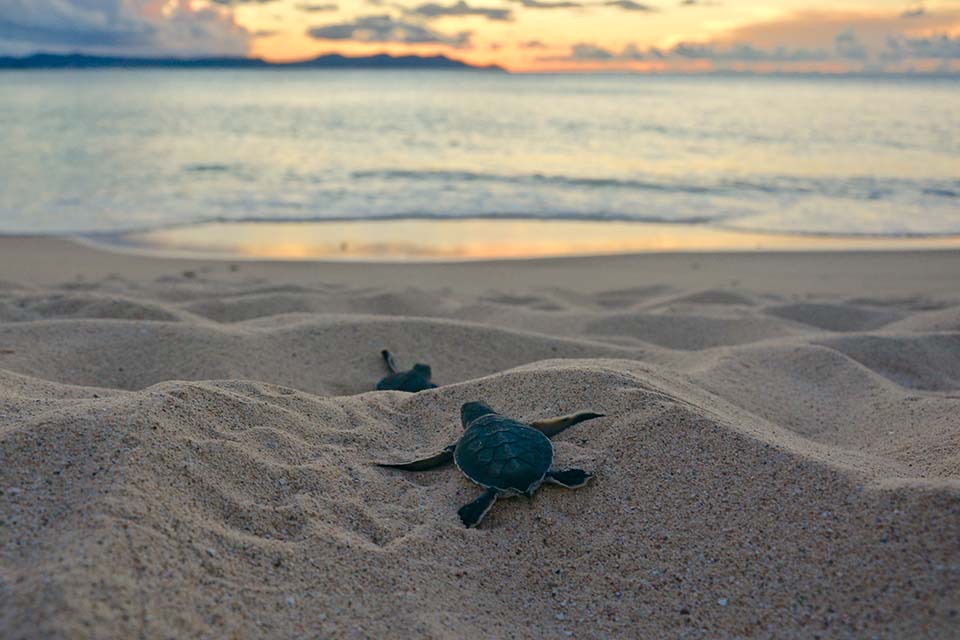
Buck Island rises out of the Caribbean a mile and a half off the northeast side of St. Croix: an uninhabited island of uplifted volcanic ash, two-thirds of it ringed by an elkhorn coral barrier reef whose branching corals push to 30-foot heights, with patch reefs shaped like haystacks rising nearly to the surface from as much as 40 feet below. Brown pelicans, least terns and hawksbill, leatherback and green sea turtles nest here. Today the 176-acre island and more than 18,000 acres of submerged reef and seafloor make up the monument. [2] [1]
The island was not always wild. Its tropical hardwoods, lignum vitae above all, were logged for timber and charcoal, and goats and sheep grazed it into the first quarter of the twentieth century; the 2012 management plan says that by 1948 grazing had reduced it to dry forest and desert scrub. Mongoose and rats brought by people may have eradicated the St. Croix ground lizard, the brochure says; the Park Service reintroduced the lizard in 2007, and the island is now its most secure refuge. [1] [2] [3]
The Virgin Islands government made Buck Island and its reefs a territorial park in 1948. President John F. Kennedy proclaimed the national monument on December 28, 1961, to protect a reef area the Park Service describes as one of the finest marine gardens in the Caribbean Sea, and on January 17, 2001, President Bill Clinton added 18,135 marine acres. The whole monument is now closed to fishing and collecting, one of only a few fully protected no-take marine areas in the national park system. [5] [2] [4]
Indigenous peoples
By about A.D. 400, according to the park’s history page, Amerindians living on St. Croix, who had come into the region through the Lesser Antilles from the lower Orinoco River and the Guyana coast, began to visit Buck Island to fish, catch lobsters and land crabs, gather conch and possibly collect turtle and bird eggs. They camped in the beach forest and left behind pottery and hearths. Charcoal and shell from hearths at West Beach have given two calibrated radiocarbon ranges, A.D. 410–600 and 510–700, and the pottery found on the island runs from Late Saladoid through Ostionoid styles. The 2017 foundation document reports that eroding shorelines are causing the loss of important archeological sites, among them the north shore Amerindian site. [3] [2] [4]
Slavery
Johann Diedrich (the park’s history page spells it Deidrich), Christiansted’s town clerk, controlled Buck Island from 1754 to 1773; between six and twelve enslaved Africans lived there at a time during his tenure, and three were listed in 1772. An 1841 Danish tax list names enslaved Africans there. Island-wide, the 2012 plan reports, enslaved people were more than 90 percent of St. Croix’s population before 1800, and in 1812 its 175 sugar plantations held 26,000 enslaved people. Emancipation came in 1848. [3] [4]
The 2001 proclamation records two slave ships under Liverpool captains wrecked in the waters it added: the Mary in March 1797, with 240 enslaved people, and the General Abercrombie in March 1803, with 339; both groups were brought to Christiansted. Such wrecks are rare in U.S. waters, the proclamation notes, and remnants lie in the monument. The Slave Wrecks Project, an NPS–Smithsonian partnership with universities, has drawn attention to them, the foundation document says. [2] [5]
Climate & environment
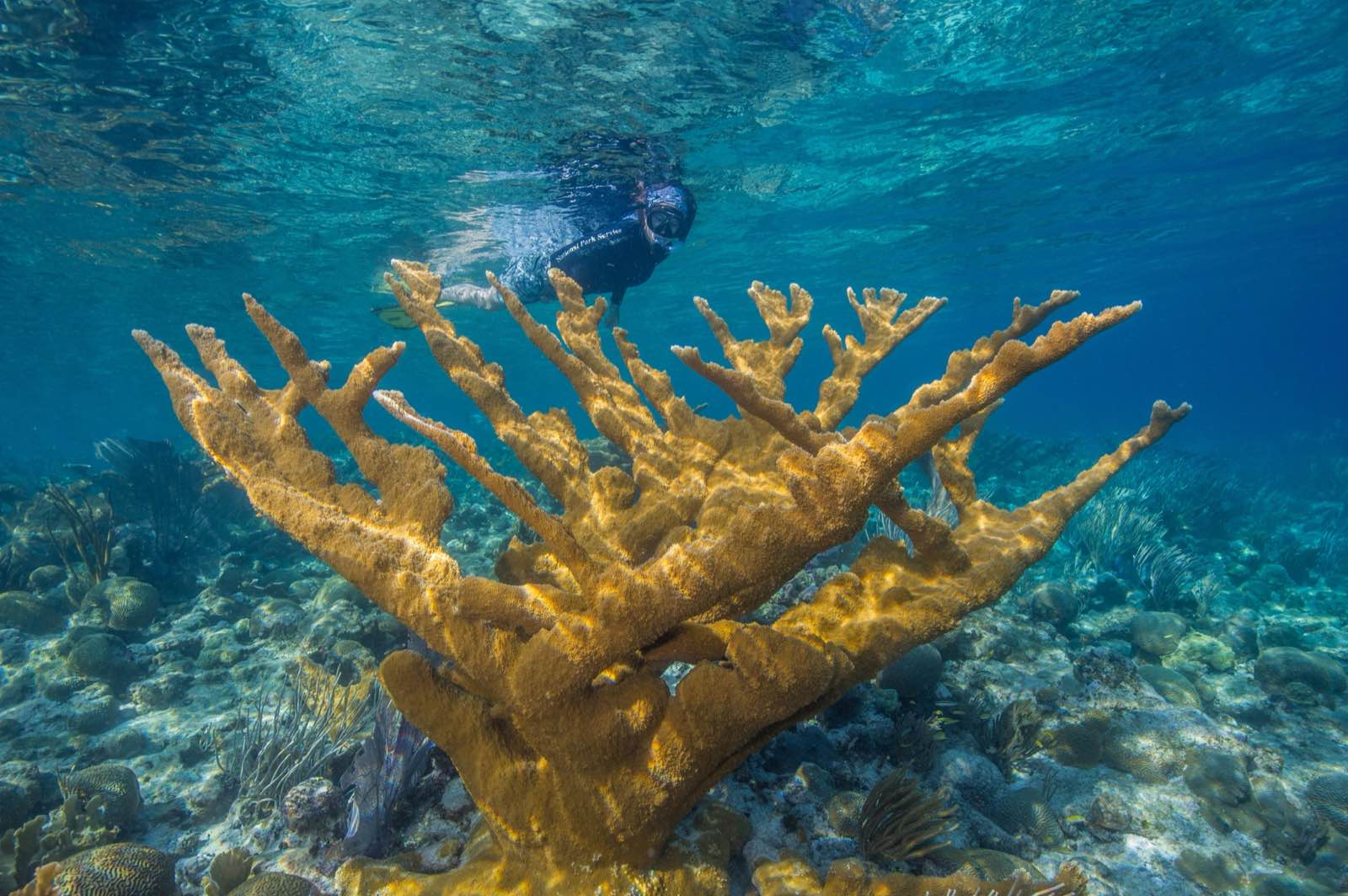
The 2004 brochure warned that coral reefs worldwide are fast disappearing and that biologists see their plight as a planetary danger signal. The 2017 foundation document gives Buck Island figures: in the 1960s, 70 percent of corals were considered healthy; in the 1970s white band disease left only 5 to 10 percent of the elkhorn coral alive; and monitoring from the 1990s to 2016 found 2 to 5 percent live cover on two reefs. It counts bleaching, rising seas and ocean acidification among the threats and says climate change is likely to worsen the threat from storms. [2] [1]
A 2023 study led by U.S. Geological Survey scientists, with Park Service co-authors, found bioerosion dominant at 91 percent of reef sites surveyed in 2016, but concluded that significant elkhorn coral restoration, if successful, could let the reef crest keep pace with the roughly half-meter of sea-level rise expected by 2100 with moderate emissions cuts. [2] [6]
Sources
- NPSHistory.com: Buck Island Reef National Monument archive page — overview (from the 2004 NPS brochure) and establishment block
- NPS, Foundation Document, Buck Island Reef National Monument (August 2017)
- NPS, Draft General Management Plan/Environmental Impact Statement, Buck Island Reef National Monument (March 2012), ch. 3 cultural resources
- NPS, Buck Island Reef NM, History & Culture (nps.gov, last updated April 6, 2018)
- Presidential Proclamation 7392, Boundary Enlargement and Modifications of the Buck Island Reef National Monument (January 17, 2001), 66 Fed. Reg. 7335
- Toth et al., The potential for coral reef restoration to mitigate coastal flooding as sea levels rise, Nature Communications 14:2313 (2023)
Removed Per Nps Court Filing: Interpretive materials
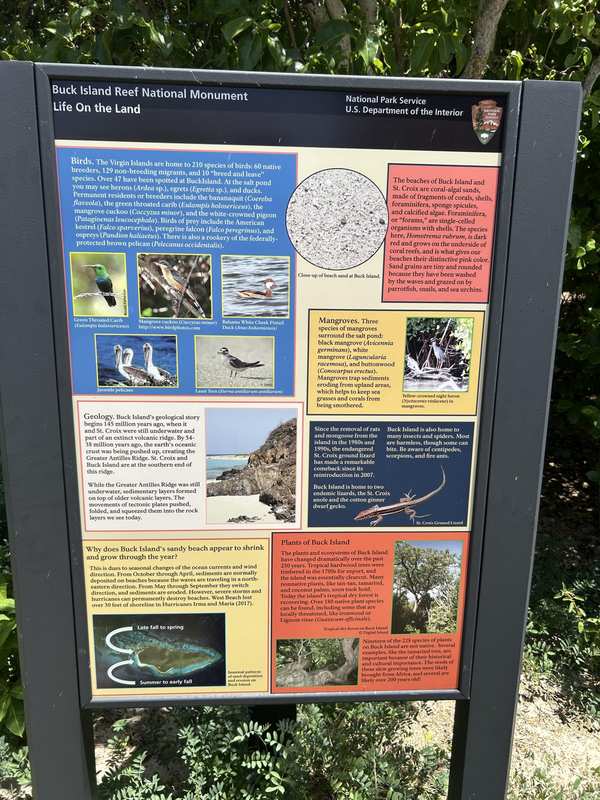
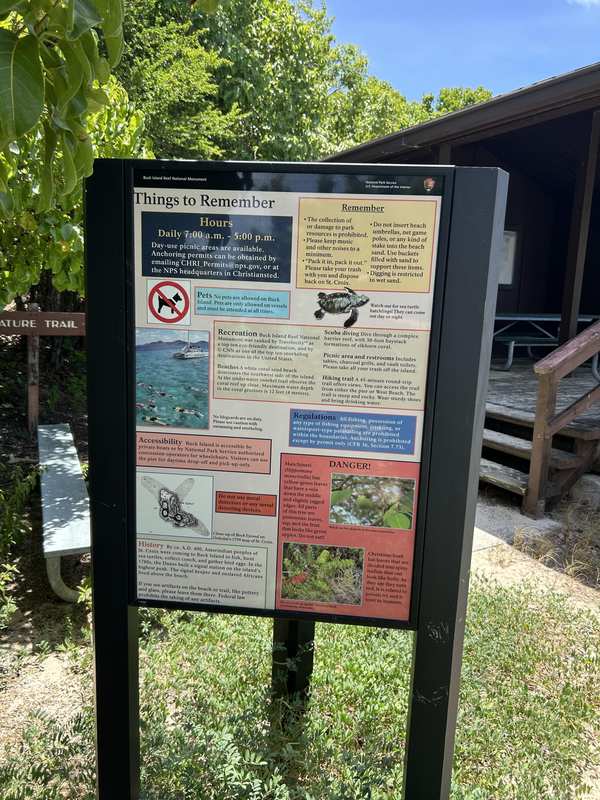
At Buck Island Reef National Monument, the natural world tells its own story. Decades of scientific observation have documented changes to this landscape — changes that are visible to every visitor who walks these trails. The interpretive materials now under review present this documented scientific record.
Among the content targeted: “ranked top ten eco-friendly destinations” — language that the administration has flagged for review under its directive to review historically accurate interpretive materials.
Why this matters: The environmental changes documented at Buck Island Reef National Monument are based on decades of scientific observation and measurement. Visitors can see these changes with their own eyes. Removing references to documented science from interpretive materials doesn't reverse the changes — it only leaves visitors without the information they need to understand what they're witnessing.
- Buck Island Reef National Monument: Junior Ranger Activity Book
- Junior Ranger book; reason: Disparages Americans past or living; now: Discarded
States BUIS has been “ranked top ten eco-friendly destinations” and mentions CNN (copyright symbol goes after CNN)
Discussion of over logging and introduction of invasive species could be seen as disparaging and not properly highlighting the beauty, abundance and grandeur of the site.
Discussion of threats to animals and impacts of climate be seen as disparaging and not properly highlighting the beauty, abundance and grandeur of the site.
Explore the Full Map
See all 446 entries across every national park and wildlife refuge.
Open Interactive Map →