Canyonlands National Park

CANY · UT
FLAGGED FOR REVIEW NEEDS REPAIR / REPLACEMENT
6 entries
6 photos
3 topics
Climate & Environment General Historical Content Indigenous & Native History

NPS History

NPSHistory.com

Canyonlands National Park in southeastern Utah preserves 337,598 acres of dramatic desert landscape carved by the Colorado and Green Rivers into countless canyons, mesas, and buttes. Established as a national park in 1964 through the efforts of Secretary of the Interior Stewart Udall, Canyonlands is divided into four distinct districts: Island in the Sky, The Needles, The Maze, and the rivers themselves. The region's geological record spans over 300 million years, and archaeological evidence shows human presence dating back at least 10,000 years, including ancestral Puebloan granaries and Fremont rock art.

📚 Learn More at NPSHistory.com →
Flagged Entries (6)
Entry #768 FLAGGED FOR REVIEW

FLAGGED FOR REVIEW: Interpretive materials
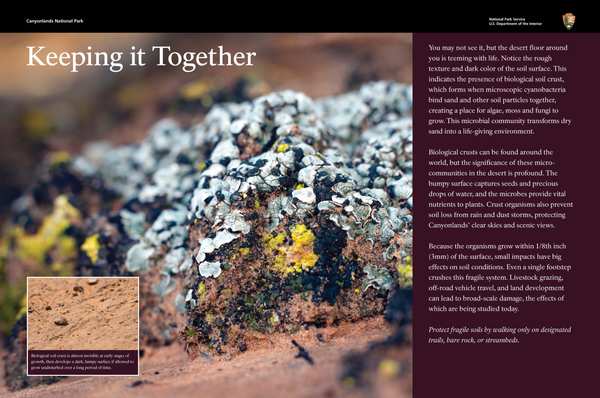
Canyonlands National Park in UT preserves a piece of American history that the public has trusted the National Park Service to protect and interpret. The interpretive materials at this site have been developed over years by historians, subject-matter experts, and park staff — and are now being reviewed under Secretary's Order 3431.

From the internal review records: “"Because the organisms grow within 1/8th inch (3mm) of the surface, small impacts have big effects on soil conditions. Even a single footstep crushes this fragile system. Livestock grazing, off-road vehicle travel, and land development can lead to broad-scale damage, the effects of which are being studied today."”

Why this matters: Canyonlands National Park is part of a network of over 400 national parks that serve as America's classrooms. The interpretive materials here were developed by subject-matter experts to help visitors understand the full story of this place. When historically accurate content is removed, the public loses access to its own history.

General Historical Content
Exact Text Targeted for Removal
What Was Flagged for Review

These panels (one each in two park districts) introduce visitors to biological soil crust and its ecological services. The park seeks guidance on whether the text describing negative outcomes associated with loss of soil crusts is within scope of Secretary's Order 3431. The text reads:

"Because the organisms grow within 1/8th inch (3mm) of the surface, small impacts have big effects on soil conditions. Even a single footstep crushes this fragile system. Livestock grazing, off-road vehicle travel, and land development can lead to broad-scale damage, the effects of which are being studied today."

View on map →
Entry #769 FLAGGED FOR REVIEW

FLAGGED FOR REVIEW: Interpretive materials

At Canyonlands National Park, the natural world tells its own story. Decades of scientific observation have documented changes to this landscape — changes that are visible to every visitor who walks these trails. The interpretive materials now under review present this documented scientific record.

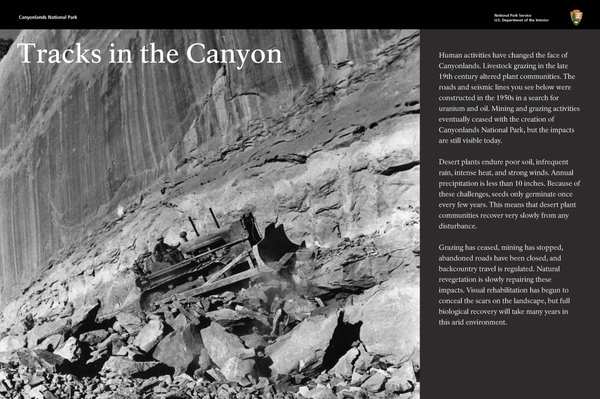
From the internal review records: “"Human activities have changed the face of Canyonlands. Livestock grazing in the late 19th century altered plant communities. The roads and seismic lines you see below were constructed in the 1950s in a search for uranium and oil. Mining and grazing activities eventually ceased with the creation of Canyonlands National Park, but the impacts are still visible today....Grazing has ceased, mining has...”

Why this matters: The environmental changes documented at Canyonlands National Park are based on decades of scientific observation and measurement. Visitors can see these changes with their own eyes. Removing references to documented science from interpretive materials doesn't reverse the changes — it only leaves visitors without the information they need to understand what they're witnessing.

Climate & Environment
Exact Text Targeted for Removal
What Was Flagged for Review

This panel describes the impacts of past activities, such as mining and grazing, on desert plant communities. The park seeks guidance on whether the entire panel is within scope of Secretary's Order 3431 and should be covered or removed. The text reads:

"Human activities have changed the face of Canyonlands. Livestock grazing in the late 19th century altered plant communities. The roads and seismic lines you see below were constructed in the 1950s in a search for uranium and oil. Mining and grazing activities eventually ceased with the creation of Canyonlands National Park, but the impacts are still visible today....Grazing has ceased, mining has stoped, abandoned roads have been closed, and backcountry travel is regulated. Natural revegetation is slowly repairing these impacts. Visual rehabilitation has begun to conceal the scars on the landscape but full biological recovery will take many years in this arid environment."

View on map →
Entry #770 FLAGGED FOR REVIEW

FLAGGED FOR REVIEW: Interpretive materials

Canyonlands National Park in UT preserves a piece of American history that the public has trusted the National Park Service to protect and interpret. The interpretive materials at this site have been developed over years by historians, subject-matter experts, and park staff — and are now being reviewed under Secretary's Order 3431.

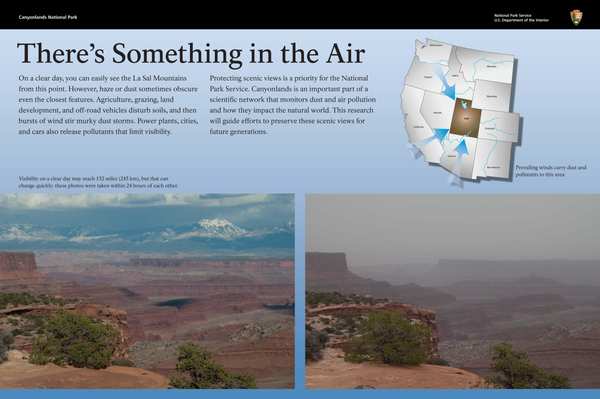
From the internal review records: “"Agriculture, grazing, land development, and off-road vehicles disturb soil, and then bursts of wind stir murky dust storms. Power plants, cities, and cars also release pollutants that limit visibility.... Protecting scenic views is a priority for the National Park Service. Canyonlands is an important part of a scientific network that monitors dust and air pollution and how they impact the natural...”

Why this matters: The environmental changes documented at Canyonlands National Park are based on decades of scientific observation and measurement. Visitors can see these changes with their own eyes. Removing references to documented science from interpretive materials doesn't reverse the changes — it only leaves visitors without the information they need to understand what they're witnessing.

Climate & Environment
Exact Text Targeted for Removal
What Was Flagged for Review

This panel describes the impacts of haze or dust on air quality and viewsheds within the park, and research being done to monitor it. The park seeks guidance on whether this topic is within scope of Secretary's Order 3431. The text reads:

"Agriculture, grazing, land development, and off-road vehicles disturb soil, and then bursts of wind stir murky dust storms. Power plants, cities, and cars also release pollutants that limit visibility.... Protecting scenic views is a priority for the National Park Service. Canyonlands is an important part of a scientific network that monitors dust and air pollution and how they impact the natural world. This research will guide efforts to preserve these scenic views for future generations."

View on map →
Entry #771 FLAGGED FOR REVIEW

FLAGGED FOR REVIEW: Interpretive materials

Canyonlands National Park in UT preserves a piece of American history that the public has trusted the National Park Service to protect and interpret. The interpretive materials at this site have been developed over years by historians, subject-matter experts, and park staff — and are now being reviewed under Secretary's Order 3431.

Among the content targeted: “is within scope of Secretary's Order 3431. The text reads:” — language that the administration has flagged for review under its directive to review historically accurate interpretive materials.

Why this matters: The specific language being targeted at Canyonlands National Park — including “is within scope of Secretary's Order 3431. The text reads:” — is historically accurate content developed by professional historians and park staff. When this language is revised or removed, visitors lose access to the documented record of what happened here.

General Historical Content
Exact Text Targeted for Removal
What Was Flagged for Review

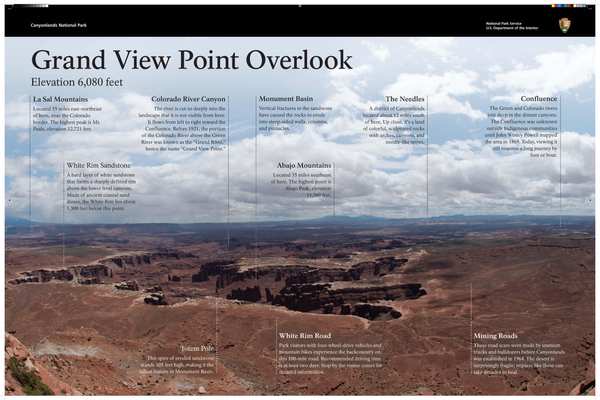
This panel identifies features on the landscape visible from an overlook. One arrow points to old roads/seismic survey lines. The park seeks guidance on whether the text describing these marks as “scars” is within scope of Secretary's Order 3431. The text reads:

“These road scars were made by uranium trucks and bulldozers before Canyonlands was established in 1964. The desert is surprisingly fragile; impacts like these can take decades to heal.”

View on map →
Entry #772 NEEDS REPAIR / REPLACEMENT

NEEDS REPAIR / REPLACEMENT: Exhibit panels (2 items)

Long before Canyonlands National Park became a national park, this land was home to Indigenous peoples whose connection to it spans thousands of years. The interpretive materials now being reviewed tell their story — often developed through years of formal tribal consultation, as required by federal law.

Among the content targeted: “Relevant text includes:” — language that the administration has flagged for review under its directive to review historically accurate interpretive materials.

Why this matters: The Indigenous history presented at Canyonlands National Park was developed through formal tribal consultation — a legal requirement under federal law. The language being reviewed was often specifically requested by tribal nations whose ancestors lived on this land for thousands of years. Revising it without renewed consultation would violate both the spirit and the letter of that process.

Indigenous & Native History
Exact Text Targeted for Removal
What Was Flagged for Review

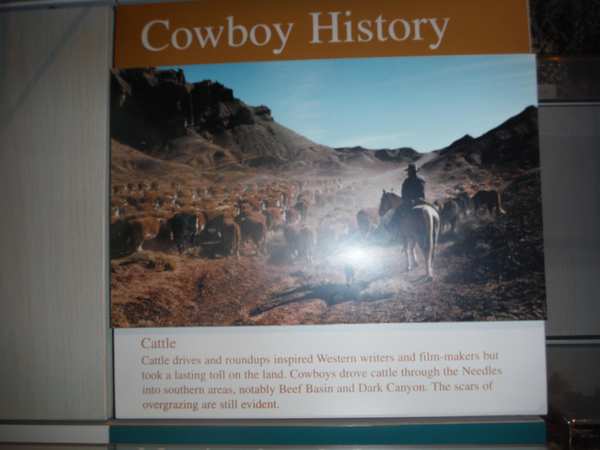
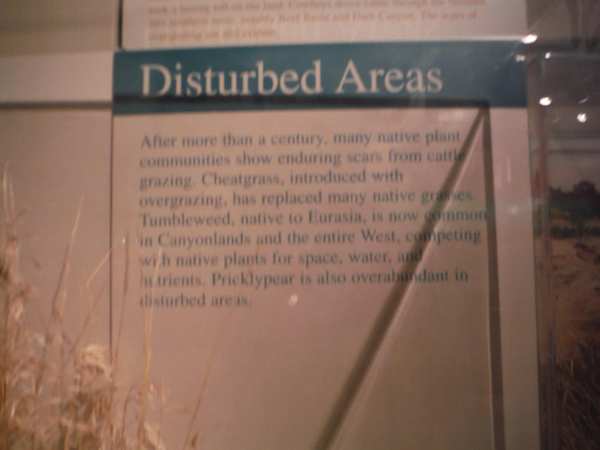
Two exhibits in Needles Visitor center describe the impact of cattle grazing in negative terms, using the word “scars.” Relevant text includes:

"Cattle drives and roundups inspired western writers and film makers but took a lasting toll on the land. Cowboys drove cattle through the Needles into southern areas, notably Beef Basin and Dark Canyon. The scars of overgrazing are still evident.“ and ”After more then a century, many native plant communities show enduring scars from cattle grazing. Cheatgrass, introduced with overgrazing, has replaced many native grasses. Tumbleweed, native to Eurasia, is now common in Canyonlands and the entire west, competing with native plants for space, water, and nutrients. Pricklypear is also overabundent in disturbed areas."

Both exhibits are already slated for removal in winter 2026.

View on map →
Entry #773 FLAGGED FOR REVIEW

FLAGGED FOR REVIEW: Interpretive materials

At Canyonlands National Park, the natural world tells its own story. Decades of scientific observation have documented changes to this landscape — changes that are visible to every visitor who walks these trails. The interpretive materials now under review present this documented scientific record.

Among the content targeted: “The landscape ahead appears to fit that description. However, human impacts on air quality and climate are affecting the natural processess at work here. Does this change your view of Canyonlands' wilderness?” — language that the administration has flagged for review under its directive to review historically accurate interpretive materials.

Why this matters: The environmental changes documented at Canyonlands National Park are based on decades of scientific observation and measurement. Visitors can see these changes with their own eyes. Removing references to documented science from interpretive materials doesn't reverse the changes — it only leaves visitors without the information they need to understand what they're witnessing.

Climate & Environment
Exact Text Targeted for Removal
What Was Flagged for Review

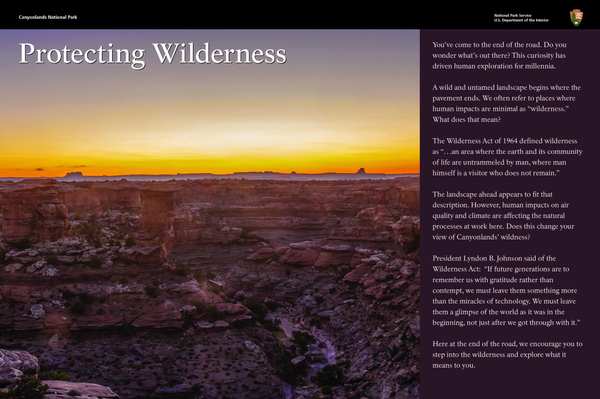
This panel introduces the concept of wilderness as a place where human impacts are minimal. The park seeks guidance on whether the following text is within scope of Secretary's Order 3431:

"The landscape ahead appears to fit that description. However, human impacts on air quality and climate are affecting the natural processess at work here. Does this change your view of Canyonlands' wilderness?"

View on map →

Share this page

Explore the Full Map

See all 874+ entries across every national park and wildlife refuge.

Open Interactive Map →