Charles Pinckney NHS
Park History
Sourced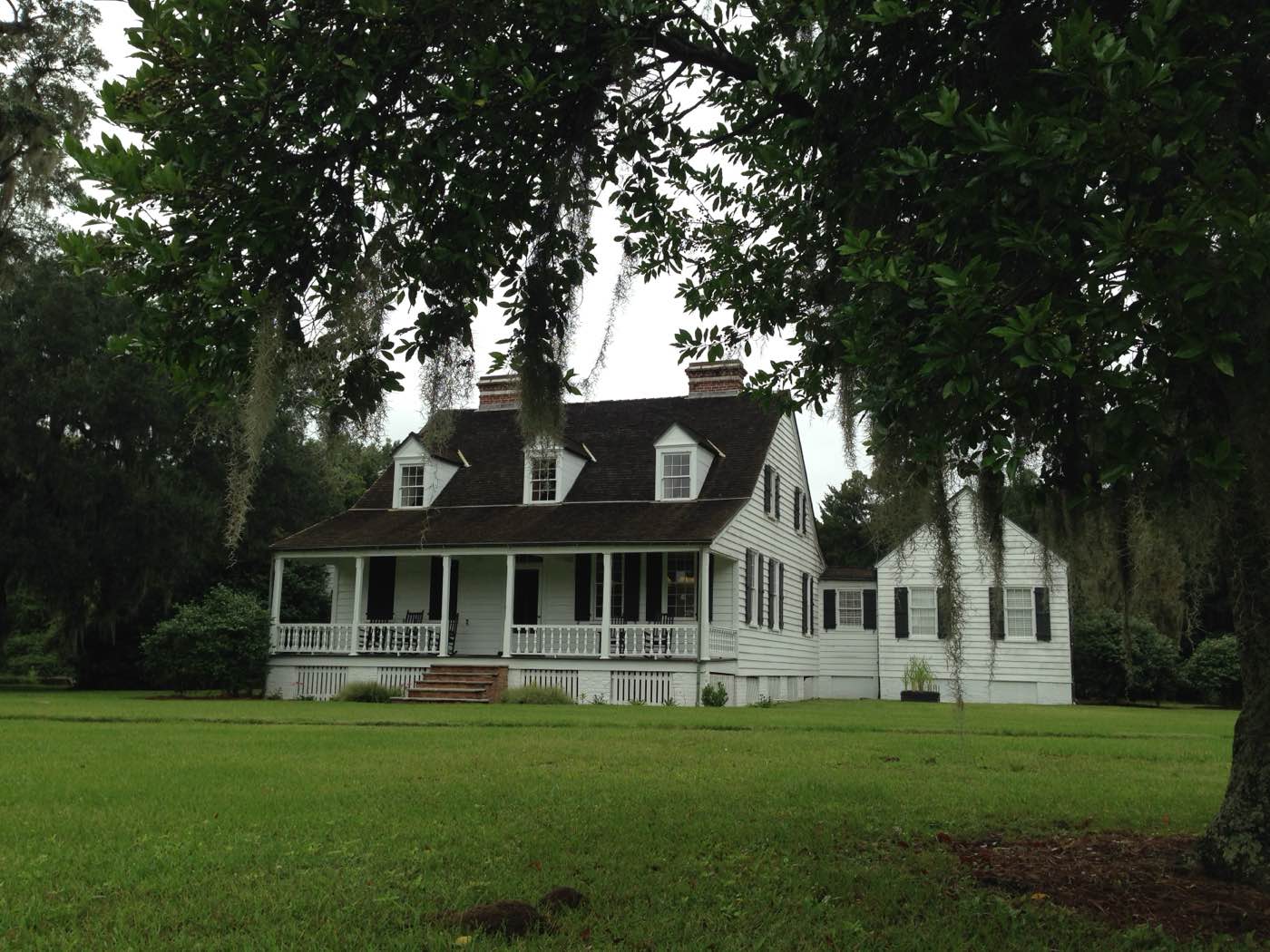
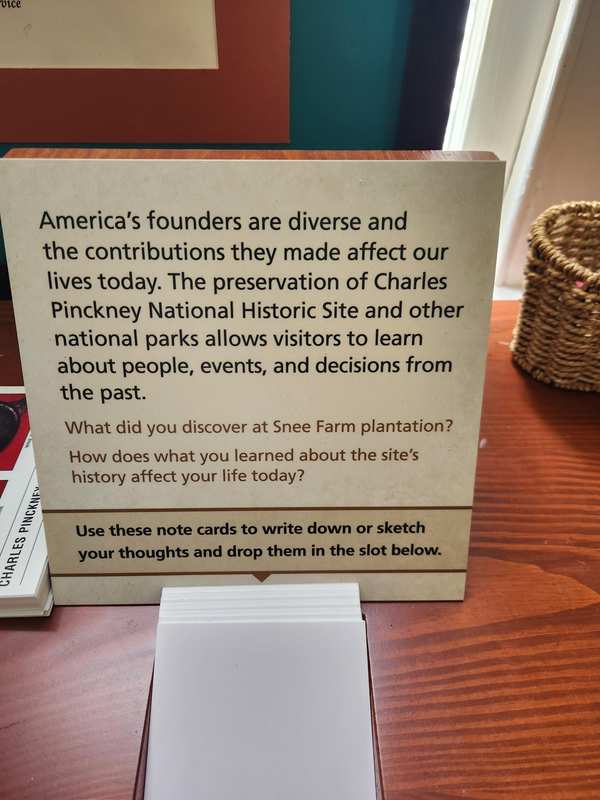
Snee Farm, 28 acres in Mount Pleasant, South Carolina, is the last undeveloped piece of a 715-acre Lowcountry plantation that Colonel Charles Pinckney bought in 1754. His son Charles, born in Charleston on October 26, 1757, inherited it in 1782 and used it as a country retreat; George Washington stopped there for breakfast in May 1791. At the Constitutional Convention of 1787 the younger Pinckney attended every session and submitted a draft constitution that was never formally considered. The park’s foundation document credits him with more than 25 clauses in the final Constitution; the park brochure says his draft contained 30 or more provisions that were incorporated into the final document. [1] [2]
No building from the Pinckney era still stands. Most of his papers burned in Charleston’s 1861 fire, and the plantation was sold to pay his debts in 1817; the cypress-and-pine cottage on the site today dates from about 1828. What is known of the Pinckney years has come largely out of the ground: archeologists have recovered more than 150,000 artifacts, including the slave-made earthenware called Colonoware, and have located the kitchen, the well and two slave cabins. [1] [2]
The rest of the land was sold for housing development and a golf course in the early 1970s, and in 1986 a developer began grading roads across the remaining core. Local residents organized the Friends of Historic Snee Farm, Congress established the historic site on September 8, 1988, and the Park Service acquired the 28 acres in 1990. Its foundation document charges it with interpreting the lives of the farm’s inhabitants, “enslaved as well as free” — a place that was, in the park’s own words, home and livelihood to some and “a form of prison” to others. [2] [3]
Black history
By 1790 the Lowcountry parishes were nearly 70 percent Black, and the HRS describes how the relative isolation of large plantations let enslaved people blend African traditions into the culture and creole language now called Gullah. After emancipation, African Americans kept working Snee Farm as tenants, sharecroppers and wage laborers. A 2001 park study by Tyson Gibbs of the University of North Texas anthropology department, built on oral-history interviews with former Snee Farm workers and their relatives, recorded Black foremen who ran the farm for its owners between 1943 and 1968 — Charlie Stroder, Billie Seabrook and members of the Kinsey family — and workers who moved freely between Snee Farm and Boone Hall across the road. [4] [3]
Gibbs found that African Americans, more than 75 percent of the area’s people at the first census, had fallen to about 7 percent of Mount Pleasant’s population, and warned of shrinking neighborhoods, developers’ demand for Black-owned land and the scattering of a culture. [3]
Slavery
The park’s 2000 Historic Resource Study notes that a 1787 inventory listed forty enslaved people at Snee Farm, among them a gardener, carpenters, coopers and Cudjoe, a driver and sawyer; the 1810 census counted 58. They grew rice and indigo, and the study traces Lowcountry tidal-rice methods to West Africa and notes that planters relied heavily on enslaved people’s knowledge to produce the crop. The study finds archeological evidence that the “task” system prevailed at Snee Farm; shells, bones and a lead shot found in a cabin posthole hint at the food they caught for themselves. Their village of post-in-ground houses, one measuring 16 by 20 feet, stood about 250 yards from the planter’s house and was in use from about 1750 to 1841. [4] [3]
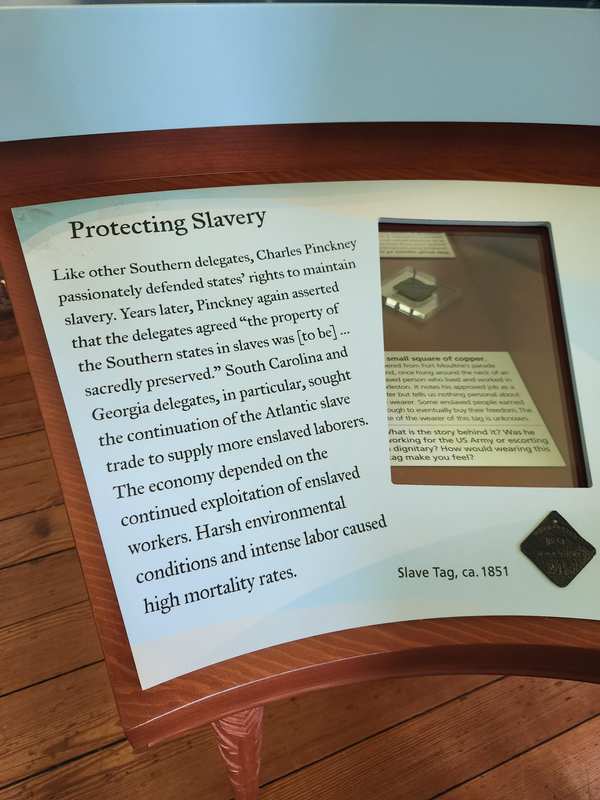
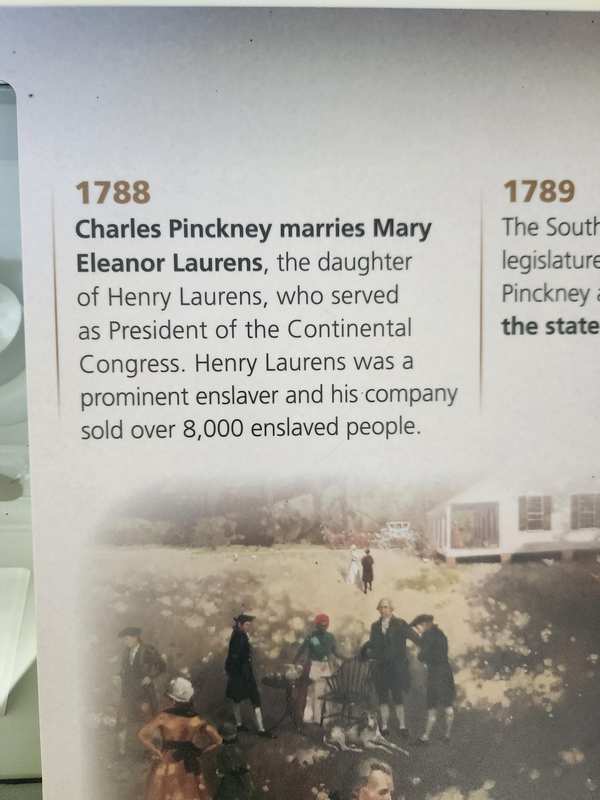
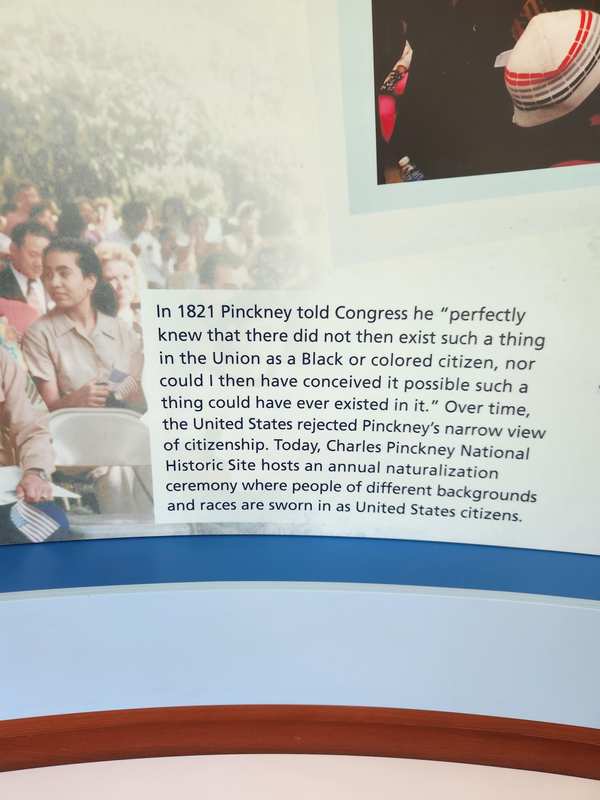
The same study notes that at the Convention Pinckney defended slavery against Northern delegates and fought for the three-fifths clause, for continuing the importation of enslaved Africans until 1808, and for the fugitive slave clause. When Snee Farm was sold in 1817, 43 people were enslaved there. [4]
Sources
- NPSHistory.com: Charles Pinckney National Historic Site archive page — overview (from the 2011 NPS brochure) and establishment block
- Foundation Document Overview, Charles Pinckney National Historic Site (NPS, January 2016)
- Gibbs, African Americans at Snee Farm Plantation, Mount Pleasant, South Carolina (NPS Southeast Region, prepared 2001, printed 2006)
- Blythe, Kleine & Moffson, Historic Resource Study: Charles Pinckney National Historic Site (NPS, 2000), ch. 1, The Archeological Resources of Charles Pinckney NHS, 1754–1816
Removed Per Nps Court Filing: Exhibit panels (1 items)


Charles Pinckney NHS in SC preserves a piece of American history that the public has trusted the National Park Service to protect and interpret. The exhibit panels at this site have been developed over years by historians, subject-matter experts, and park staff — and are now being reviewed under Secretary's Order 3431.
Why this matters: Charles Pinckney NHS is part of a network of over 400 national parks that serve as America's classrooms. The interpretive materials here were developed by subject-matter experts to help visitors understand the full story of this place. When historically accurate content is removed, the public loses access to its own history.
- “Sign” — removed per NPS court filing
- Sign; reason: Unrelated to beauty, abundance, and grandeur of the natural landscape; now: At the park
Please review the text for the water bottle sign locatedf at the comfort station of the Charles Pinckney NHS to ensure compliance with the SO/EO.
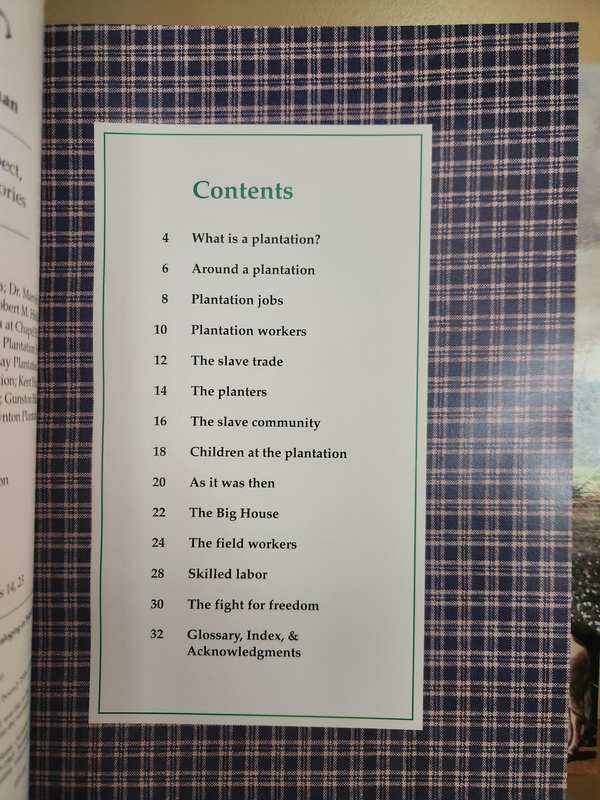
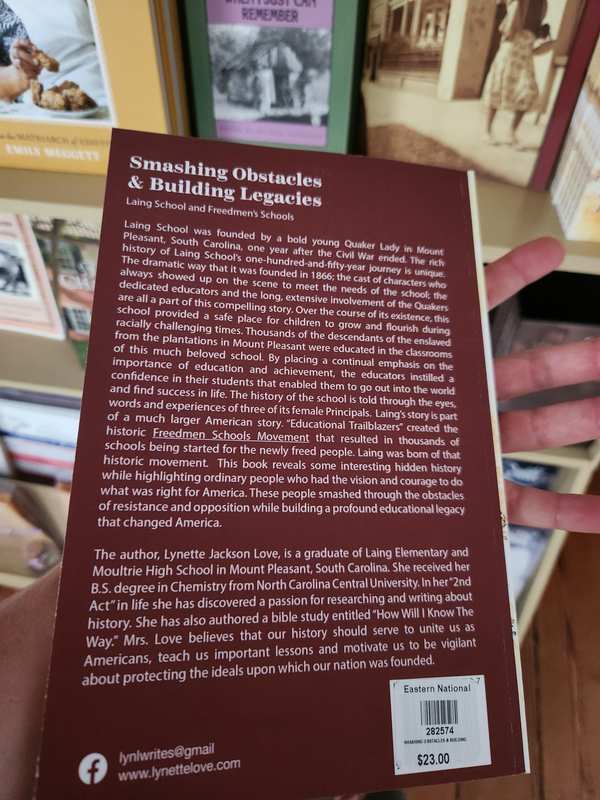
Photographs attached to this park's records in the leaked NPS review database.




Explore the Full Map
See all 446 entries across every national park and wildlife refuge.
Open Interactive Map →