Everglades NP
NPS History
NPSHistory.comEverglades National Park, established in 1947, protects 1.5 million acres of tropical and subtropical wetlands at the southern tip of Florida — the largest subtropical wilderness in the United States. It was the first national park created to protect a biological ecosystem rather than scenic grandeur. The park's "River of Grass," as described by Marjory Stoneman Douglas in her influential 1947 book, is a slow-moving sheet of water that flows southward from Lake Okeechobee to Florida Bay. The Everglades provides habitat for 36 federally listed threatened or endangered species, including the Florida panther, American crocodile, and West Indian manatee. It is designated as a UNESCO World Heritage Site, an International Biosphere Reserve, and a Wetland of International Importance.
📚 Learn More at NPSHistory.com →Flagged for Review: Exhibit panels (12 items)
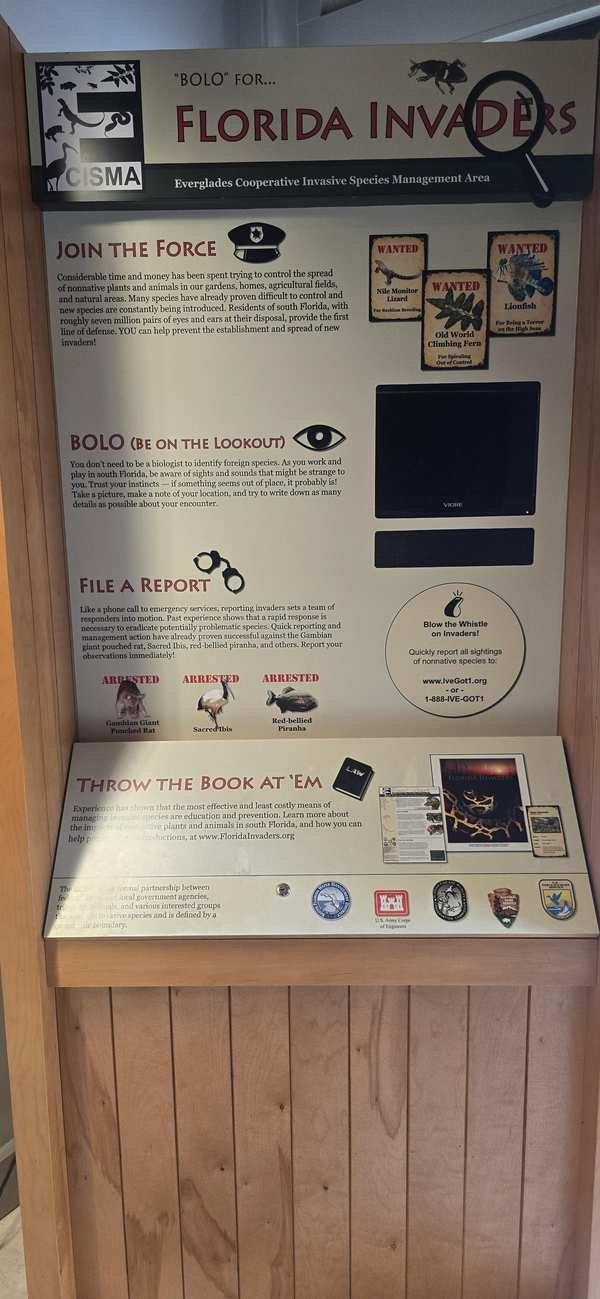
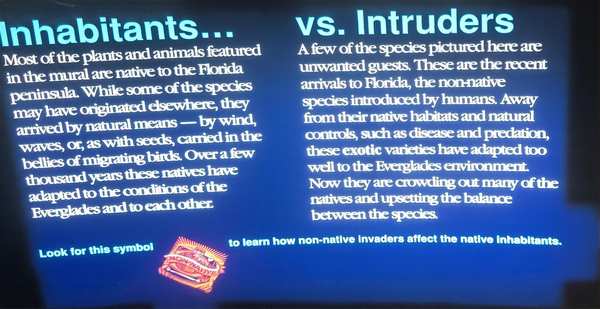
In 1927, journalist and conservationist Marjory Stoneman Douglas joined the committee to create Everglades National Park, beginning a lifelong crusade to save the 'River of Grass' from drainage and development.
Douglas's 1947 book 'The Everglades: River of Grass' redefined the swamp as a treasured river ecosystem and became instrumental in preservation efforts. Everglades National Park officially opened in 1947, protecting 1.5 million acres of unique subtropical wetland. Douglas founded Friends of the Everglades in 1969 and continued conservation work until her death in 1998 at age 108.
Among the content targeted: “River of Grass” — language that the administration has flagged for review under its directive to review historically accurate interpretive materials.
Why this matters: The Everglades represent a unique ecosystem where freshwater flows through a subtropical landscape, supporting wildlife found nowhere else on Earth. Over 1.1 million people visit this site each year.
Several of Everglades National Park's stories could be conceived as being disparaging to the development of industrial America. Because of the impacts that urbanization, agriculture, drainage, and industrialization, Everglades National Park was established because eventually society realized the significance of the ecosystem for being a source of fresh water for agriculture and people inhabiting South Florida and the numerous other resources it provides. This theme can be found throughout the purpose, foundation, and enabling legislation of what established Everglades National Park and is a th...
The purpose statement identifies the specific reason(s) for establishment of a particular park. Everglades National Park was established when the enabling legislation adopted by Congress was signed into law on May 30, 1934. The purpose statement lays the foundation for understanding what is most important about the park. Everglades National Park preserves the largest subtropical wilderness in the nation, a vast natural area in the southern Everglades and Florida Bay known throughout the world for its unparalleled ecological values, natural hydrologic conditions, vibrant cultural heritage, and...
Flagged for Review: Exhibit panels
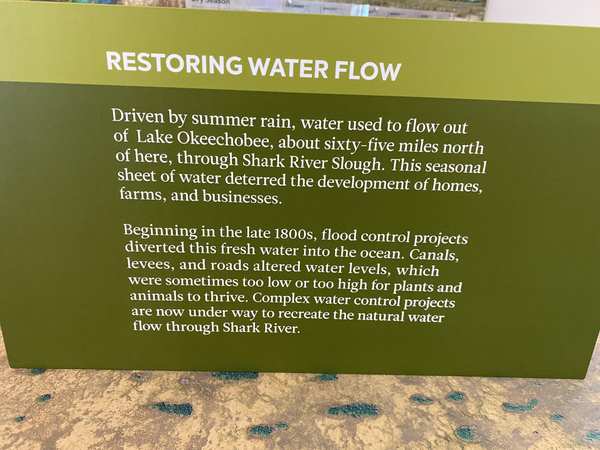
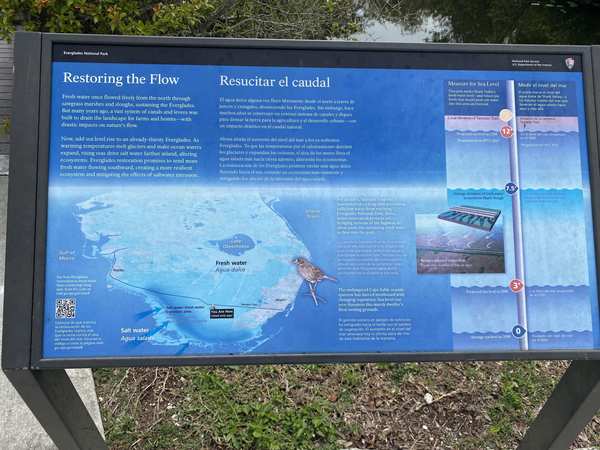
In 1927, journalist and conservationist Marjory Stoneman Douglas joined the committee to create Everglades National Park, beginning a lifelong crusade to save the 'River of Grass' from drainage and development.
Douglas's 1947 book 'The Everglades: River of Grass' redefined the swamp as a treasured river ecosystem and became instrumental in preservation efforts. Everglades National Park officially opened in 1947, protecting 1.5 million acres of unique subtropical wetland. Douglas founded Friends of the Everglades in 1969 and continued conservation work until her death in 1998 at age 108.
Among the content targeted: “River of Grass” — language that the administration has flagged for review under its directive to review historically accurate interpretive materials.
Why this matters: The Everglades represent a unique ecosystem where freshwater flows through a subtropical landscape, supporting wildlife found nowhere else on Earth. Over 1.1 million people visit this site each year.
Several of Everglades National Park's stories could be conceived as being disparaging to the development of industrial America. Because of the impacts that urbanization, agriculture, drainage, and industrialization, Everglades National Park was established because eventually society realized the significance of the ecosystem for being a source of fresh water for agriculture and people inhabiting South Florida and the numerous other resources it provides. This theme can be found throughout the purpose, foundation, and enabling legislation of what established Everglades National Park and is a th...
The purpose statement identifies the specific reason(s) for establishment of a particular park. Everglades National Park was established when the enabling legislation adopted by Congress was signed into law on May 30, 1934. The purpose statement lays the foundation for understanding what is most important about the park. Everglades National Park preserves the largest subtropical wilderness in the nation, a vast natural area in the southern Everglades and Florida Bay known throughout the world for its unparalleled ecological values, natural hydrologic conditions, vibrant cultural heritage, and...
Flagged for Review: Exhibit panels, publications
In 1927, journalist and conservationist Marjory Stoneman Douglas joined the committee to create Everglades National Park, beginning a lifelong crusade to save the 'River of Grass' from drainage and development.
Douglas's 1947 book 'The Everglades: River of Grass' redefined the swamp as a treasured river ecosystem and became instrumental in preservation efforts. Everglades National Park officially opened in 1947, protecting 1.5 million acres of unique subtropical wetland. Douglas founded Friends of the Everglades in 1969 and continued conservation work until her death in 1998 at age 108.
Among the content targeted: “River of Grass” — language that the administration has flagged for review under its directive to review historically accurate interpretive materials.
Why this matters: The Everglades represent a unique ecosystem where freshwater flows through a subtropical landscape, supporting wildlife found nowhere else on Earth. Over 1.1 million people visit this site each year.
Several of Everglades National Park's stories could be conceived as being disparaging to the development of industrial America. Because of the impacts that urbanization, agriculture, drainage, and industrialization, Everglades National Park was established because eventually society realized the significance of the ecosystem for being a source of fresh water for agriculture and people inhabiting South Florida and the numerous other resources it provides. This theme can be found throughout the purpose, foundation, and enabling legislation of what established Everglades National Park and is a th...
The purpose statement identifies the specific reason(s) for establishment of a particular park. Everglades National Park was established when the enabling legislation adopted by Congress was signed into law on May 30, 1934. The purpose statement lays the foundation for understanding what is most important about the park. Everglades National Park preserves the largest subtropical wilderness in the nation, a vast natural area in the southern Everglades and Florida Bay known throughout the world for its unparalleled ecological values, natural hydrologic conditions, vibrant cultural heritage, and...
EDU - Publications that are provided by the Education Teams, specifically to teachers that are joining workshops.
Revise: Exhibit panels (26 items)
In 1927, journalist and conservationist Marjory Stoneman Douglas joined the committee to create Everglades National Park, beginning a lifelong crusade to save the 'River of Grass' from drainage and development.
Douglas's 1947 book 'The Everglades: River of Grass' redefined the swamp as a treasured river ecosystem and became instrumental in preservation efforts. Everglades National Park officially opened in 1947, protecting 1.5 million acres of unique subtropical wetland. Douglas founded Friends of the Everglades in 1969 and continued conservation work until her death in 1998 at age 108.
Among the content targeted: “River of Grass” — language that the administration has ordered revised under its directive to review historically accurate interpretive materials.
Why this matters: The Everglades represent a unique ecosystem where freshwater flows through a subtropical landscape, supporting wildlife found nowhere else on Earth. Over 1.1 million people visit this site each year.
Several of Everglades National Park's stories could be conceived as being disparaging to the development of industrial America. Because of the impacts that urbanization, agriculture, drainage, and industrialization, Everglades National Park was established because eventually society realized the significance of the ecosystem for being a source of fresh water for agriculture and people inhabiting South Florida and the numerous other resources it provides. This theme can be found throughout the purpose, foundation, and enabling legislation of what established Everglades National Park and is a th...
The purpose statement identifies the specific reason(s) for establishment of a particular park. Everglades National Park was established when the enabling legislation adopted by Congress was signed into law on May 30, 1934. The purpose statement lays the foundation for understanding what is most important about the park. Everglades National Park preserves the largest subtropical wilderness in the nation, a vast natural area in the southern Everglades and Florida Bay known throughout the world for its unparalleled ecological values, natural hydrologic conditions, vibrant cultural heritage, and...
Revise: Film/video (1 items)
In 1927, journalist and conservationist Marjory Stoneman Douglas joined the committee to create Everglades National Park, beginning a lifelong crusade to save the 'River of Grass' from drainage and development.
Douglas's 1947 book 'The Everglades: River of Grass' redefined the swamp as a treasured river ecosystem and became instrumental in preservation efforts. Everglades National Park officially opened in 1947, protecting 1.5 million acres of unique subtropical wetland. Douglas founded Friends of the Everglades in 1969 and continued conservation work until her death in 1998 at age 108.
Why this matters: The Everglades represent a unique ecosystem where freshwater flows through a subtropical landscape, supporting wildlife found nowhere else on Earth. Over 1.1 million people visit this site each year.
Explore the Full Map
See all 874+ entries across every national park and wildlife refuge.
Open Interactive Map →