Freedom Riders National Monument
Park History
Sourced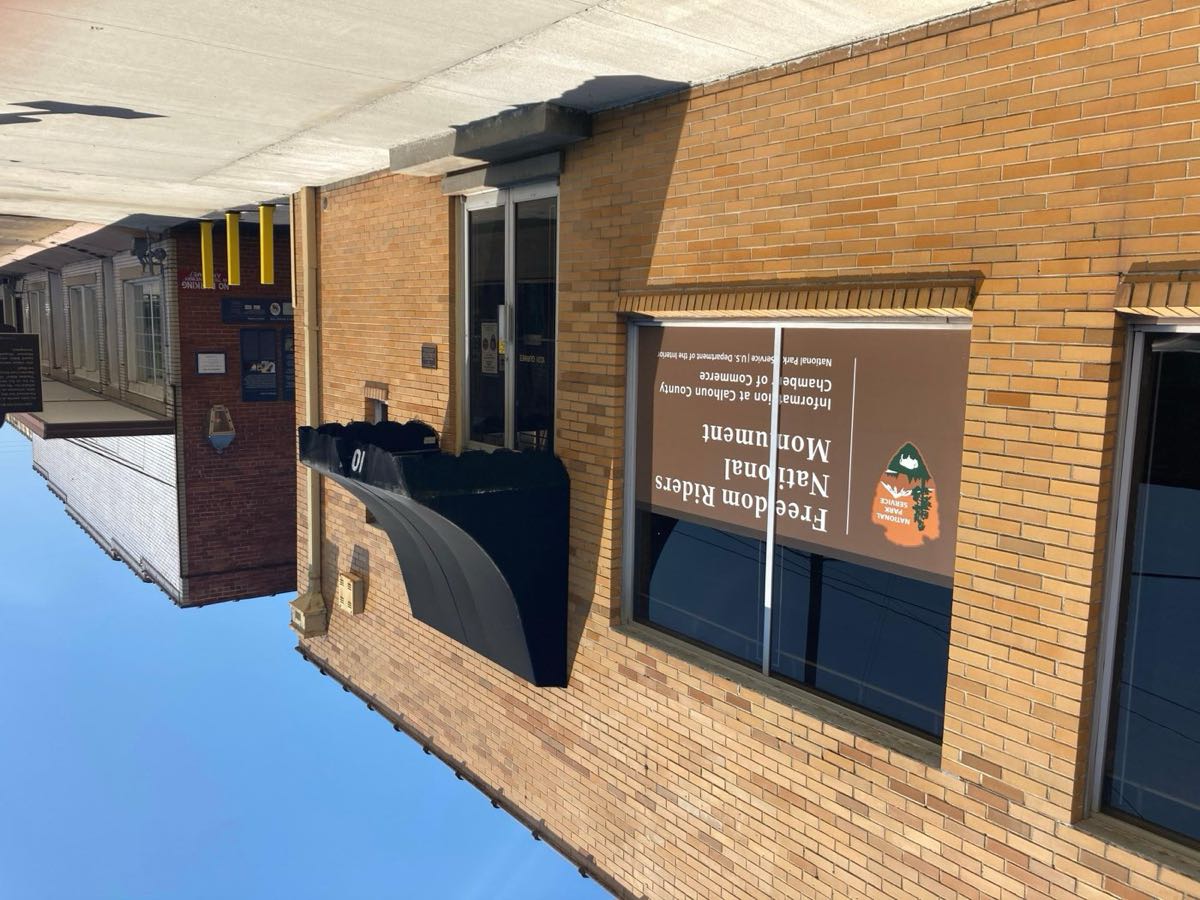
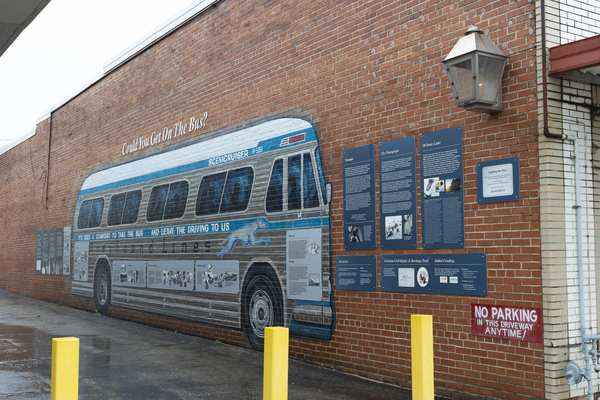
Freedom Riders National Monument has two units in and near Anniston, Alabama: the former Greyhound bus depot at 1031 Gurnee Avenue downtown, with the adjacent Mural Building, and the Bus Burning Site almost six miles west of central Anniston, 5.86 acres around the spot on the Old Birmingham Highway where a Greyhound bus was set on fire in front of Forsyth & Son Grocery. President Barack Obama proclaimed the monument on January 12, 2017; its stated purpose is to foster reconciliation and racial healing. [3] [2]
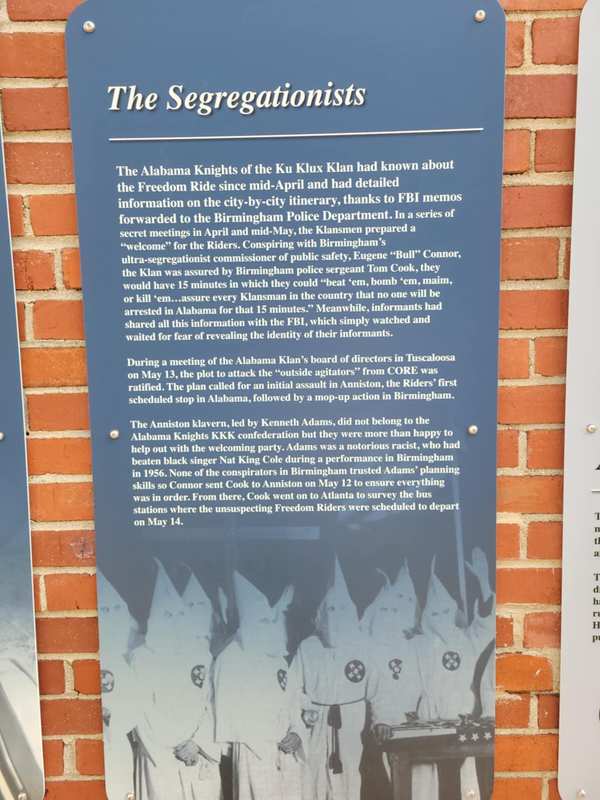
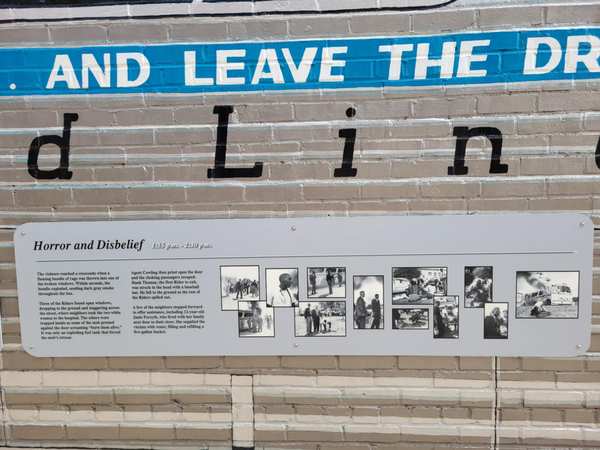
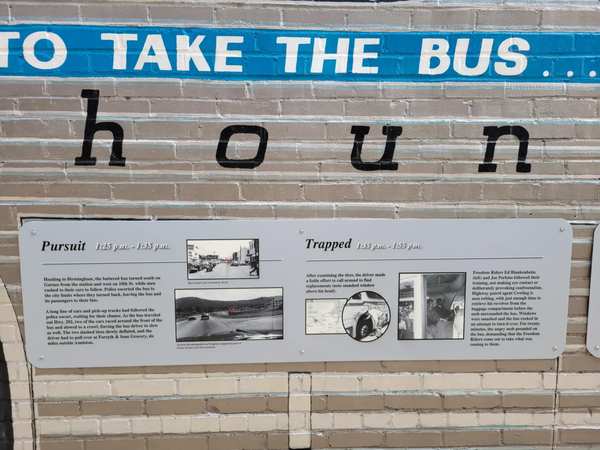
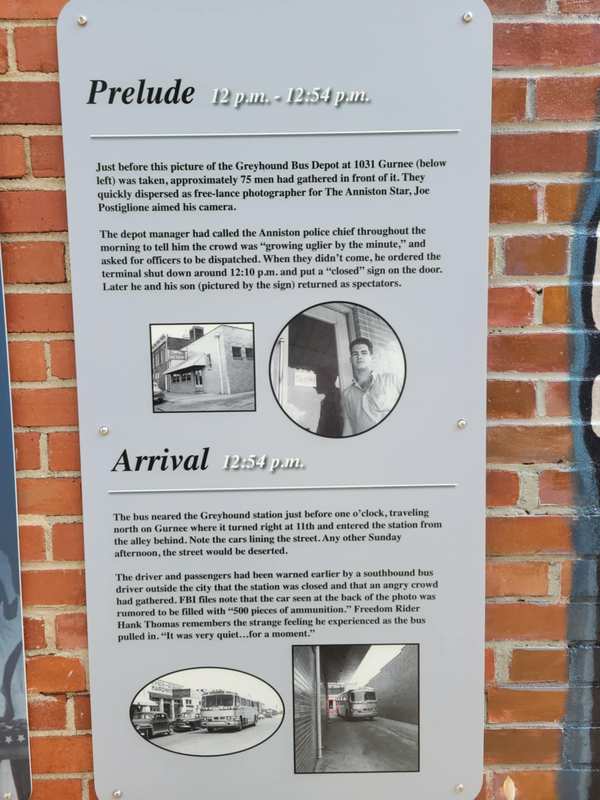
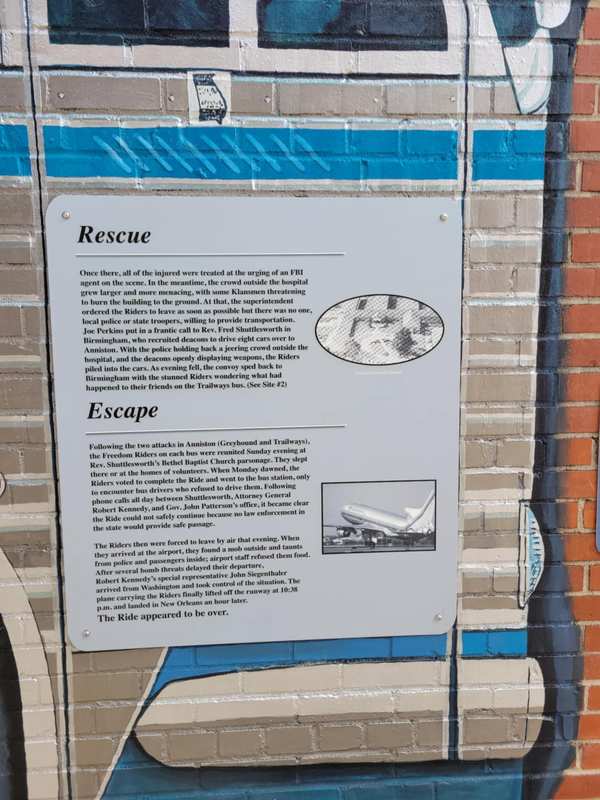
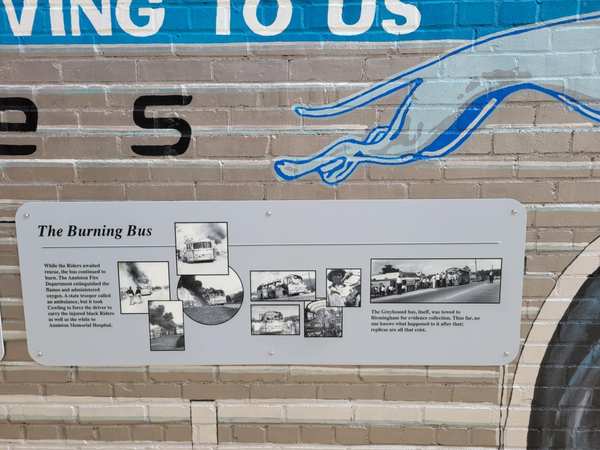
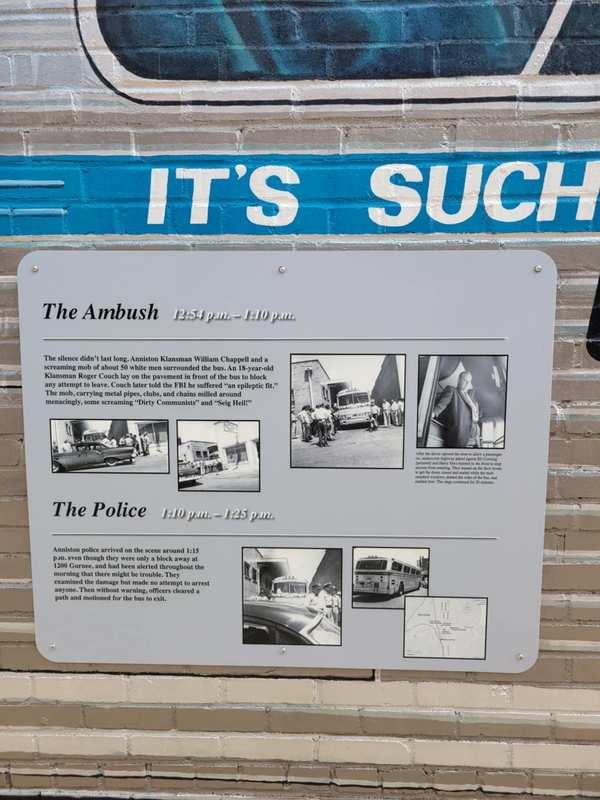
In the spring of 1961, small interracial bands of Freedom Riders set out to test whether bus stations in the Deep South were obeying Supreme Court decisions — Morgan v. Virginia (1946) and Boynton v. Virginia (1960) — against segregation in interstate travel. On Mother’s Day, May 14, a mob that included Ku Klux Klan members met the Greyhound in Anniston, broke its windows and slashed its tires. Some six miles out of town the tires gave out, and someone threw a firebomb inside. The attackers held the door shut; the riders escaped after a detective on board drew his revolver, and at Anniston Memorial Hospital many of the injured were refused treatment. Photographs of the burning bus appeared in hundreds of newspapers the next morning. [2] [3]
More than 400 Freedom Riders followed. On May 29, 1961, Attorney General Robert Kennedy petitioned the Interstate Commerce Commission, which ordered bus carriers and terminals serving interstate travel integrated by November 1, 1961. [2] [1]
Women
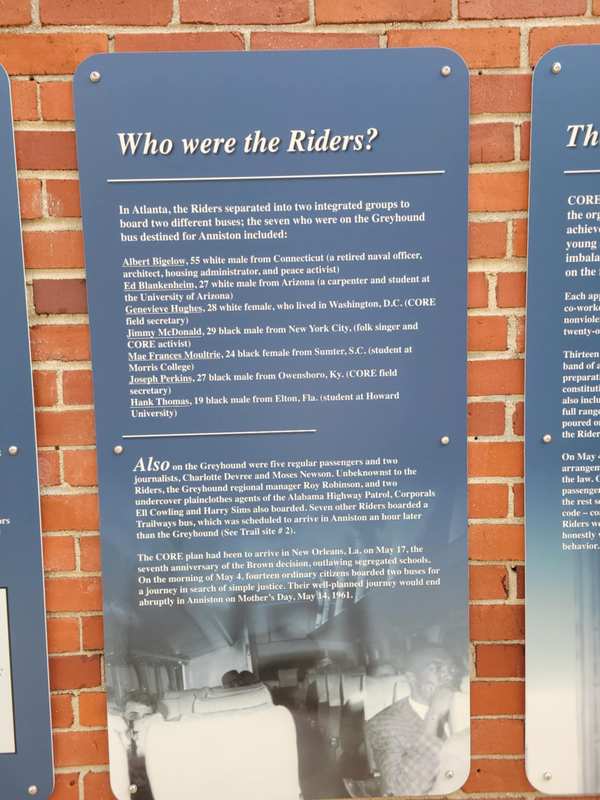
Genevieve Hughes, a White CORE field secretary, rode the Greyhound from Washington; Mae Frances Moultrie, a student at historically Black Morris College, joined the riders in Sumter, South Carolina. As riders lay choking from smoke on May 14, 12-year-old Janie Forsyth, a daughter of grocer Richard Forsyth, brought cups and buckets of water and tended to the injured, while attackers’ families in their Sunday clothes stood and watched. Decades later, as Janie Forsyth McKinney, she joined Freedom Riders Hank Thomas, Charles Person and Bill Harbour at the public meeting on the proposed monument, which drew more than 450 people. [3]
Black history
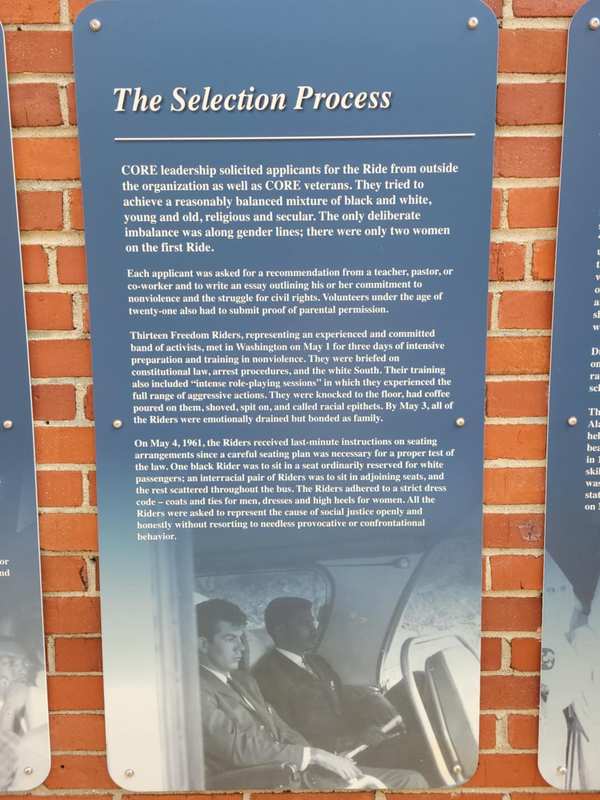
The seven Freedom Riders on the Greyhound were four Black and three White volunteers sponsored by the Congress of Racial Equality. They included CORE field secretary Joe Perkins, Jimmy McDonald, a Black folk singer from New York, and Hank Thomas, recruited by his Howard University roommate. [3]
After White men fired shotguns into the homes of two Black families and into St. John’s Methodist Church on Mother’s Day 1963, the city created a Human Relations Council; by that September “White” and “Colored” signs had come down from fountains and restroom doors, but two Black ministers who tried to integrate the public library were met by a mob of Klansmen; Rev. Reynolds was beaten. Willie Brewster was shot on his way home from the Anniston Pipe Foundry and died; the conviction of Hubert Damon Strange was, the 2023 landscape report says, “the first time during the civil rights era that a White person was convicted of killing a Black person in Alabama.” [3]
Sources
FLAGGED FOR REVIEW: Exhibit panels


Freedom Riders National Monument in AL preserves a piece of American history that the public has trusted the National Park Service to protect and interpret. The exhibit panels at this site have been developed over years by historians, subject-matter experts, and park staff — and are now being reviewed under Secretary's Order 3431.
Among the content targeted: “the greatness of the achievements and progress of the American people.” — language that the administration has flagged for review under its directive to review historically accurate interpretive materials.
Why this matters: The civil rights history documented at Freedom Riders National Monument is not a matter of opinion — it is the factual record of how Americans fought for the rights promised by our founding documents. These events occurred within living memory. The people who marched, sat in, and sacrificed are still alive to tell their stories.
A construction project for the long-anticipated rehabilitation of the Greyhound Bus Depot has been steadily progressing over the las few years. Projected construction completion is in 2028. To meet the current visitor needs, the depot is serving in its current state with pre-existing exhibits to tell the story of the Freedom Riders. Additionally, rangers on site can augment the experiences of the visitors. This an interim solution while the NPS continues plans for building rehab and development of future exhibits.
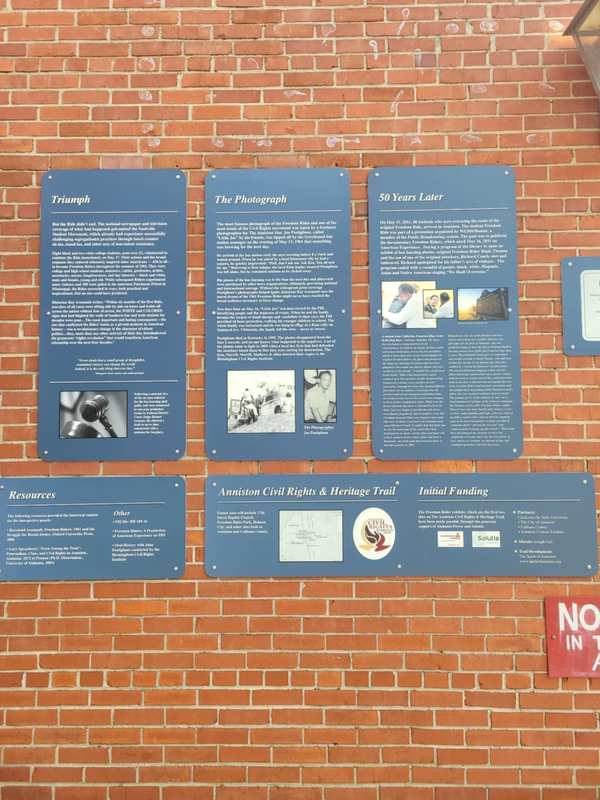
The exhibit on display currently at the depot was designed as a traveling exhibit in conjunction with the 50th Anniversary of the Freedom Rides and as a companion to the PBS documentary film Freedom Riders. This documentary was released in 2012, so the documentary (and likely the exhibit) likely predates the national monument by 5 years. They were temporary exhibits in the depot in the summer of 2021 and were permanently acquired by the NPS somewhere around 2022 or 2023. A segment of the film can be played in the depot on request from visitors to augment their experience.
Park staff think that the content does keep with SO3431 by focusing on "the greatness of the achi...
Photographs attached to this park's records in the leaked NPS review database.




Explore the Full Map
See all 446 entries across every national park and wildlife refuge.
Open Interactive Map →