Lowell National Historical Park
Park History
Sourced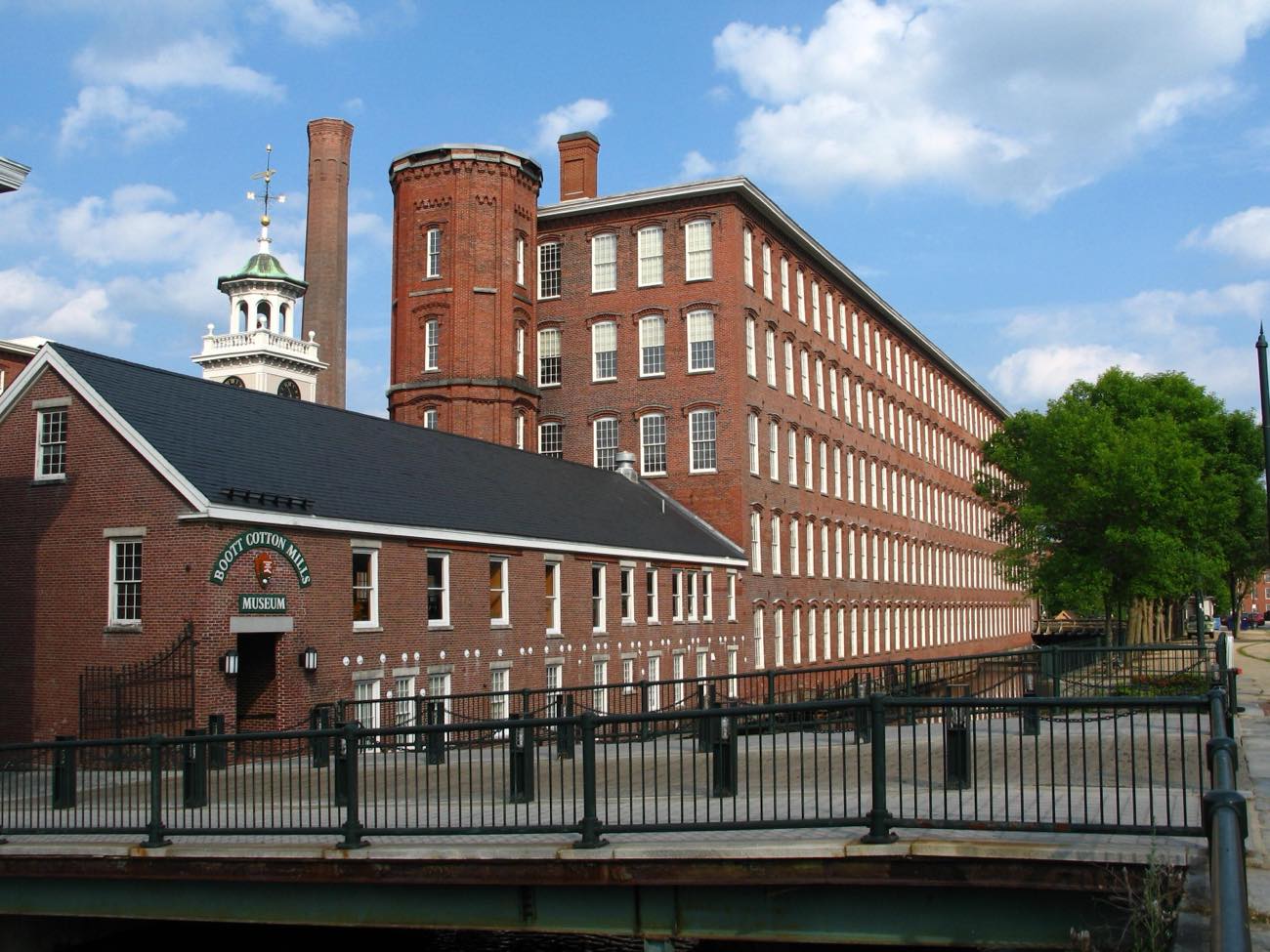
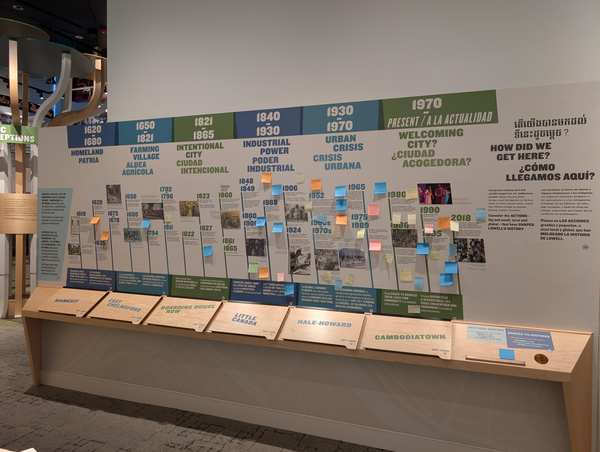
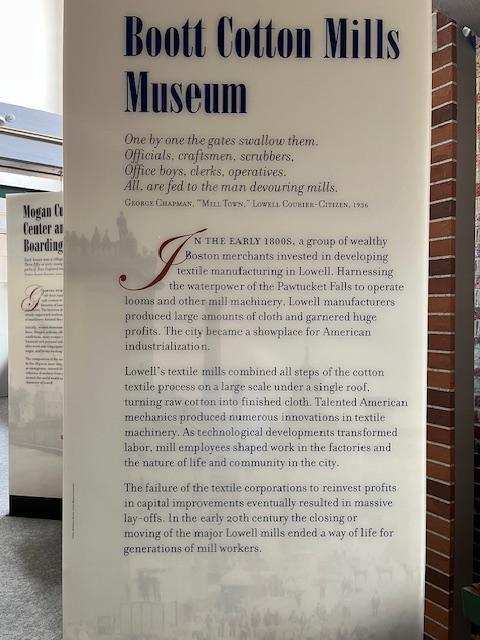
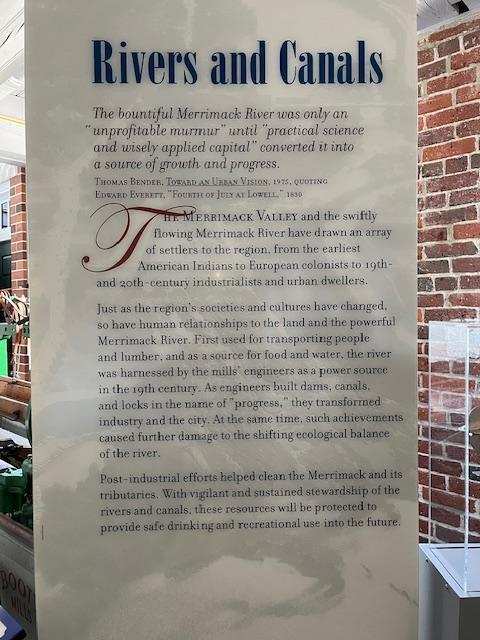
The Merrimack River drops ninety feet over its last forty-eight miles, and more than a third of that fall comes in one mile near its junction with the Concord: Pawtucket Falls. In November 1821 Nathan Appleton, Patrick Tracy Jackson, Kirk Boott, Paul Moody and Warren Dutton walked the grounds at East Chelmsford. Within a year their “Boston Associates” controlled the 400 acres between the Pawtucket Canal and the two rivers; in 1822 the Merrimack Manufacturing Company was chartered, and by 1836 Lowell was the third incorporated city in Massachusetts, with 17,000 people and eight major textile mills employing 7,500 workers. [1]
The park’s 2017 foundation document says Lowell was not, as is sometimes claimed, the birthplace of America’s Industrial Revolution, but the place where its developments converged on a revolutionary scale. It says the early Lowell system was distinguished by state-of-the-art technology, its waterpower system, monumental mill architecture, rational city planning, a dependence on cotton grown by enslaved peoples and, most of all, its workforce of Yankee “mill girls.” As the factories aged, wages were cut and the mill girls gave way to immigrant workers; eight of the city’s ten original textile firms closed in the 1920s and the last two in the 1950s. [2]
In the late 1960s a federal Model Cities program proposed revitalizing the city through its heritage, a 1972 city council resolution adopted an “historical park concept,” and President Carter signed the law creating Lowell National Historical Park on June 5, 1978. [1] Its partner-driven management, the foundation document says, had no direct precedent in the national park system. Its boundary encloses 142 acres, only 19 of them federally owned, and almost all of downtown’s 5.3 million square feet of historic mill buildings have since been rehabilitated. [2]
Indigenous peoples
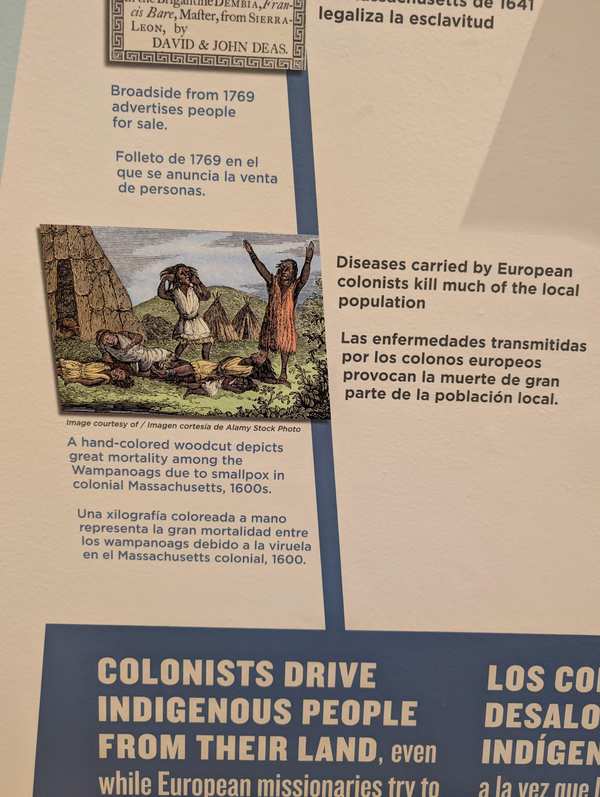
The undated park brochure describes the tribes of the Pennacook Confederacy meeting at Pawtucket Falls each spring to fish and settle tribal affairs. [1] The 2023 historic resource study by Stephanie Fortado and Emily Twarog uses the Western Abenaki name for the river, Molôdomek, rejecting the colonial picture of an empty land. It quotes Gregory Gray Fitzsimons’s estimate that “possibly as much as” 95 percent of the population perished after a 1616–19 plague and the 1633–34 smallpox pandemic. In 1653 the Massachusetts General Court seized land for Chelmsford and set aside about 1,500 acres along the rivers as Indian Territory; King Philip’s War (1675–76) followed, in which, by some counts, 5,000 people died, three-quarters of them Indigenous, and more than a thousand Native people were sold into slavery in the West Indies. In the 1680s Chelmsford settlers bought the Indian land. The Pennacook, the authors insist, did not simply vanish. [3]
Women
To run the mills, the Boston Associates recruited the daughters of Yankee farmers. Living in company boardinghouses under strict codes, women worked twelve-hour days, six days a week, to a bell, for $2.25 to $4.25 a week, minus $1.25 for room and board. They came to earn dowries, help the family farm, or become independent, and from 1840 to 1845 they edited and published the Lowell Offering, an early women’s literary magazine. [1] Sarah Bagley, born in 1806, praised factory work in an 1840 Offering essay; within a few years she had turned to founding the Lowell Female Labor Reform Association, taken over The Voice of Industry, and called the Offering’s editor “a mouthpiece of the corporations.” The 2023 historic resource study quotes Jocelyn Boryczka’s argument that Lowell’s rebellious mill women made revolutionary claims for women’s rights before the 1848 Seneca Falls declaration. [3]
Slavery
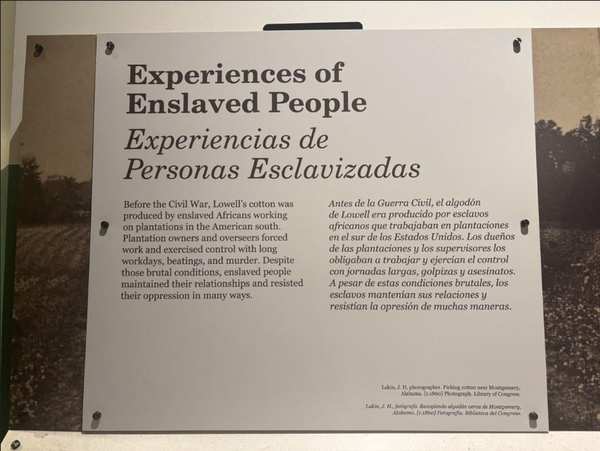
Lowell’s cotton came from plantations worked by enslaved people. The foundation document names that dependence among the defining features of the Lowell system. [2] The 2023 historic resource study goes further: the Boston Associates made their fortunes in trade built on plantation goods, and Israel Thorndike and Nathan Appleton were growing wealthy from southern cotton fields before the Lowell mills began. It quotes historian Edward Baptist’s figure that from the 1830s Lowell’s mills used 5.5 million pounds of cleaned cotton a year, which “consumed 100,000 days of enslaved people’s labor every year,” and notes, following Baptist, that slaveholders also bought northern cloth for enslaved workers. Kirk Boott was vocally proslavery; in 1834 Lowell residents formed men’s and women’s antislavery societies, and historian Sean Griffin counts labor leader Sarah Bagley among reformers “unequivocal” against slavery. Baptist’s work, the authors conclude, makes it impossible to adequately tell Lowell’s history without the history of slavery. [3]
Labor & the New Deal
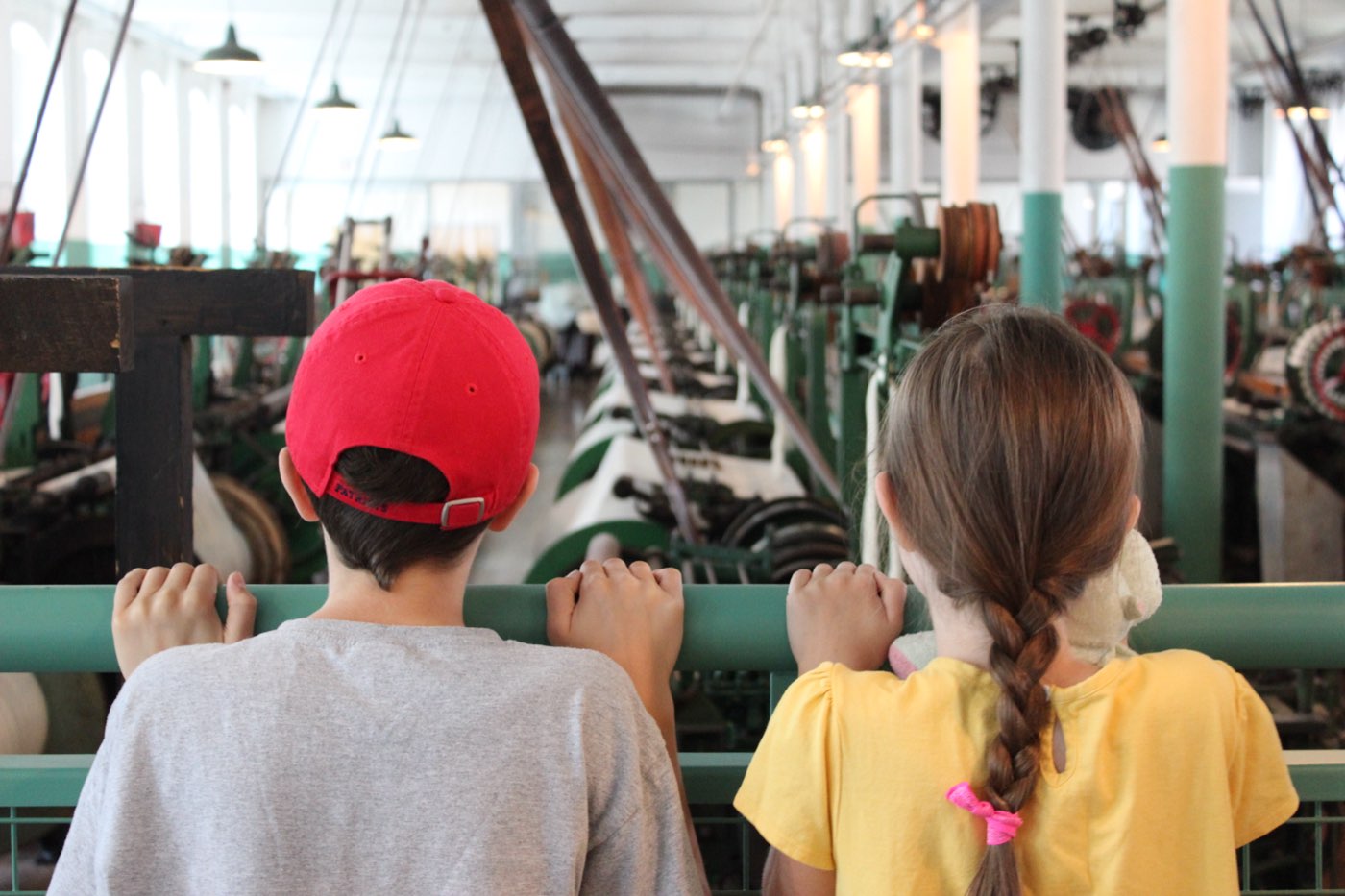
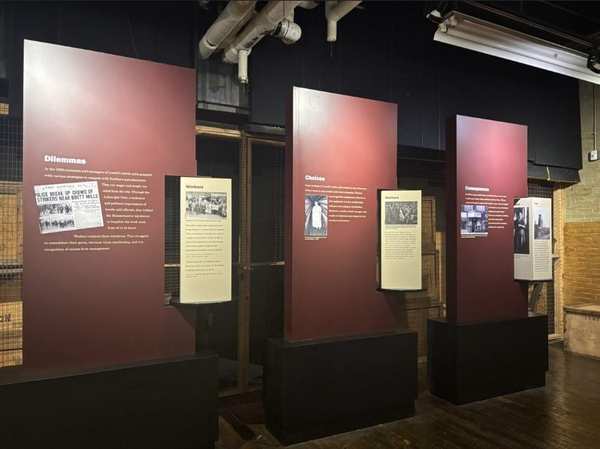
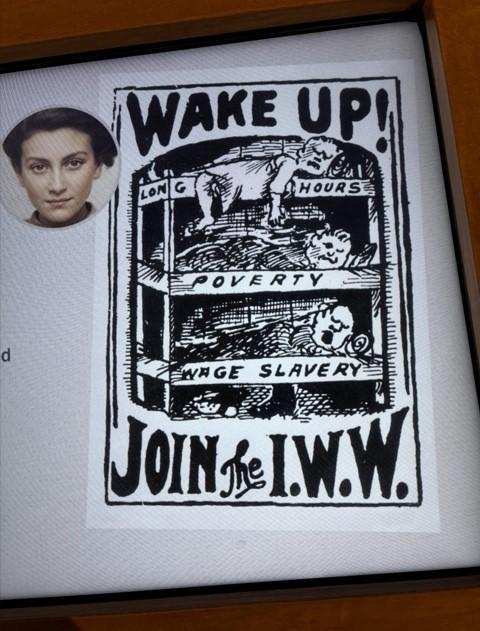
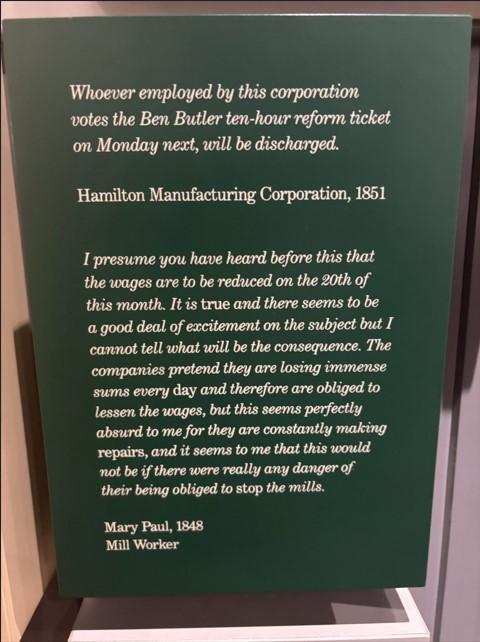
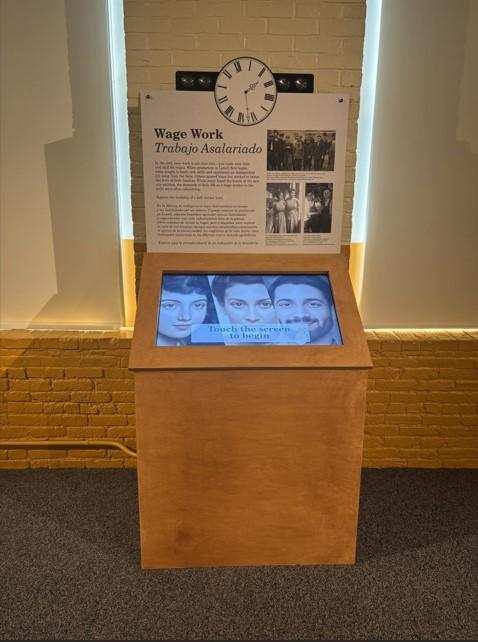
By 1845, the undated park brochure says, operatives were working longer hours under worsening conditions, turning out more cloth for less pay than when the mills opened. [1] In 1834 eight hundred women walked out over a 15 percent cut in piece rates, invoking ancestors who “preferred privation to bondage”; the 2023 study reads that language as reflecting a wider working-class wish to be distinguished from enslaved Black people. [3] The strike failed, but the brochure traces the Factory Girls Association of 1836 to it. Walkouts in 1853 cut the workday at Lowell and Lawrence from thirteen hours to eleven; a citywide strike failed in 1903, and in 1912 the Industrial Workers of the World won raises of six to eight percent. Irish laborers led by Hugh Cummiskey walked from Boston in 1822 to dig the canals, followed by French-Canadians, Greeks, Portuguese, Poles, Jews, Armenians, an African American community in the 1870s, and later Asian and Hispanic newcomers. [1]
Sources
- NPSHistory.com: Lowell National Historical Park archive page — overview (from an undated NPS brochure) and establishment block
- Foundation Document, Lowell National Historical Park, Massachusetts (NPS, September 2017)
- Fortado & Twarog, Lowell: The Spindle City — Historic Resource Study (NPS/OAH, September 2023)
Film Pulled From Circulation: Film/video (8 items)
The story of Lowell National Historical Park is inseparable from the lives of the enslaved people whose forced labor grew the cotton that Lowell's mills turned into cloth. For generations, their stories went untold. The interpretive materials now targeted for review were created to ensure these voices would finally be heard.
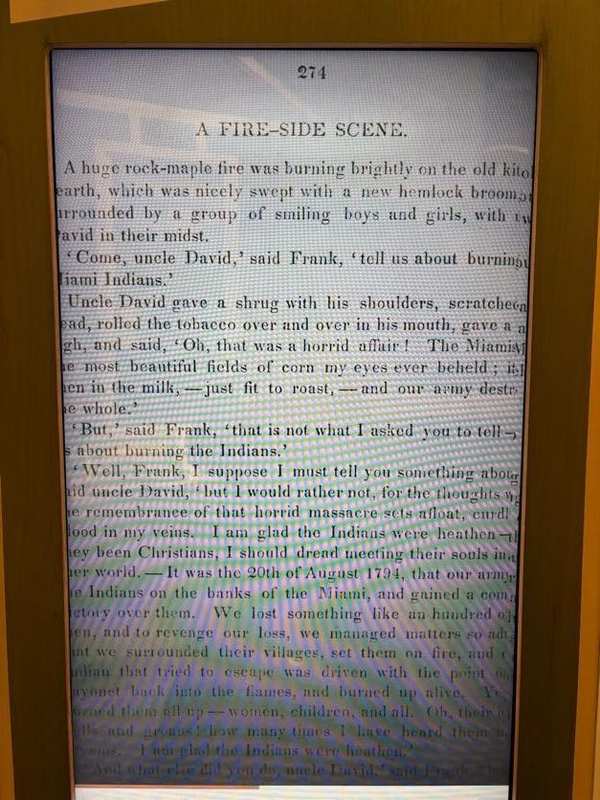
From the internal review records: “b. Video 4, Image of Lowell Offering – description of burning Native Americans (Attachment: 1b – Video 4)”
Why this matters: Lowell’s mills ran on cotton grown by enslaved people, and the flagged films also address the treatment of Native Americans, including an image from the Lowell Offering with a description of Native people being burned, and the lives of indentured servants. These are hard parts of the industrial story the park exists to tell. Pulling the films takes them out of what visitors see. [NPS review record]
- 2 films no longer shown
Films would not upload to reporting tool. To request the videos please reach out to the park
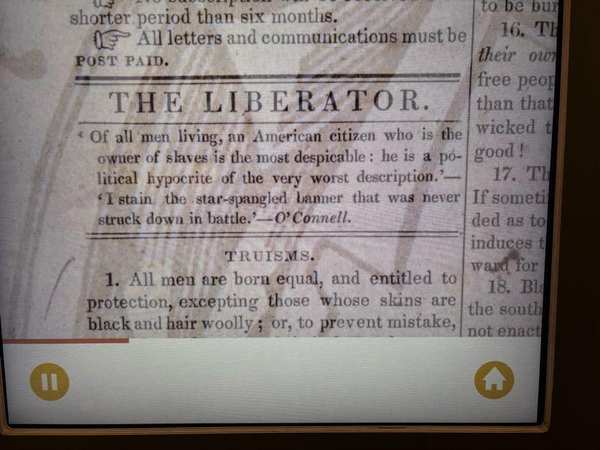
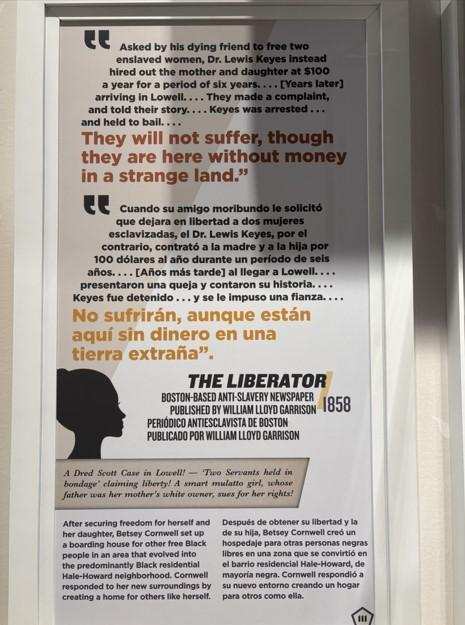
1 – Cultural Expression) a. Video 2, Image of a newspaper – critique of slave owners (Attachment: 1a – Video 2) b. Video 4, Image of Lowell Offering – description of burning Native Americans (Attachment: 1b – Video 4)
2 - Adapt a. Video 1 – addresses treatment of Native Americans (No attachment) b. Video 2 – images of enslaved people (No attachment) c. Video 3 – addresses treatment of indentured servants
The Continuing Revolution – critique of harm caused by industrial byproducts and exploitation of natural resources around the 1:30 and 12:30 marks (URL: https://www.youtube.com/watch?v=HdVU85zBZXE)
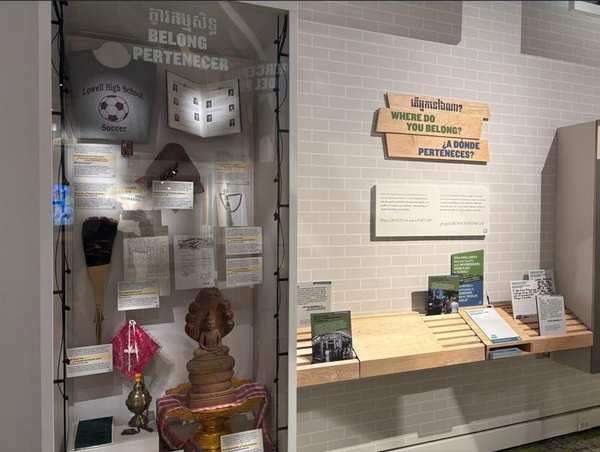
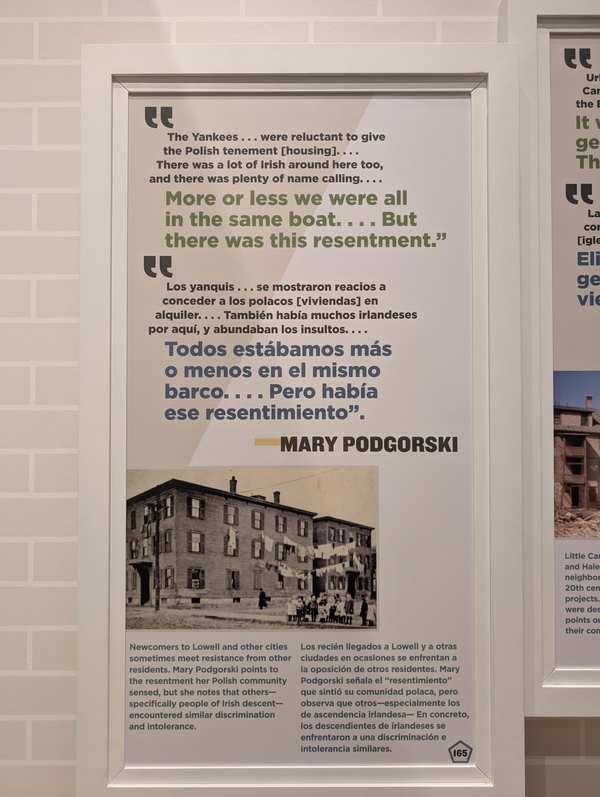
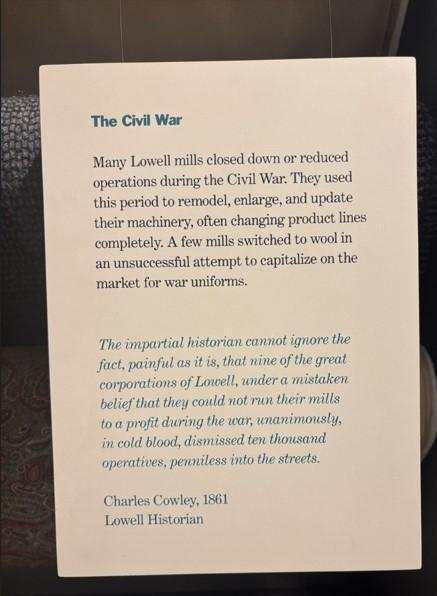
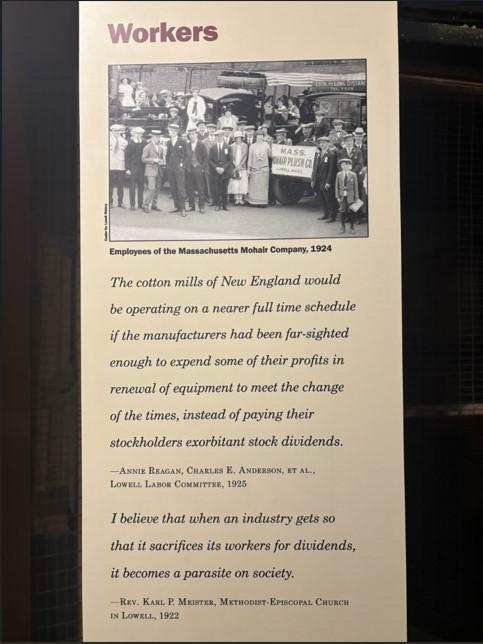
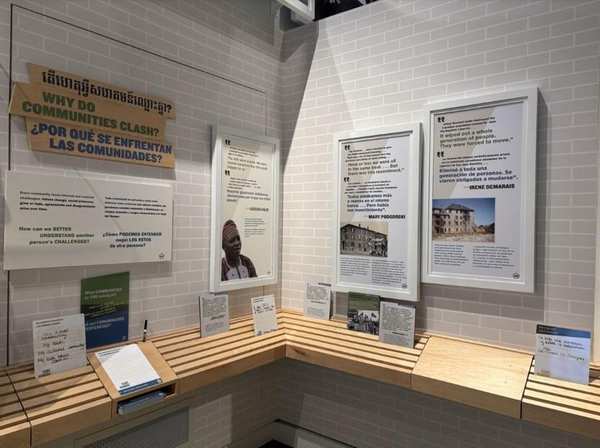
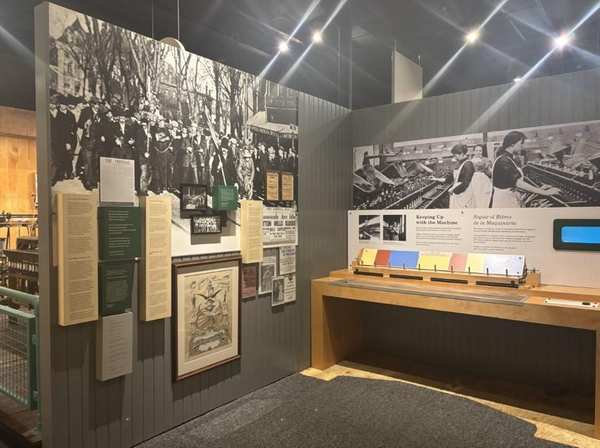
Photographs attached to this park's records in the leaked NPS review database.
News Sources
VerifiedExplore the Full Map
See all 446 entries across every national park and wildlife refuge.
Open Interactive Map →