Muir Woods National Monument
Park History
Sourced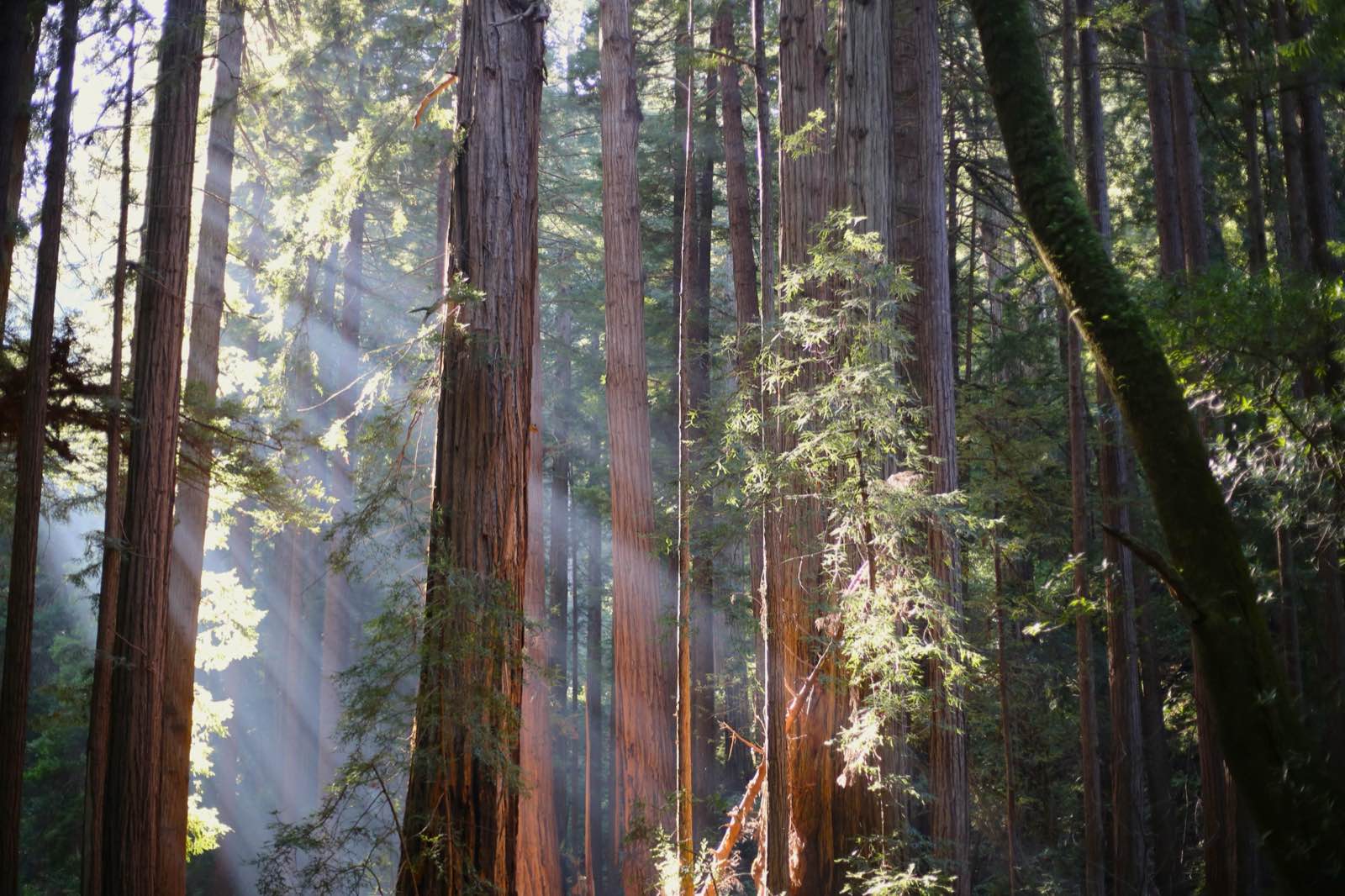
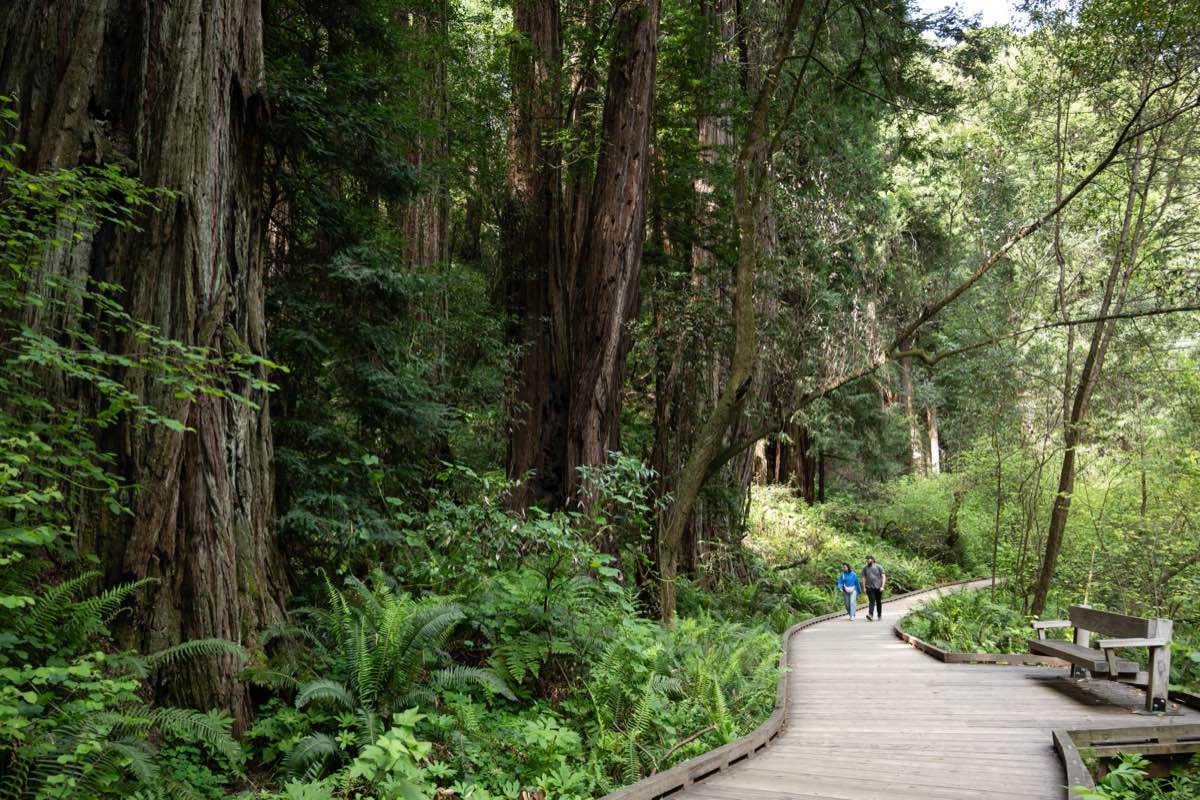
In a narrow canyon on the southern slope of Mount Tamalpais, a few miles north of San Francisco, Redwood Creek runs beneath one of the last old-growth coast redwood forests in the Bay Area. The canyon was never logged because it was hard to get to. In Bohemian and Cathedral groves, one tree stands 252 feet tall and another is 14 feet wide. Most mature trees are 500 to 800 years old; the brochure says some are at least 1,000, the Foundation Document Overview nearly 1,000. Before fire suppression began in the 19th century, wildfire occurred here every 20 to 50 years, and coho salmon and steelhead still climb the creek each winter to spawn. [1] [2]
In 1905 William Kent and his wife, Elizabeth Thacher Kent, bought the canyon for $45,000. When a water company moved in 1907 to condemn part of it for a reservoir, the Kents gave the forest to the federal government, and on January 9, 1908, President Theodore Roosevelt proclaimed it the tenth national monument under the Antiquities Act, the first near a major city and the first made of formerly private land. [1] [2] [3] Roosevelt suggested naming it for Kent; Kent chose John Muir, who called it the best tree-lover’s monument in all the forests of the world. The 2006 Historic Resource Study notes what might at first seem a contradiction: Kent strongly supported the Hetch Hetchy dam project that Muir opposed and, after becoming a congressman in 1910, played an active, influential role in its success. The 2017 Foundation Document Overview counts more than a million visitors a year. [1] [3] [2]
Indigenous peoples
Redwood Canyon lies in the homeland of the Coast Miwok, whose earliest known sites in Marin, along the shores of San Francisco and San Pablo bays, date back 7,000 years. The Huimen were the Coast Miwok tribe of the Redwood Creek watershed. The Miwok called the redwoods cho-lay; the name Tamalpais is most probably Miwok, and they held its summit to be a dangerous place inhabited by spirits. No archeological evidence of habitation has been found within or near the monument, the 2006 study says, but the Coast Miwok most likely hunted, fished and gathered there. [3]
After Mission San Rafael was founded about 1817, the Miwok were decimated by disease and forcibly relocated, and the mission lands meant for them were sold to speculators and ranchers; by 1840 Marin’s Miwok population had fallen by an estimated 90 percent. The Coast Miwok survived, and today, with people of Southern Pomo descent, form the federally recognized Federated Indians of Graton Rancheria. [3]
Labor & the New Deal
In the fall of 1933 a Civilian Conservation Corps camp, NM-3, went up beside the monument, joined that November by 126 men, mostly from New York. The following April they left for Idaho and were replaced by a company made up mainly of veterans aged 35 to 64. Averaging about 200 men, the CCC rebuilt trails, built log footbridges and benches and a new entrance gate, and replanted ferns trampled by hikers and picnickers; Custodian J. Barton Herschler called 1933–34 the greatest period of development the monument had seen. [3]
The last major project of the CCC era, the 1940 Administration-Concession Building, was the largest building yet at Muir Woods. In the postwar Mission 66 era the Park Service removed many CCC features, including the main gate, signs, bridges and comfort stations. [3]
Sources
- NPSHistory.com: Muir Woods National Monument archive page — overview (NPS brochure text) and establishment block
- Foundation Document Overview, Muir Woods National Monument, California (NPS, 2017)
- Auwaerter & Sears, Historic Resource Study for Muir Woods National Monument (Olmsted Center for Landscape Preservation for NPS, 2006)
CONFIRMED REMOVED: Interpretive materials
In 1906, President Theodore Roosevelt proclaimed Muir Woods National Monument, protecting one of the last remaining stands of old-growth coast redwoods near San Francisco.
The monument was named after conservationist John Muir, whose preservation efforts helped save the ancient trees. Coast redwoods in Muir Woods reach over 250 feet tall and are among the tallest living things on Earth. The grove remained relatively isolated and protected due to its remote location and conservation efforts by local preservationists.
The administration has flagged for review content that includes the language: “Saving Muir Woods”, references to a “sticky notes” annotation process from 2021, and the exhibit’s historical timeline content.
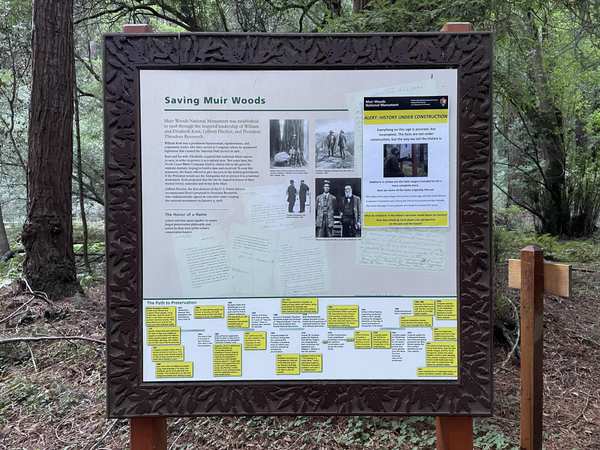
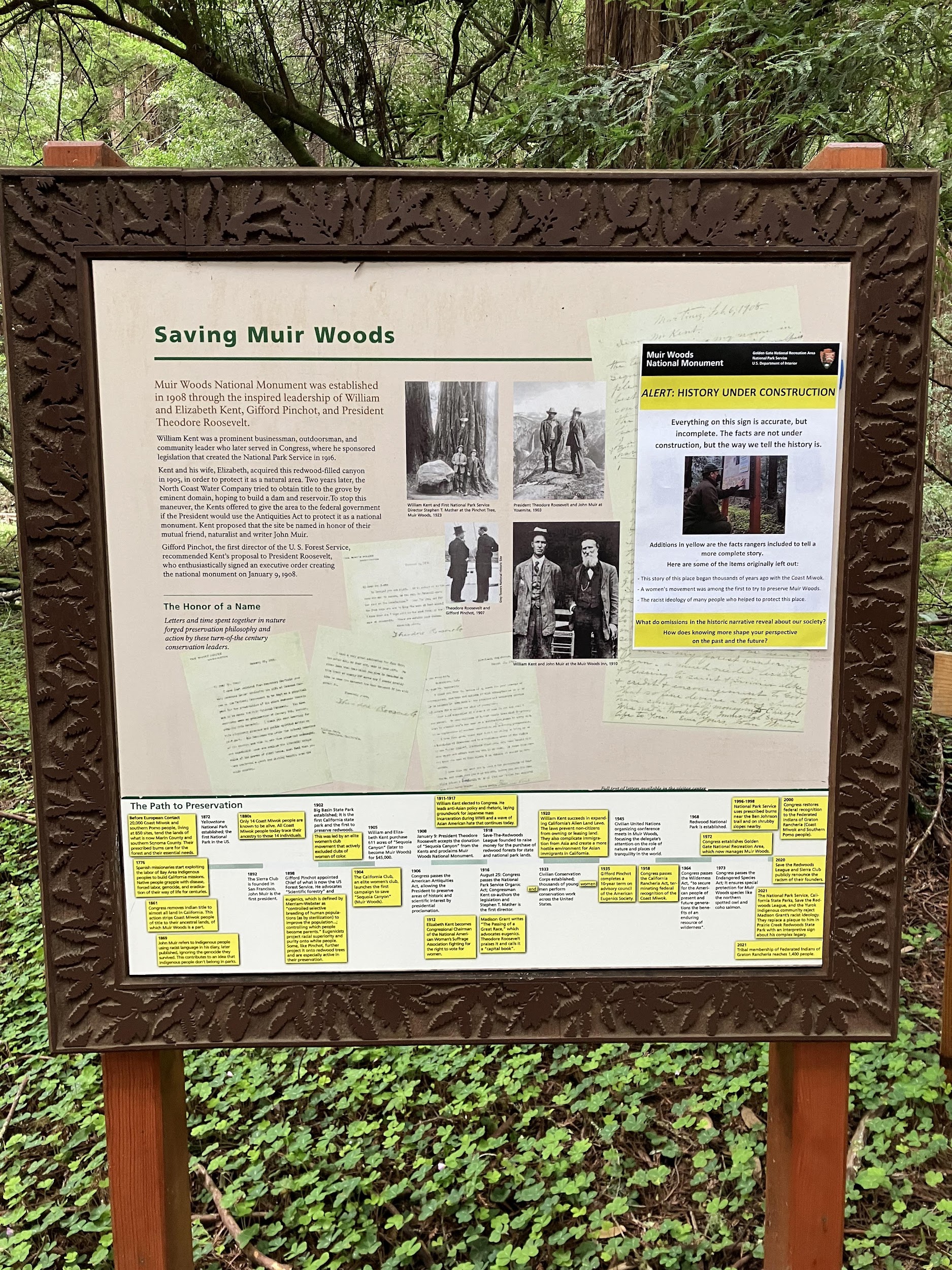
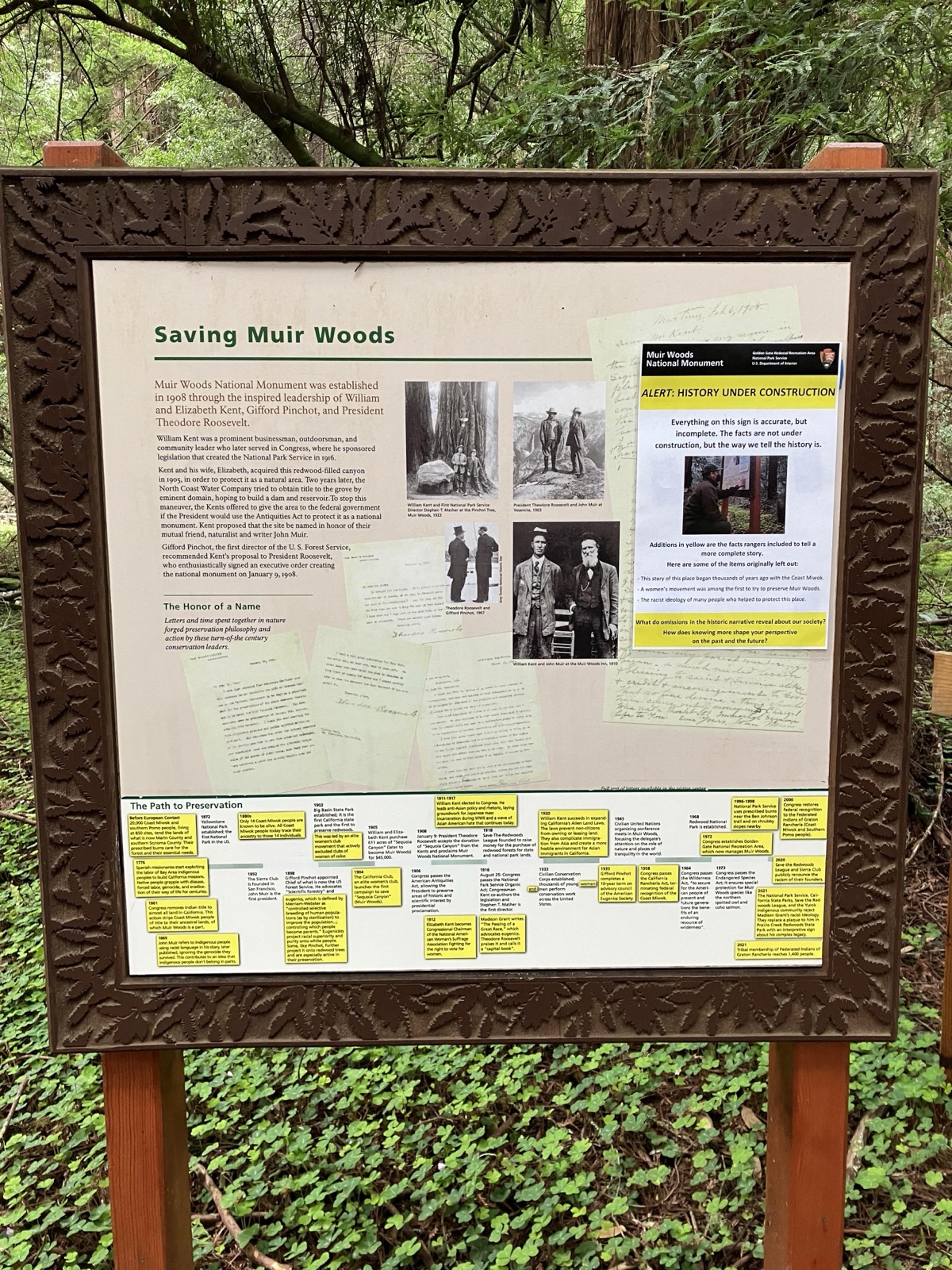
Why this matters: Park staff added notes to the “Saving Muir Woods” timeline in 2021 because the original sign was, in their words, “true but incomplete.” The notes named the Coast Miwok and Southern Pomo as the land’s original caretakers, said their lands were taken from them, and described the anti-Asian politics and eugenics views of figures in the park’s founding story. Removing the notes returns the sign to the version staff had already judged incomplete. [KQED]
- “History Under Construction (part of Saving Muir Woods)” — removed
- “Are We Protecting Redwoods?” — removed
- Sign; reason: Disparages Americans past or living; now: At the park
- Sign; reason: Unrelated to beauty, abundance, and grandeur of the natural landscape; now: At the park
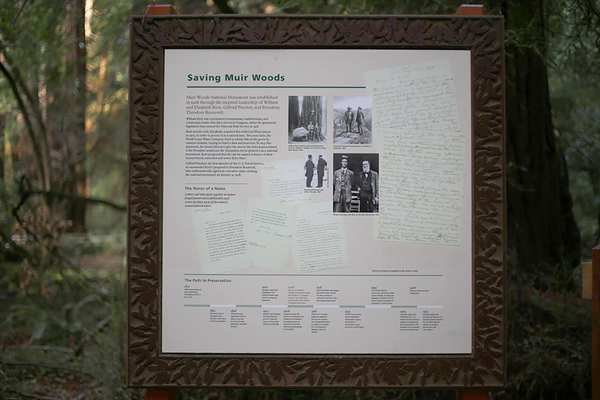
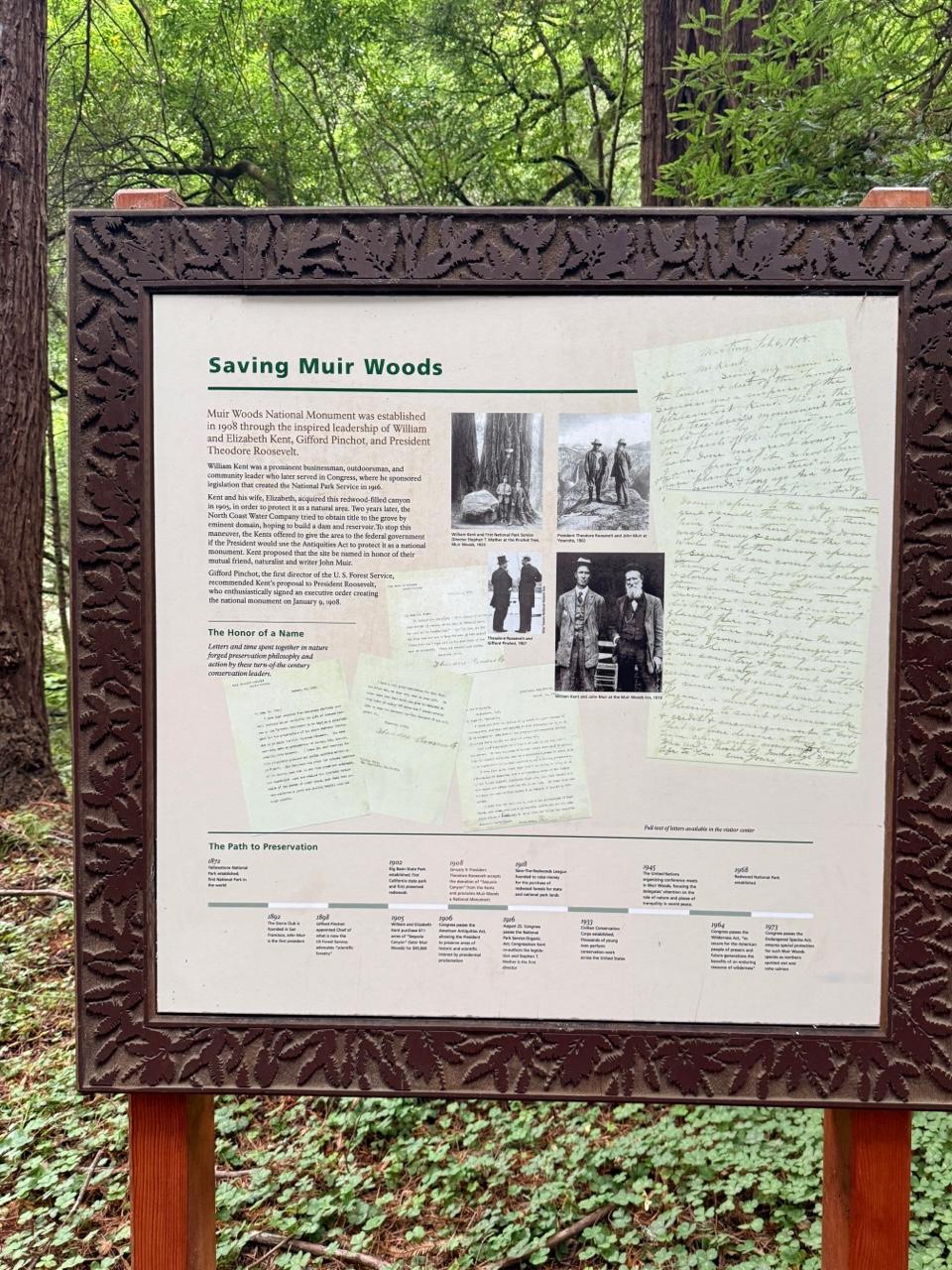
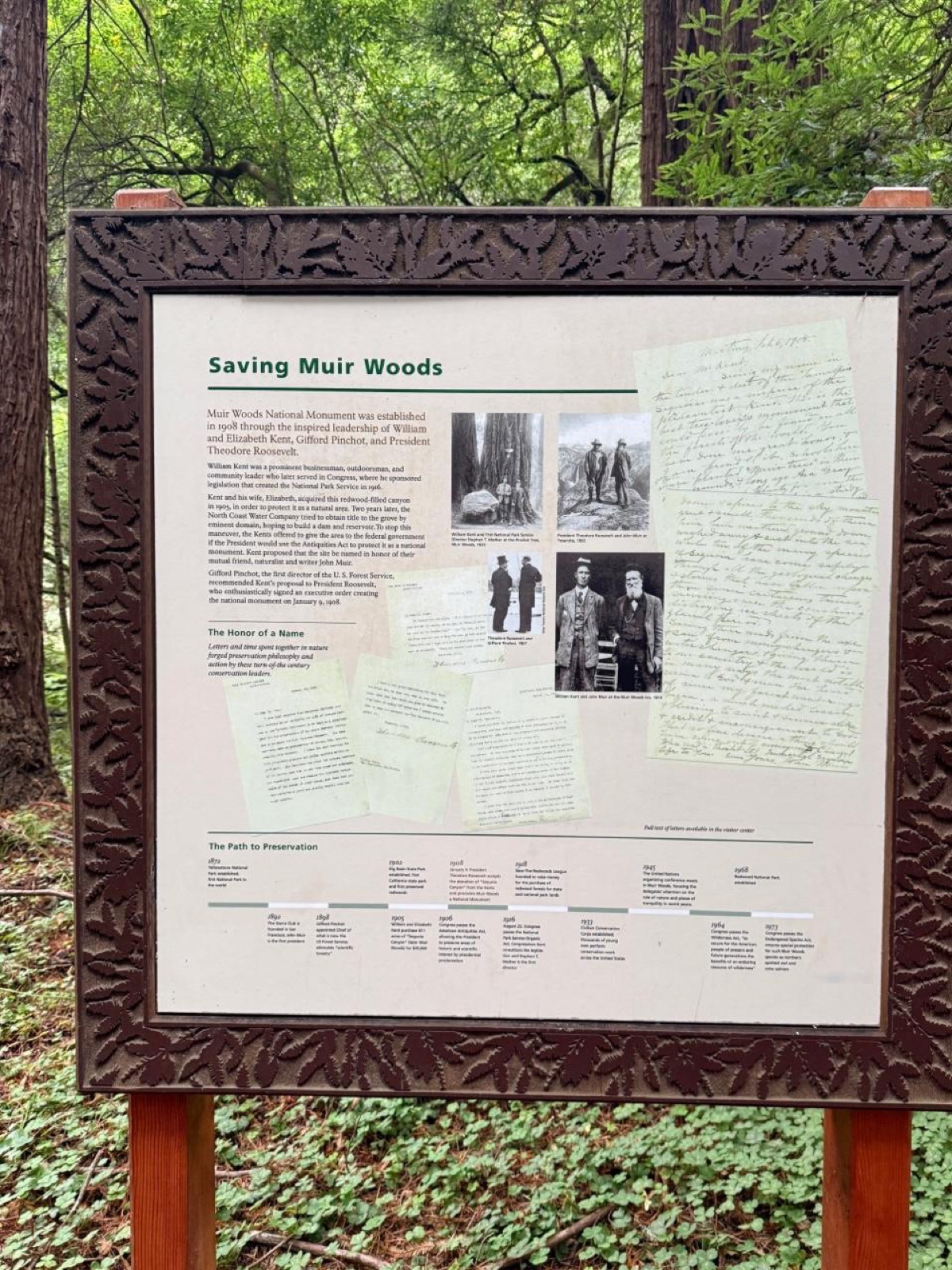
“Saving Muir Woods.”
The original sign was installed in ~2004 (see attached sign labeled “original”). In 2021 park staff annotated the timeline on the exisiting sign, first with “sticky notes,” and later with a vinyl sticker overlaying the timeline of the original sign as well as a laminated piece of paper explaining why the sign was annotated to add historical information missing in the original sign. A photo of the full sign as seen today is attached, as well as a PDF of the timeline with annotations.
If the timeline is determined to need changes, we would like to edit those specific “sticky notes” rather than remove all of the updates to the timeline. If the entire annotated timeline needs to be removed, we can revert to the original sign (we have no concerns about the original contents).
Note: this sign is scheduled to be replace within the next year as part of Exhibit Cyclic Maintenance; the current intention is to make some edits to the sign but otherwise retain the overall theme and content.
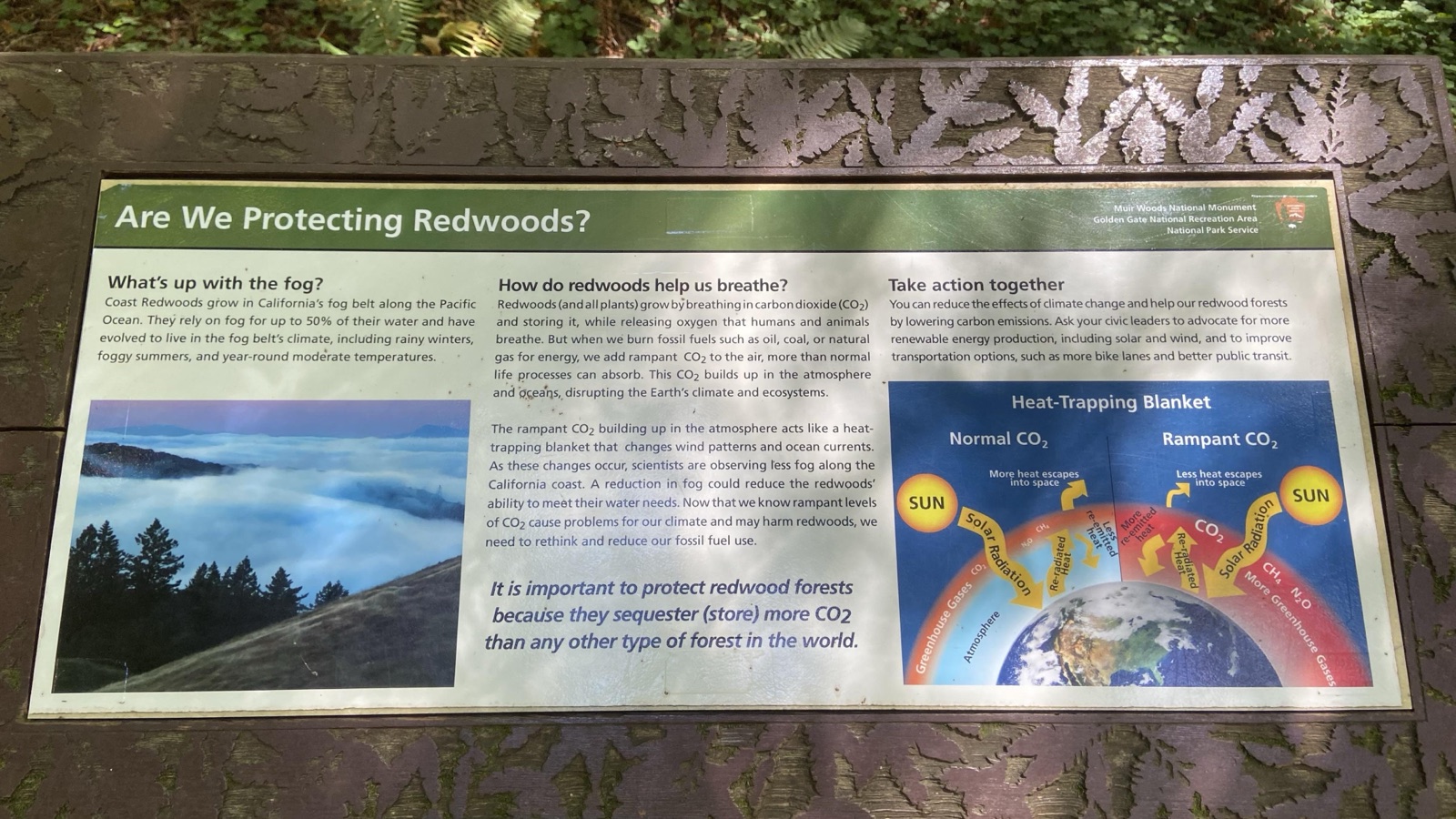
Photos courtesy Save Our Signs (public domain)
News Sources
VerifiedExplore the Full Map
See all 446 entries across every national park and wildlife refuge.
Open Interactive Map →