Salt River Bay National Historical Park and Ecological Preserve
Park History
Sourced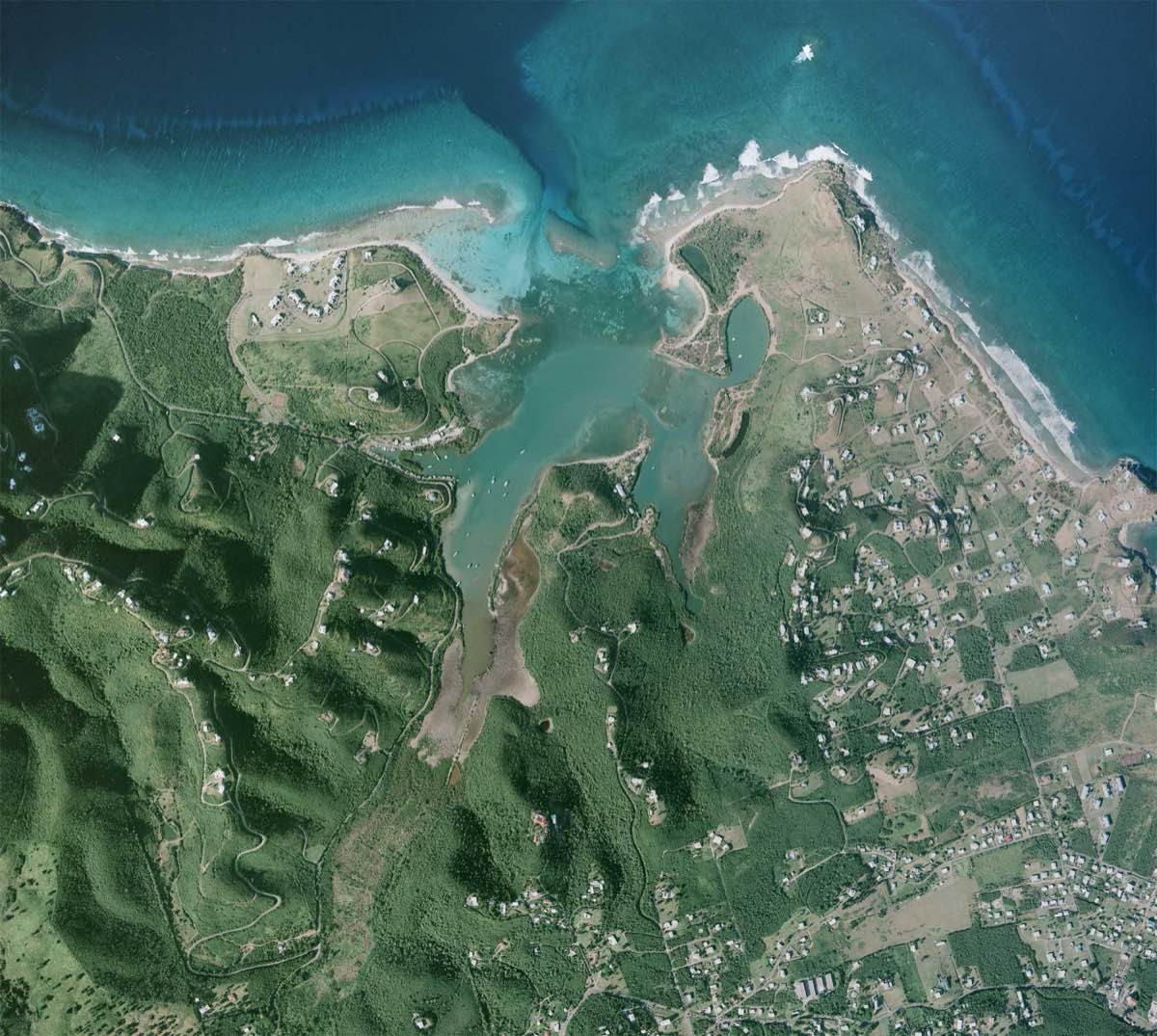
On the north coast of St. Croix, an upland watershed drains into Salt River Bay, a bay fringed with some of the largest mangrove forests left in the Virgin Islands and with coral reefs, opening onto a submarine canyon as deep as 350 feet, carved by an ancestral river 30,000 years ago when the sea stood 300 feet lower. Beyond it the seafloor falls away into the Virgin Islands Trough. The bay’s waters were designated a National Natural Landmark in 1980 and are home to 27 species listed as rare, threatened or endangered. [1]
Congress created the 1,015-acre park on February 24, 1992, to be managed jointly by the National Park Service and the Government of the Virgin Islands. Its foundation document calls it a confirmed site where members of Columbus’s second voyage landed on what is now U.S. territory in 1493, and the scene of the earliest recorded armed resistance by Amerindians to European colonization. Fort Salé, first built in 1641 to guard the inlet, is in its words one of the earliest and few surviving European earthen fortifications in the New World. [2] [1]
The park’s own account is that every major period of human habitation in the Virgin Islands is represented here, from several South American Indian cultures, among them the Taíno and Island Caribs, through the 1493 encounter, European colonization and enslaved West Africans and their descendants, a story revealed by more than a dozen major archeological investigations since 1880 and by historical research. [3]
Indigenous peoples
South American hunter-gatherers reached the Virgin Islands about 4,500 years ago, the 2006 brochure says; by 2,000 years ago the first of three pottery-making peoples lived at Salt River Bay, and after 700 the Taíno gradually absorbed the Igneri. Their ball court, unearthed in 1923, is the only one known in the Lesser Antilles, the brochure says. The Taíno called the island Ay; the Kalinago (the brochure’s Caribs) called it Cibuqueira. [1] [4]
On November 14, 1493, over twenty armed men from Columbus’s fleet visited a Kalinago village and seized enslaved Taíno women and children they claimed to have liberated, then fought villagers in a canoe; each side lost a man, and Columbus named the place Cape of the Arrows. The brochure reports a 1512 Spanish royal decree ordering the extermination of St. Croix’s Caribs, and disease helping depopulate the island by 1590; the park’s website now calls this the Spanish capture and removal of Amerindian peoples. [4] [1] [3]
Slavery
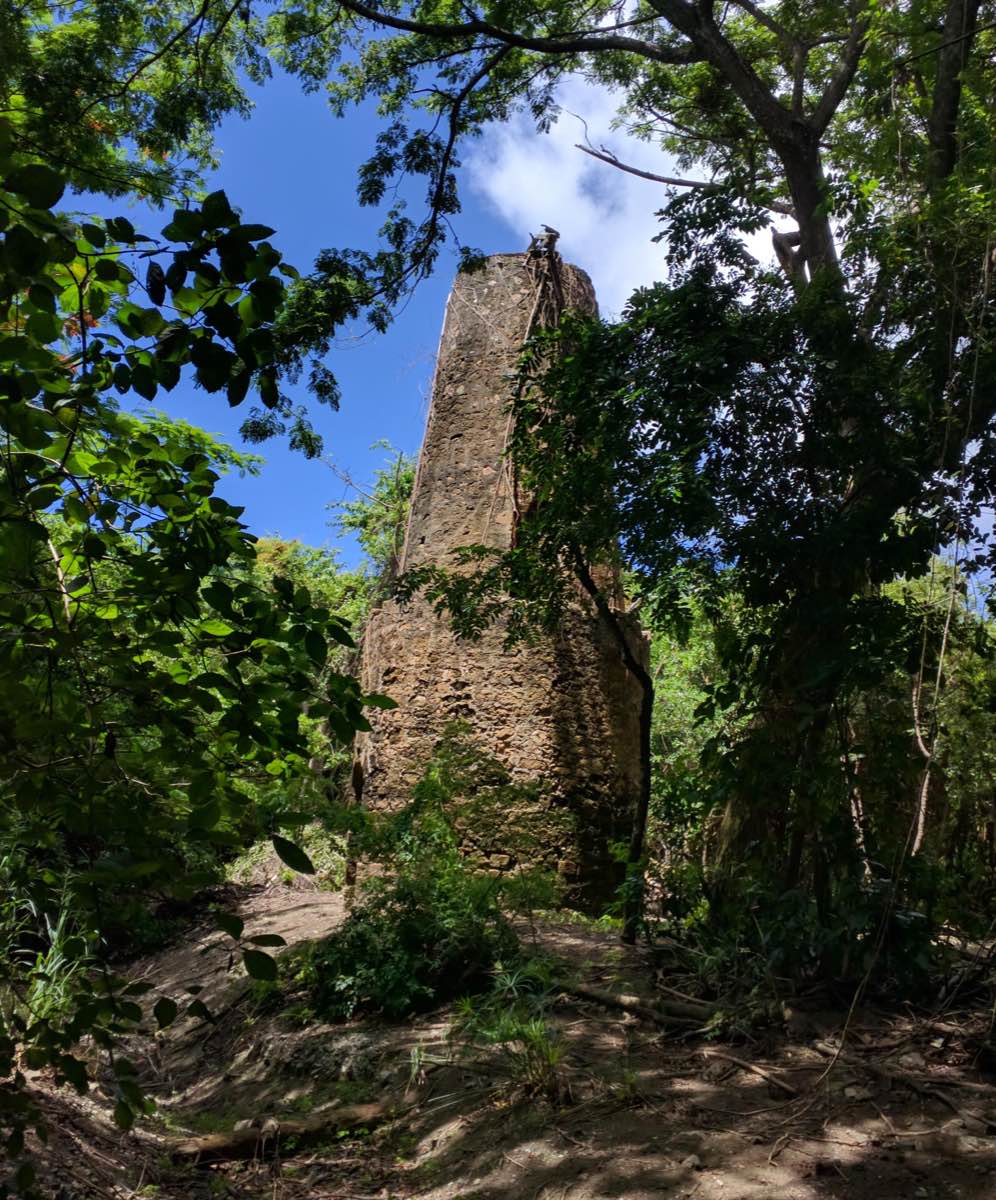
Denmark ruled St. Croix from 1733 to 1917 and made it a major sugar-producing island; the Danish West Indies Company built sugar and cotton plantations and a trade that included enslaved people transported from West Africa. Colonists cleared the dense forest around the bay for cotton, tobacco and sugar, and the Danish period left at least six sugar plantations in the Salt River Bay area. A brick and coral-block well tower, built about 1780–1800 for Estate Morningstar, used wind to draw water to irrigate the estate’s crop lands. In 1788 the Danes built a customs post to stop sugar, molasses and rum being smuggled out through the bay. [4] [1]
Across St. Croix, enslaved people made up more than 90 percent of the population before 1800, and in 1812, the peak year, 175 sugar plantations held 26,000 enslaved people, according to a 2012 Park Service plan for nearby Buck Island; emancipation came in 1848. [5]
Climate & environment
Salt River ran year-round when Columbus anchored here; it now flows only after heavy or sustained rain, which the brochure attributes to centuries of land use and regional climatic change. The bay’s mangroves are still recovering from Hurricane Hugo in 1989, and the 2021 landscape inventory lists sea-level rise, coastal erosion and hurricanes among the natural stressors on them; Hurricane Maria damaged park buildings in 2017. The 2015 foundation document projects sea level at the park rising 0.33 to 1.57 feet by 2050 and 0.59 to 4.92 feet by 2100, which, with stronger storms, could threaten the park’s archeological and historic sites. [1] [4] [2]
Sources
- NPSHistory.com: Salt River Bay NHP & Ecological Preserve archive page — overview (from the 2006 NPS brochure) and establishment block
- NPS, Foundation Document, Salt River Bay National Historical Park and Ecological Preserve (2015)
- NPS, Salt River Bay NHP & EP, History & Culture (nps.gov, last updated May 17, 2022)
- NPS, Cultural Landscapes Inventory: Salt River Bay National Historical Park and Ecological Preserve (2021)
- NPS, Draft General Management Plan/EIS, Buck Island Reef National Monument (March 2012), ch. 3 St. Croix history, pp. 3-51–3-52
FLAGGED FOR REVIEW: Interpretive materials
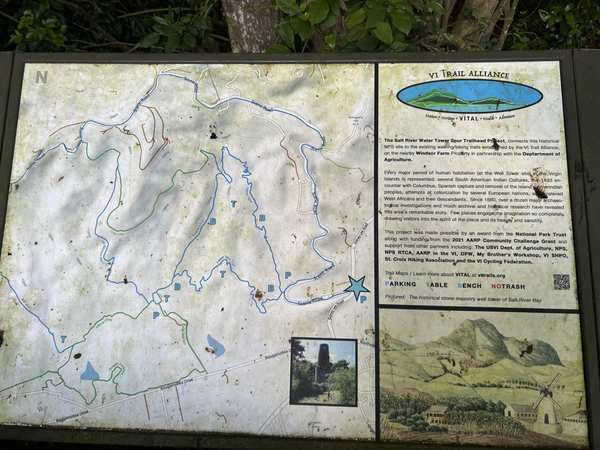
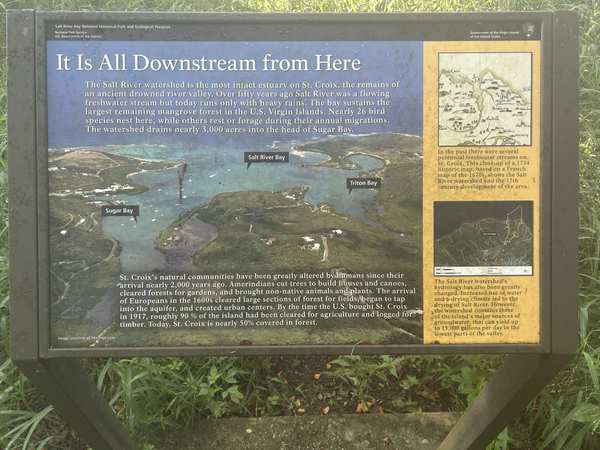
At Salt River Bay National Historical Park and Ecological Preserve, the National Park Service has worked for years to document and interpret the history of slavery at this site — a history that was ignored for much of the park's existence. The exhibits, waysides, and publications now under review represent a hard-won commitment to telling the complete American story.
Among the content targeted: “South American Indian Cultures” — language that the administration has flagged for review under its directive to review historically accurate interpretive materials.
Why this matters: The history of slavery at Salt River Bay National Historical Park and Ecological Preserve was suppressed for generations. The materials now being targeted represent decades of work by historians, descendants of enslaved people, and community advocates to ensure these stories are finally told. Removing them would re-erase history that has only recently been acknowledged.
Three waysides at Salt River Well Tower area. One is written and produced by the Virgin Islands Trail Aliance. This wayside Represents the Indigenous peoples as “South American Indian Cultures” which is inaccurate.
Water for power and life mentions enslavement which could be considered by some to be disparaging or inappropriate to some.
It's all downstream mentions climate and human related factors that have altered the Salt River Bay ecosystem.
Explore the Full Map
See all 446 entries across every national park and wildlife refuge.
Open Interactive Map →