Selma to Montgomery NHT
Park History
Sourced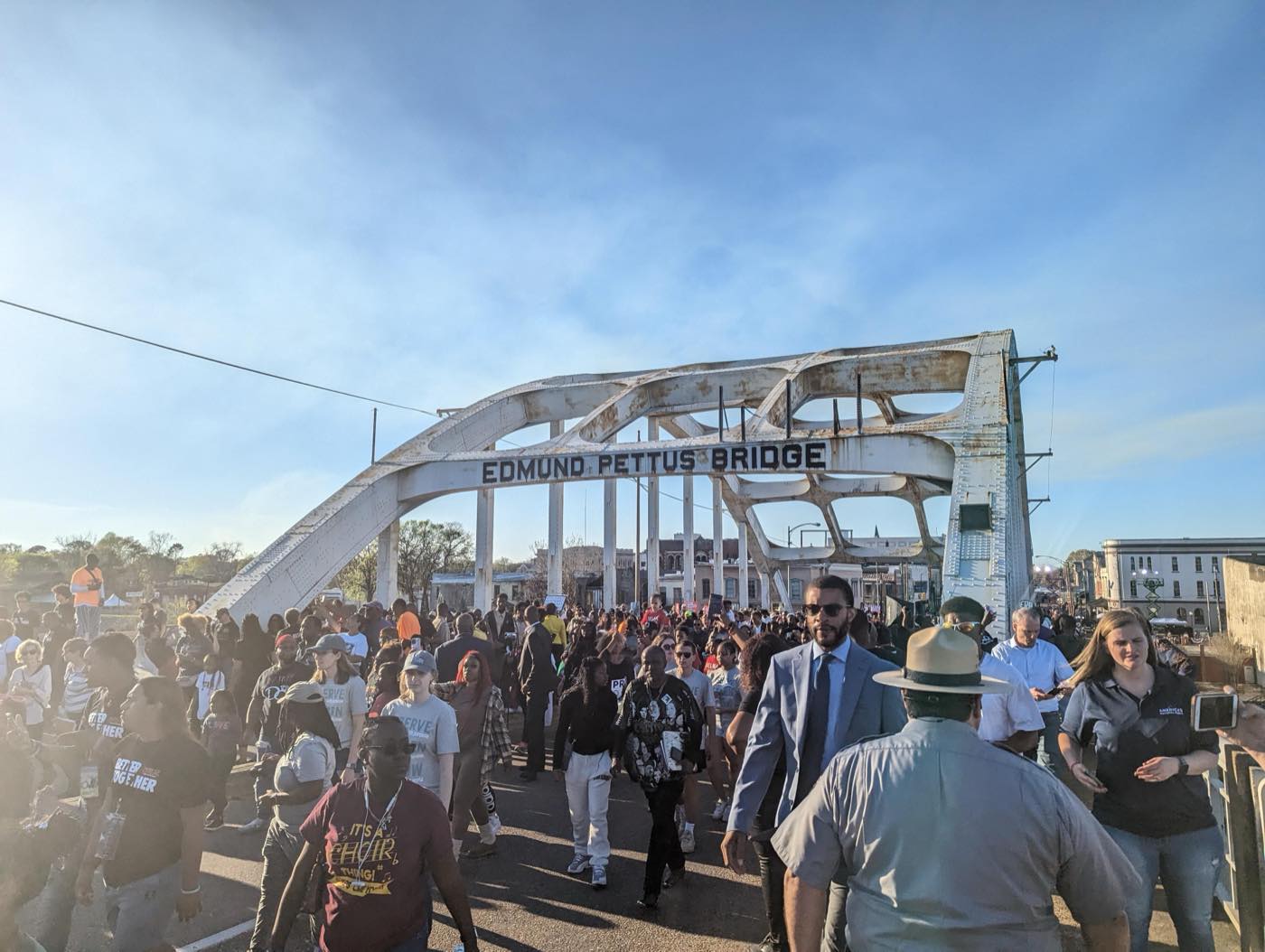
The Selma to Montgomery National Historic Trail follows the 54-mile route of the 1965 voting rights marches: from Brown Chapel African Methodist Episcopal Church in Selma, over the Edmund Pettus Bridge and east along U.S. Highway 80 through Dallas and Lowndes counties to the Alabama State Capitol in Montgomery. Along the highway, the 2015 foundation document notes, row-crop fields, pastures and woodlots remain largely intact, reflecting the agrarian land use of 1965. Congress established the trail by a law signed on November 12, 1996. [1]
Selma became the focus because of what had been done to its voters. African Americans made up about half of Dallas County’s voting-age population, but since 1901 the county and state had kept them from the polls with literacy tests, poll taxes and intimidation; in 1961 only 156 of the county’s 15,000 voting-age African Americans were registered. The 2008 park brochure calls the final march the climactic event of the modern civil rights movement, and the foundation document names the marches an important catalyst for the Voting Rights Act, signed August 6, 1965. [2] [1]
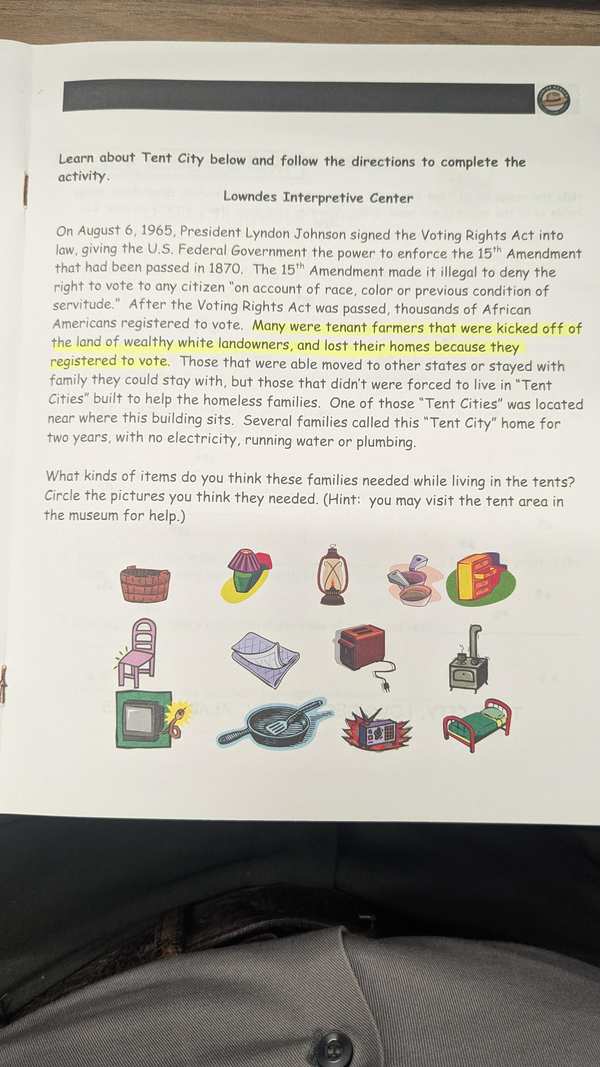
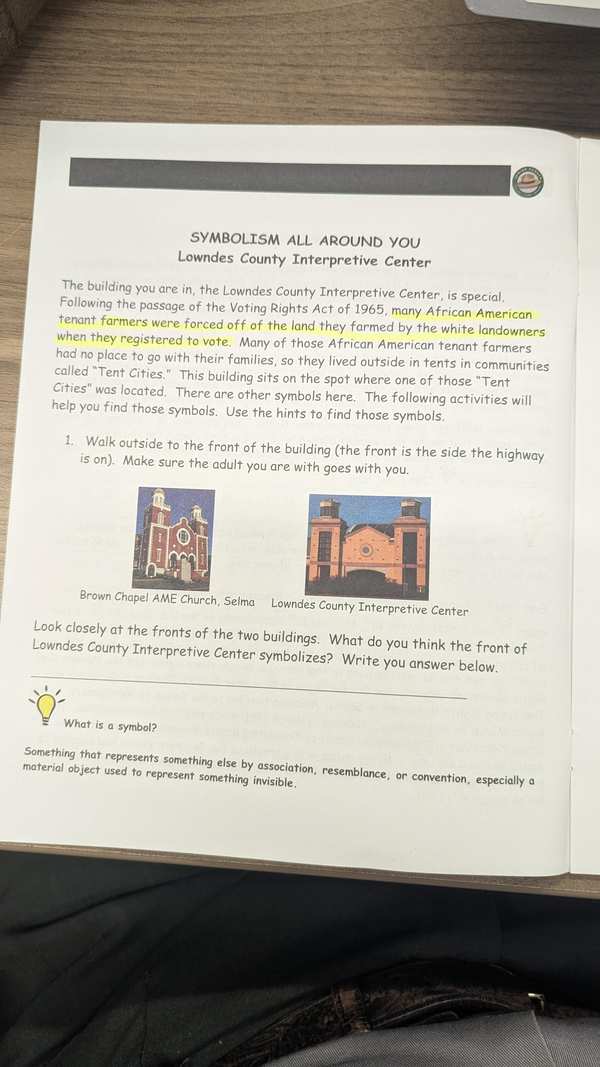
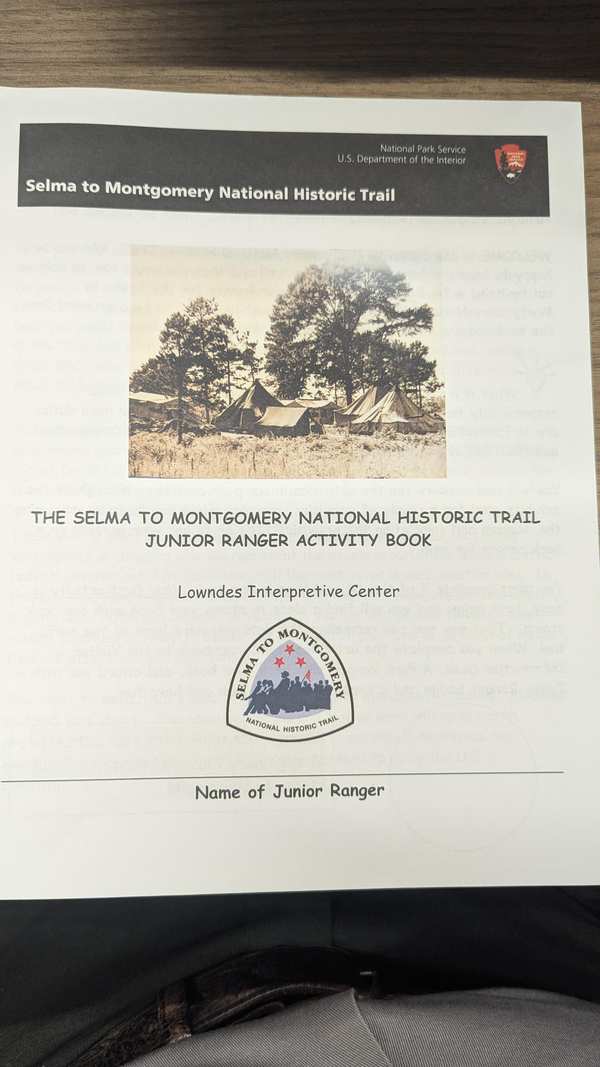
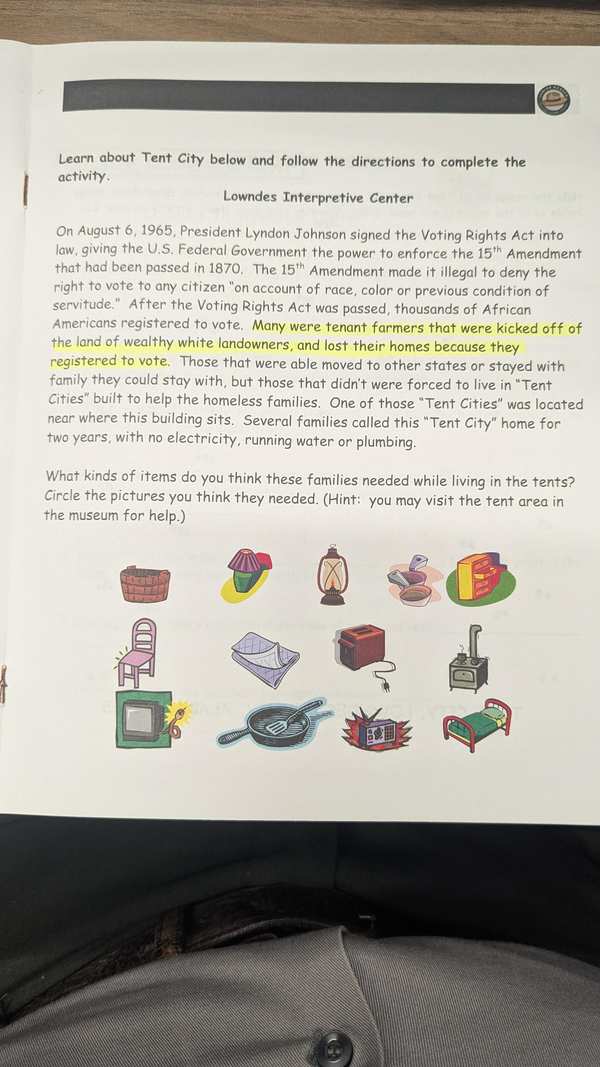
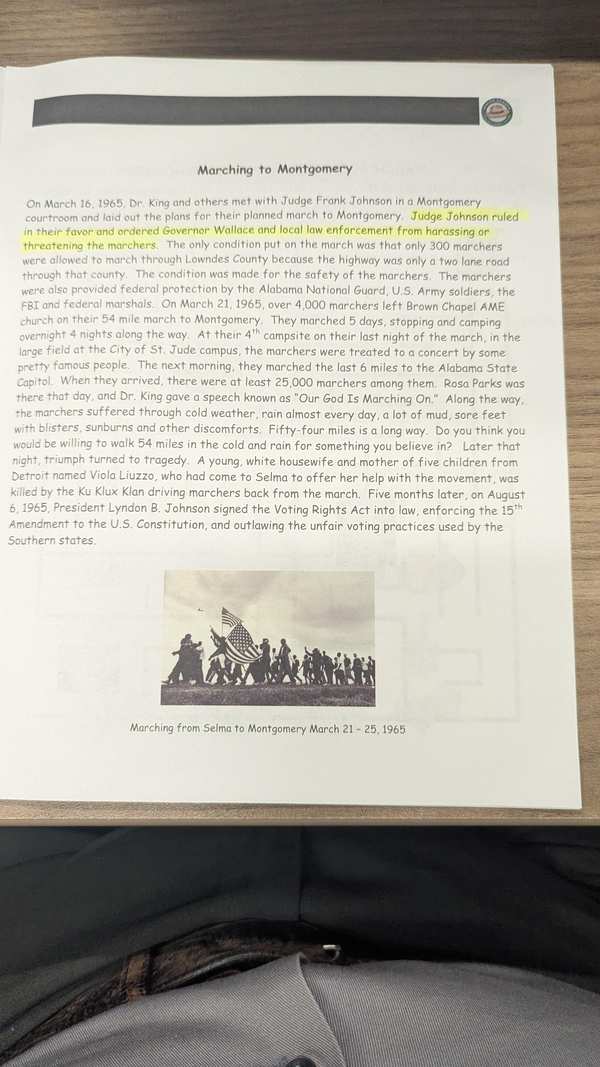
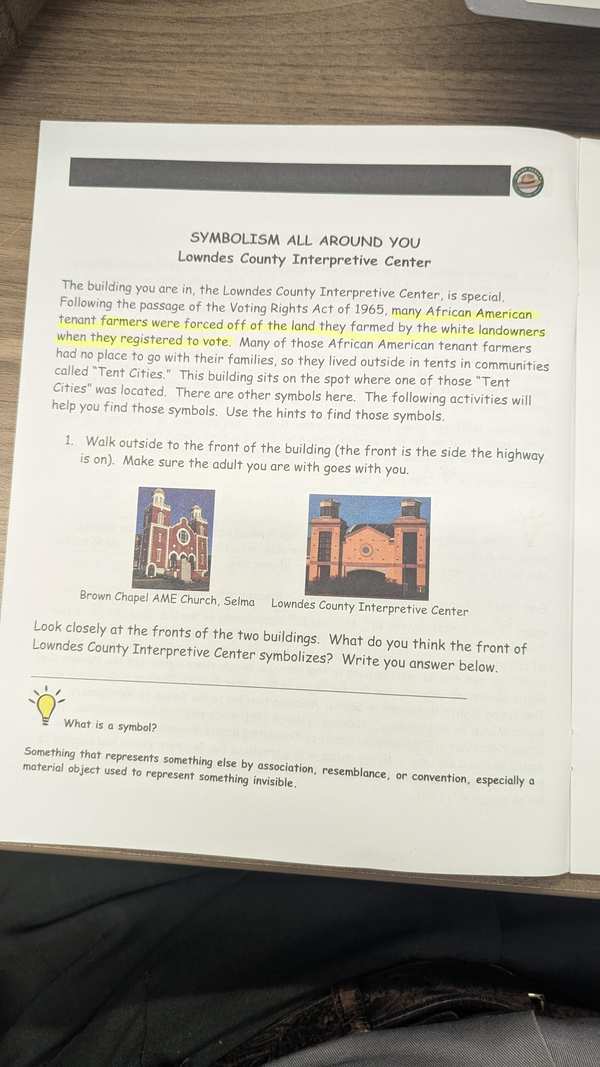
The trail also marks what the right cost. The foundation document records that many suffered from violent opposition and some were murdered, and that after the act passed many Lowndes County tenant farmers were evicted for exercising their right to vote. It defines the trail’s purpose as inspiring all citizens to be vigilant in protecting their constitutional rights. [1]
Women
On January 19, 1965, when Amelia Boynton of the Dallas County Voters League was slow to obey Sheriff Clark’s order to move, he grabbed her by the collar and shoved her toward a patrol car; with the photograph of her treatment in major newspapers, the 2008 park brochure says, the media turned its eye on Selma. On the night the march ended, Viola Liuzzo, who had come from Detroit to help, was shot and killed by Klansmen after driving marchers back to Selma; her memorial overlooks the route. The park’s 2015 foundation document warned that Boynton’s Selma home was in disrepair and under threat of demolition. [2] [1]
Black history
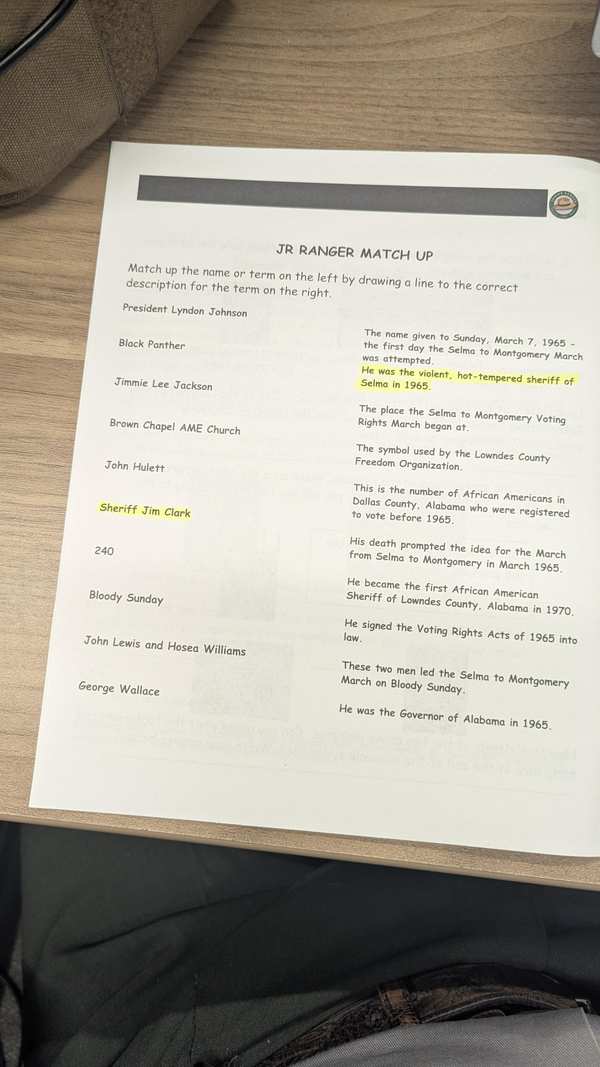
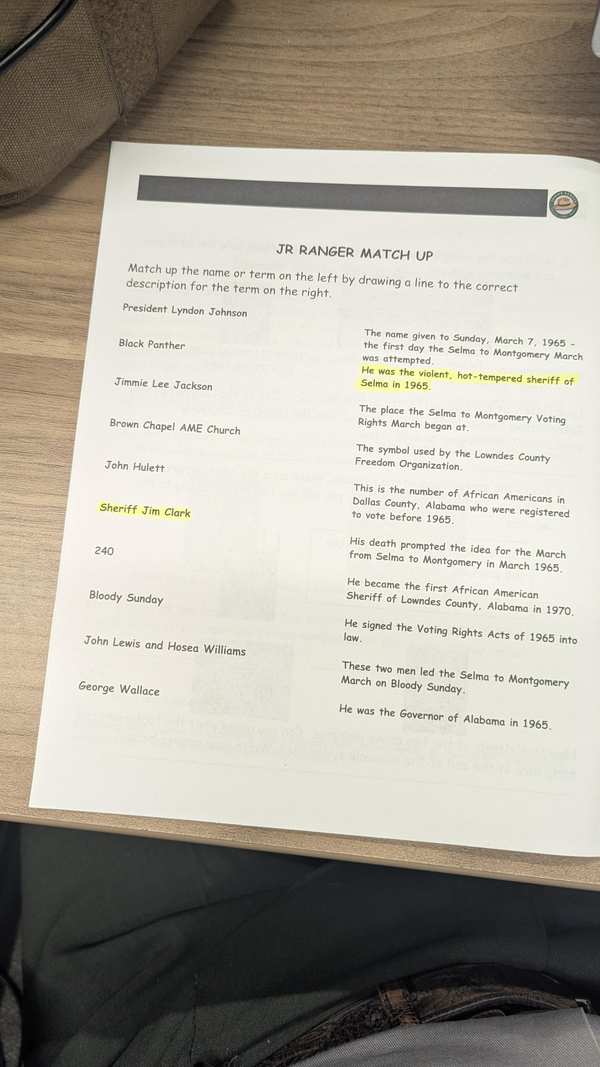
In January 1965 the Southern Christian Leadership Conference joined the Selma campaign. Sheriff Jim Clark directed would-be registrants to an alley, then let no one register; by February 5 more than 3,000 had been arrested. On February 18 in Marion a state trooper shot Jimmie Lee Jackson as he tried to defend his grandfather; a call to carry his body to Montgomery became the march. [2] [1]
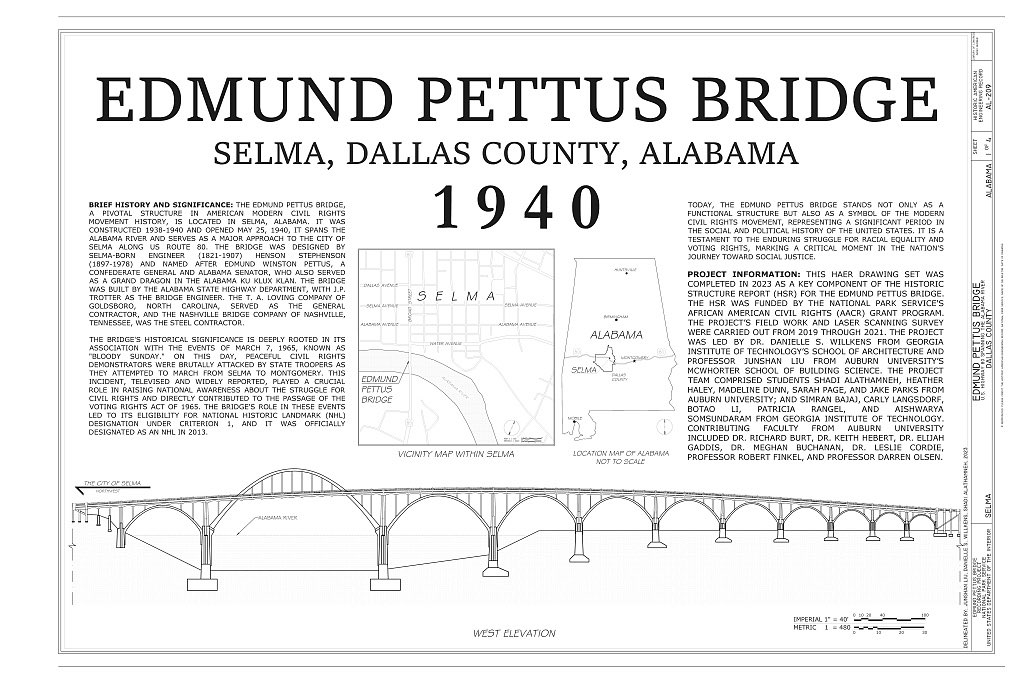
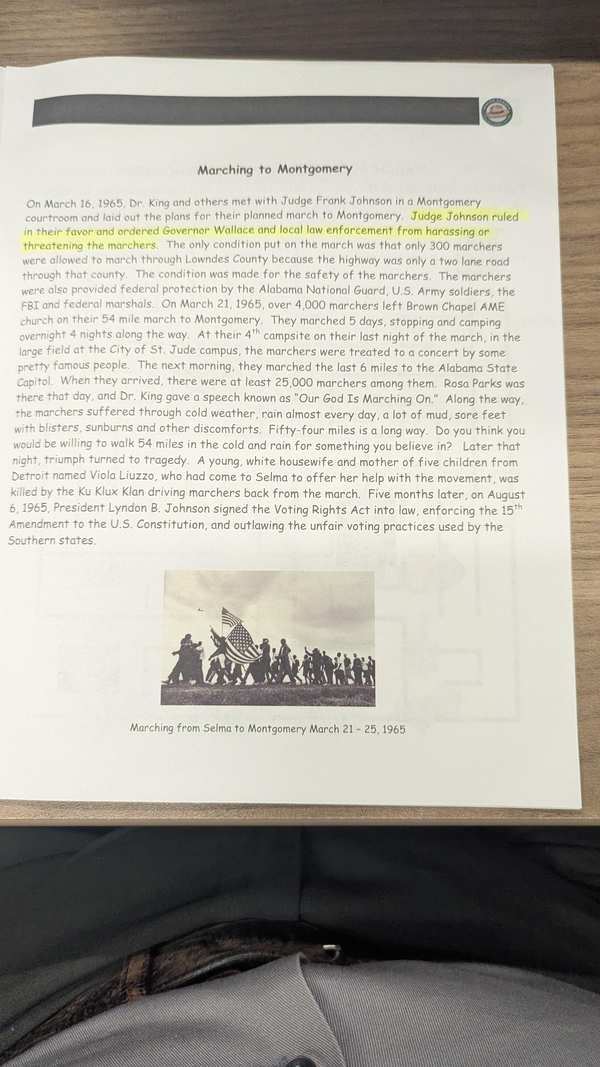
On March 7 about 600 marchers led by John Lewis and Hosea Williams were tear-gassed and beaten by state troopers and the sheriff’s posse beyond the Edmund Pettus Bridge, opened in 1940 and named, the Historic American Engineering Record notes, for a Confederate general and Alabama senator who also served as a grand dragon in the Alabama Ku Klux Klan. The final march, under federal protection, left Selma on March 21 and reached the Capitol on March 25, some 25,000 strong by the brochure’s count. [1] [3] [2]
Sources
- NPS, Foundation Document, Selma to Montgomery National Historic Trail (February 2015)
- NPSHistory.com: Selma to Montgomery NHT archive page — NPS brochure text (2008) and establishment block
- Library of Congress, HAER AL-209, Edmund Pettus Bridge (documentation 2023) — catalog significance note
- Walton, Edmund Pettus Bridge, National Historic Landmark nomination (2012; designated February 27, 2013)
REVISE: Publications (6 items)


Selma to Montgomery NHT in AL preserves a piece of American history that the public has trusted the National Park Service to protect and interpret. The visitor publications at this site have been developed over years by historians, subject-matter experts, and park staff — and are now being reviewed under Secretary's Order 3431.
From the internal review records: “(Section 2.3) The designation of the route of the march from Selma to Montgomery as a national historic trail will serve as a reminder of the right and responsibility of all Americans to fully participate in the election processes. It will serve as a reminder that we must be ever vigilant in securing our right to vote. It will also give long overdue recognition to the men and women who have sacrif...”
Why this matters: The civil rights history documented at Selma to Montgomery NHT is not a matter of opinion — it is the factual record of how Americans fought for the rights promised by our founding documents. These events occurred within living memory. The people who marched, sat in, and sacrificed are still alive to tell their stories.
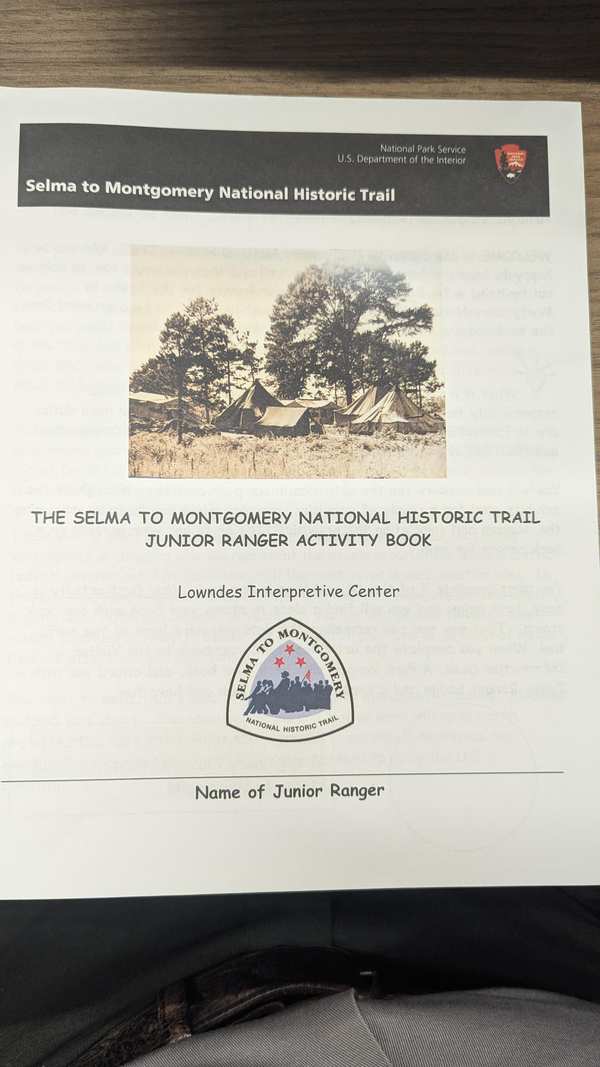
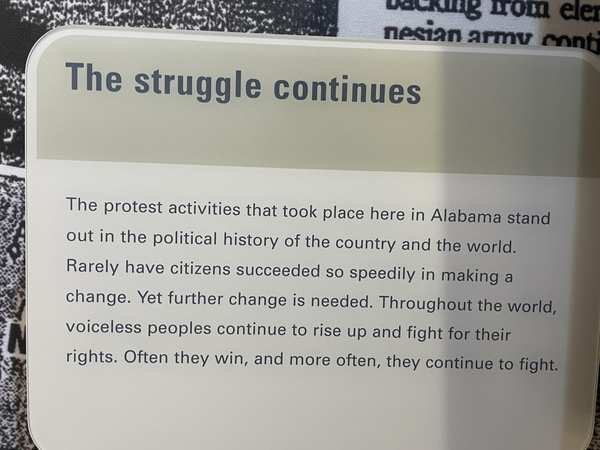
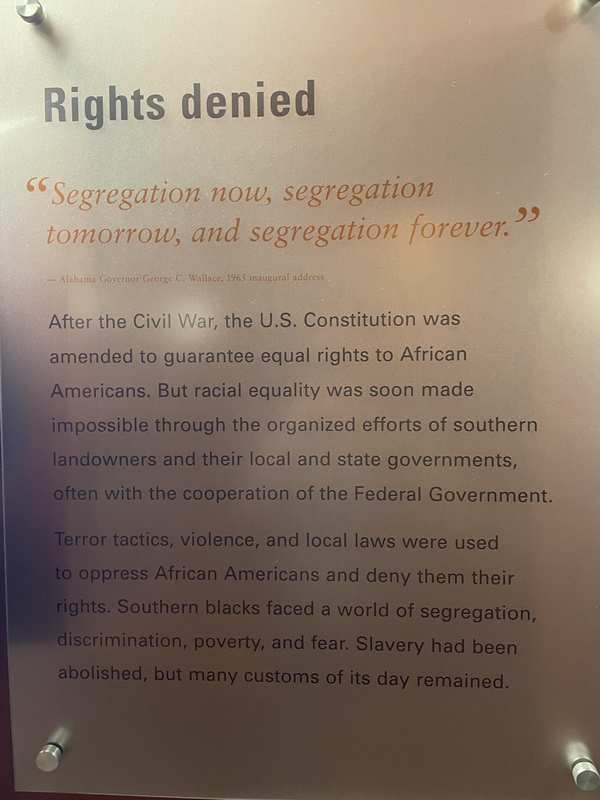
Please see photos of rack cards with highlighted text.
While these statements are historically accurate and supported by firsthand accounts, they may be perceived as disparaging by individuals who are less familiar with the history of the Civil Rights Movement.
According to Park Enabling Legislation, Public Law 101-321: (Section 2.3) The designation of the route of the march from Selma to Montgomery as a national historic trail will serve as a reminder of the right and responsibility of all Americans to fully participate in the election processes. It will serve as a reminder that we must be ever vigilant in securing our right to vote. It will also give long overdue recognition to the men and women who have sacrificed so much for, and dedicated their lives to, voting rights for all Americans.
Photographs attached to this park's records in the leaked NPS review database.






News Sources
VerifiedExplore the Full Map
See all 446 entries across every national park and wildlife refuge.
Open Interactive Map →