Stones River NB
Park History
Sourced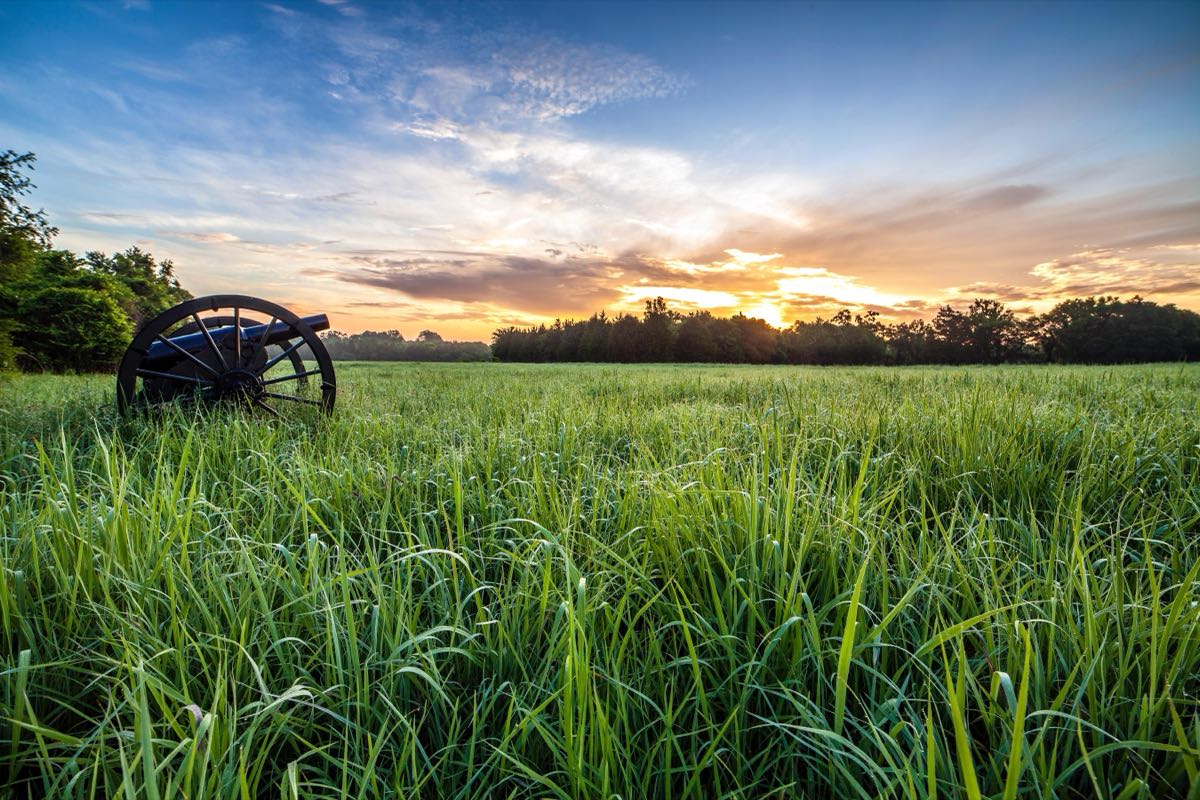
In the cedar woods, rocks and cotton fields outside Murfreesboro, Tennessee, armies totaling 81,000 men fought from December 31, 1862, through January 2, 1863, in one of the Civil War’s bloodiest encounters. Each side lost nearly one-third of its men: 13,249 Union and 10,266 Confederate casualties. On the last afternoon, 57 Union cannon massed above McFadden’s Ford killed or wounded more than 1,800 Confederates in less than an hour, and the Confederate army limped away. The victory, the park brochure says, together with the Emancipation Proclamation that took effect on January 1, shifted the war’s aims from restoring the Union to remaking the nation. [1]
Union soldiers and hundreds of formerly enslaved men then built Fortress Rosecrans, a 200-acre fort and supply depot ringed by three miles of earthworks — one of the largest Civil War earthen fortifications, in the 2014 foundation document’s words — and Murfreesboro stayed under Union occupation until 1877. Hazen’s brigade raised its monument on the field in 1863, one of the oldest intact Civil War monuments, the foundation document says, and more than 6,100 Union soldiers, 2,500 of them unknown, lie in the national cemetery. [1] [2]
Congress created Stones River National Military Park on March 3, 1927; it became Stones River National Battlefield on April 22, 1960. It preserves a small part of the original battlefield, in six separate parcels, along with cedar glades whose plant community is found only in Rutherford County, including the endangered Pyne’s ground plum. Its 2014 foundation document also names as part of the park’s significance the freedmen’s settlement called Cemetery, built on the battlefield after the war; the park brochure says the park’s creation in 1927 uprooted many of its residents. [1] [2]
Women
In Murfreesboro, women formed a soldiers’ relief society to support the hospital at Union University and carried food, clothing and medicine to the front lines. [1] During the battle Elmwood, the home of Thomas and Mildred Amelia Gilmer Hord, was taken so suddenly for a hospital that the family could not move the carpets or furniture; Amelia Hord helped care for the wounded despite being far along in pregnancy. In 1911 the family was awarded part of its $60,000 claim for property seized or destroyed by Union forces. [3]
Black history
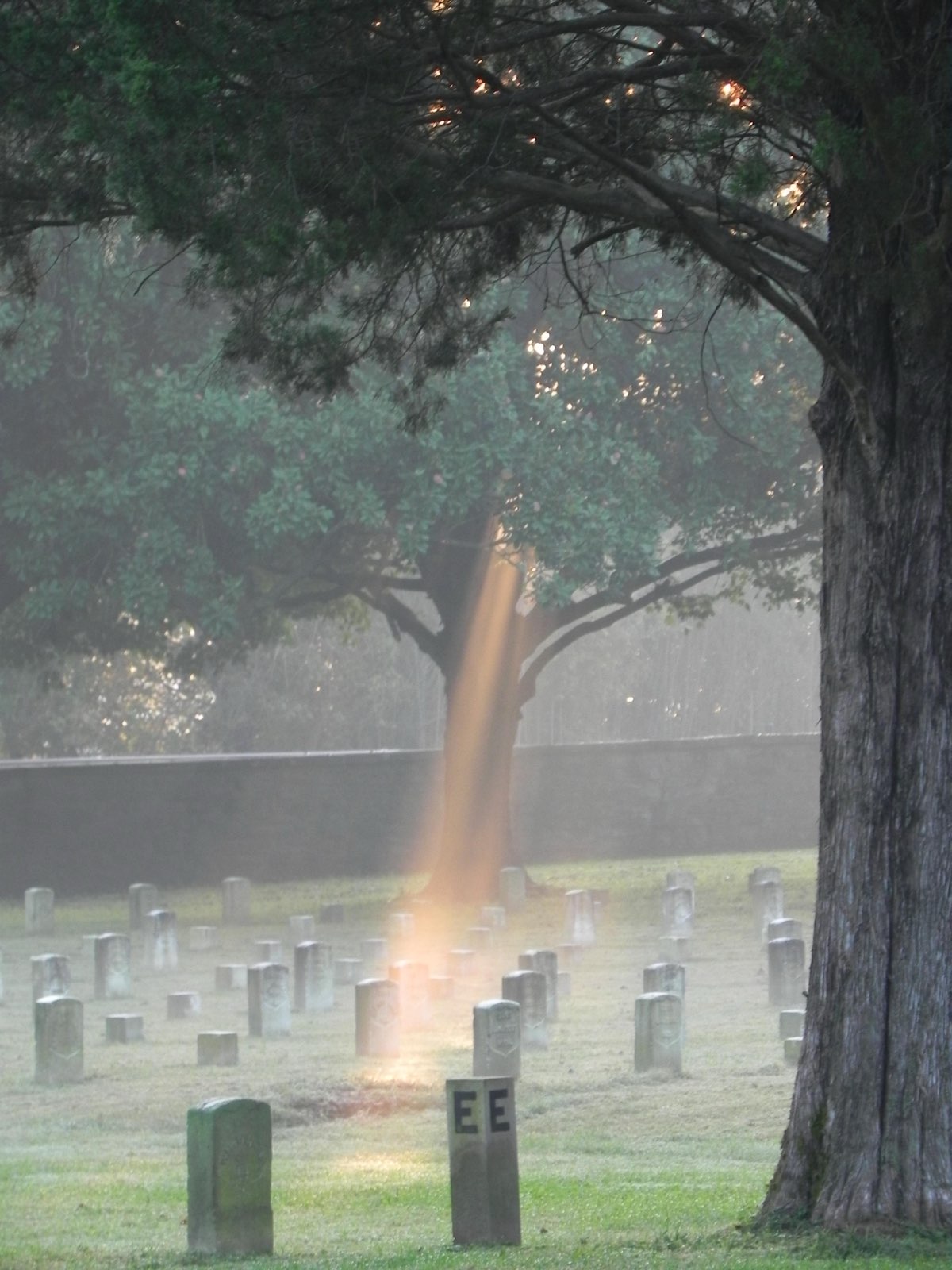
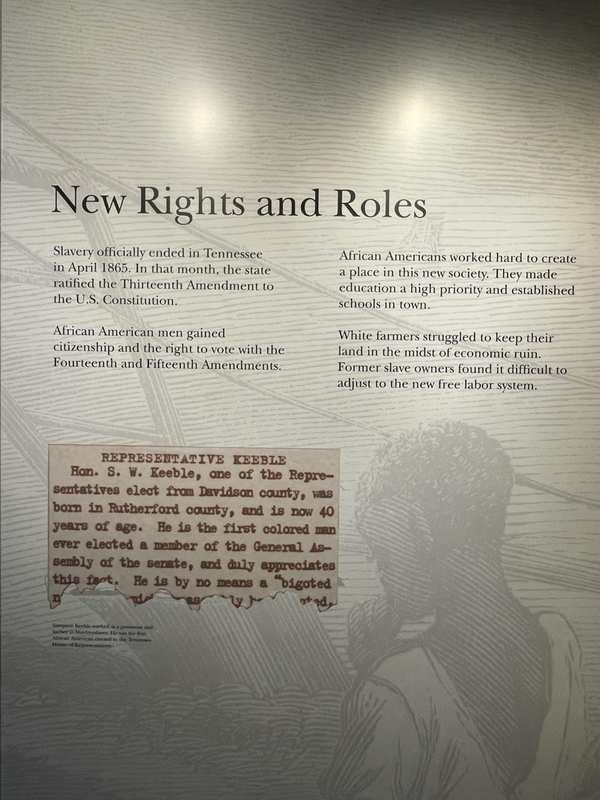
In 1865 soldiers of the 111th U.S. Colored Infantry began reburying the Union dead in the new national cemetery; afterward veterans such as William Holland and other freed people built homes, a school, churches and a store around it, a community named Cemetery. In the section called the Cedars, Rebecca Conard’s 2016 history finds, blacksmith Sam Grisham bought 40 acres in 1872 and in 1875 Holland bought three acres beside the Hazen monument. By 1910 about 80 people lived there in 17 households. Cemetery School, built on donated land in 1874, taught children through eighth grade until 1962. [1] [4] [5]
The park’s web page says that after Congress approved the military park in 1927, African Americans, who owned more than half the land, were forced to sell; Conard dates the forced sales in the Cedars to 1929. The displacement and erasure of their history created resentment and distrust, the page says; partnerships with the Black community are slowly rebuilding trust. [5] [4]
Slavery
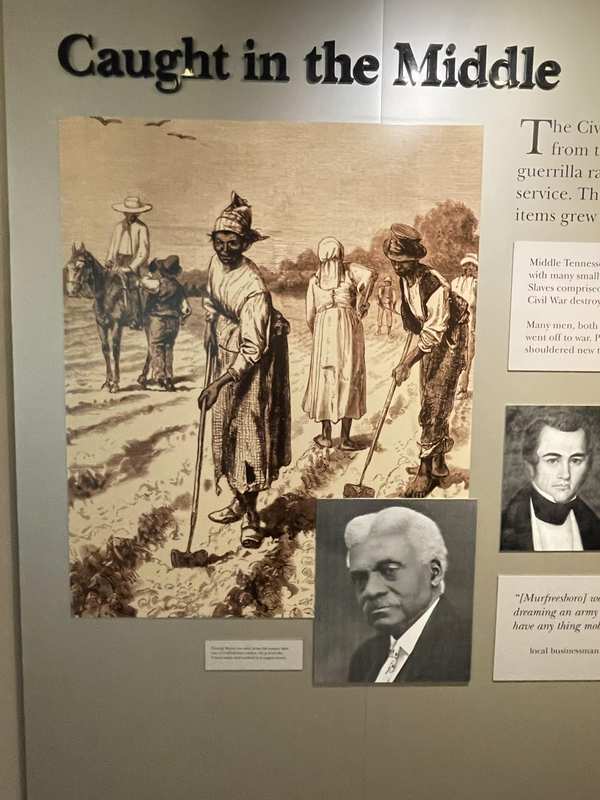
In 1860 Rutherford County had 27,918 people, nearly half of them enslaved, the park’s 2004 historic resource study reports. The Nashville & Chattanooga Railroad, which ran through the battlefield, was permitted by law to own slaves, and enslaved workers together with Irish immigrant labor built its line through the county. Elmwood, the Hord house on the Nashville Pike that Union forces used as a hospital, was built in 1842 of bricks made by people Thomas Hord enslaved; after the battle Union officers impressed Hord’s slaves to help build Fortress Rosecrans. [3]
Around Murfreesboro, family farms worked by white and enslaved Black people raised hogs, horses, corn, wheat and cotton. Once Union troops held Murfreesboro, enslaved people flocked to their camps to seize their freedom, leaving hundreds of farms untended, and more than 20,000 formerly enslaved men from Tennessee went on to fight in the U.S. Colored Troops. [1]
Sources
- NPSHistory.com: Stones River National Battlefield archive page — overview (NPS brochure text) and establishment block
- Foundation Document, Stones River National Battlefield, Tennessee (NPS, 2014)
- Styles, Stones River National Battlefield Historic Resource Study (NPS Southeast Region, February 2004)
- Conard, Cemetery Community: A Brief History (Middle Tennessee State University, February 2016)
- NPS, The Cemetery Community — Stones River National Battlefield (nps.gov, last updated July 31, 2024)
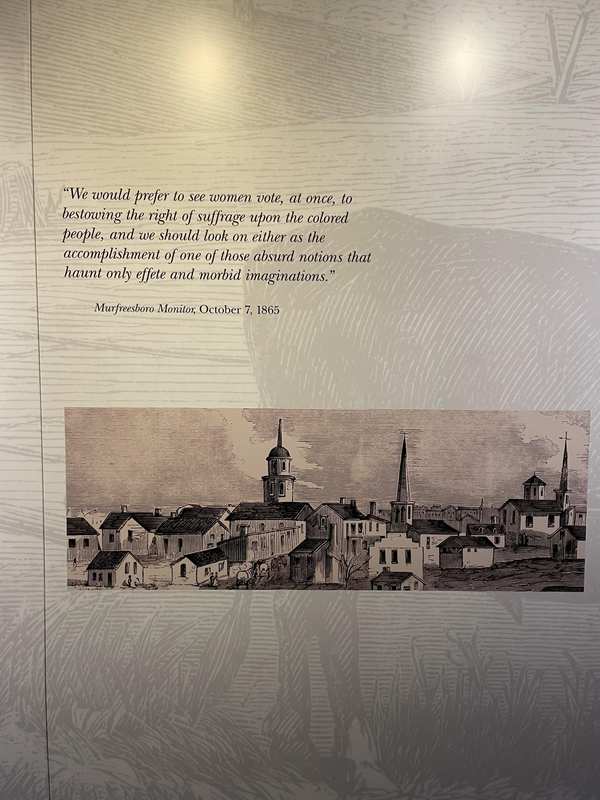
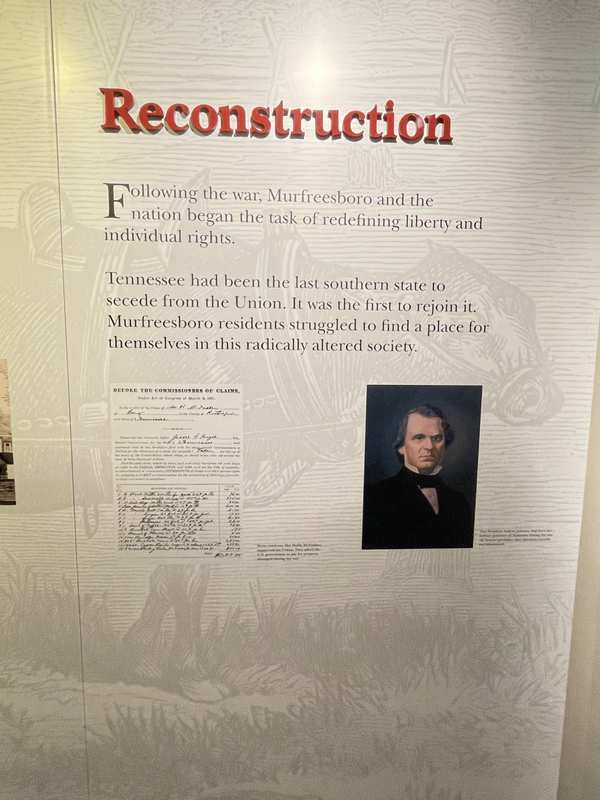
FLAGGED FOR REVIEW: Exhibit panels (2 items)


At Stones River NB, the National Park Service has worked for years to document and interpret the history of slavery at this site — a history that was ignored for much of the park's existence. The exhibits, waysides, and publications now under review represent a hard-won commitment to telling the complete American story.
From the internal review records: “Ninety Days War Exhibit Panel - Text addresses slavery as the primary cause of the American Civil War. This is both historically correct and legislatively mandated but we ask for further review to confirm it is aligned with SO 3431.”
Why this matters: The history of slavery at Stones River NB was suppressed for generations. The materials now being targeted represent decades of work by historians, descendants of enslaved people, and community advocates to ensure these stories are finally told. Removing them would re-erase history that has only recently been acknowledged.
Review Requested
Ninety Days War Exhibit Panel - Text addresses slavery as the primary cause of the American Civil War. This is both historically correct and legislatively mandated but we ask for further review to confirm it is aligned with SO 3431.
Photographs attached to this park's records in the leaked NPS review database.





Explore the Full Map
See all 446 entries across every national park and wildlife refuge.
Open Interactive Map →