Yosemite NP
Park History
Sourced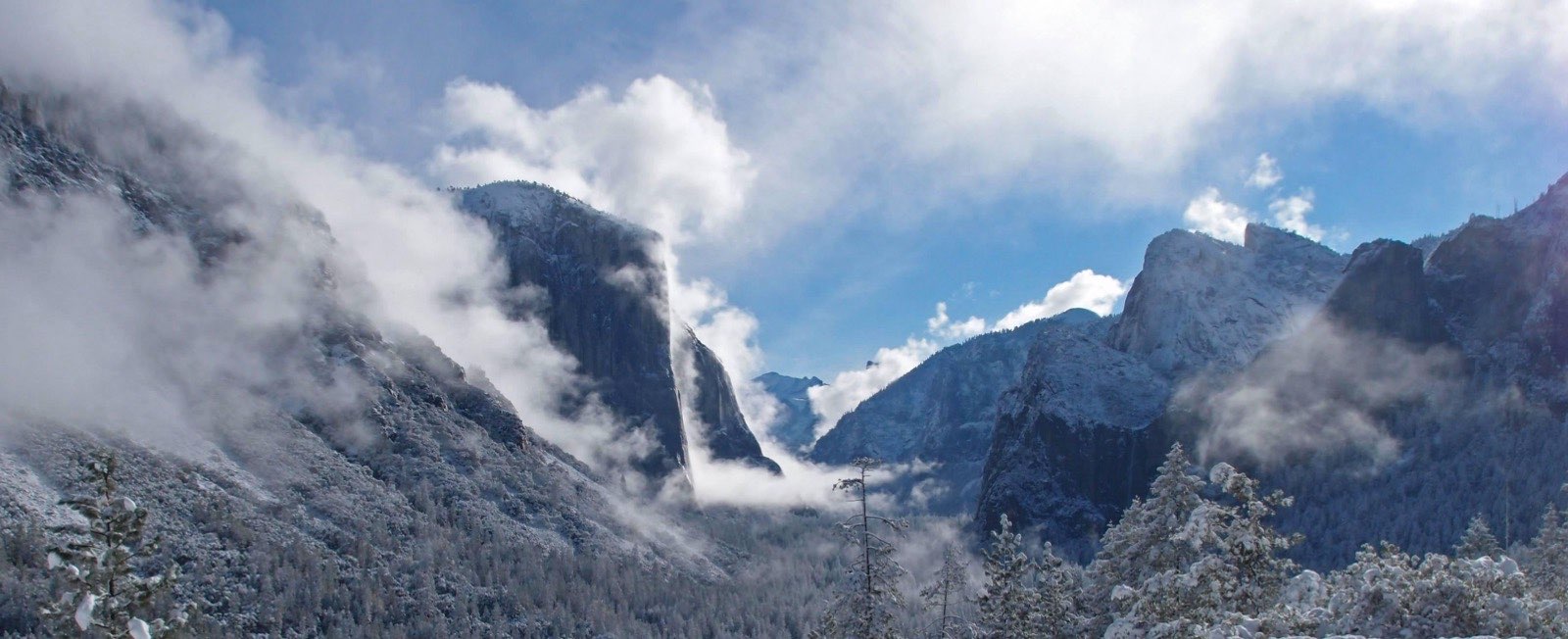
Yosemite covers 747,956 acres of the central Sierra Nevada: granite domes and cliffs, waterfalls, three groves of giant sequoias, alpine meadows and the headwaters of the Tuolumne and Merced rivers, which supply drinking water to millions of people in the San Francisco Bay Area. About a million years ago glaciers moved down the river valleys — ice in Yosemite Valley may have been 4,000 feet thick — and carved the U-shaped valley visitors know today. More than 94 percent of the park is designated wilderness. [1]
Oral tradition and archeological evidence, the Park Service’s 2016 foundation document says, suggest people have lived continuously in the Yosemite region for at least 8,000 years, and seven present-day tribes descend from those who first called it home. On June 30, 1864, President Lincoln signed the Yosemite Grant, giving Yosemite Valley and the Mariposa Grove to California to be held for public use, resort and recreation, inalienable for all time — the first scenic natural area set aside by the United States for public benefit. Congress created the surrounding national park on October 1, 1890; California returned the valley and the grove in 1905 and Congress accepted them in 1906. [1] [2]
More than four million people a year now enter the park. Its own documents describe a landscape still being remade — by rockfall and flood, by fire after a century of protecting the sequoias from it, and by a warming climate pushing the pika upslope — and a human history that includes the 1851 militia campaign against the valley’s Ahwahneechee people. [1] [2] [3]
Indigenous peoples
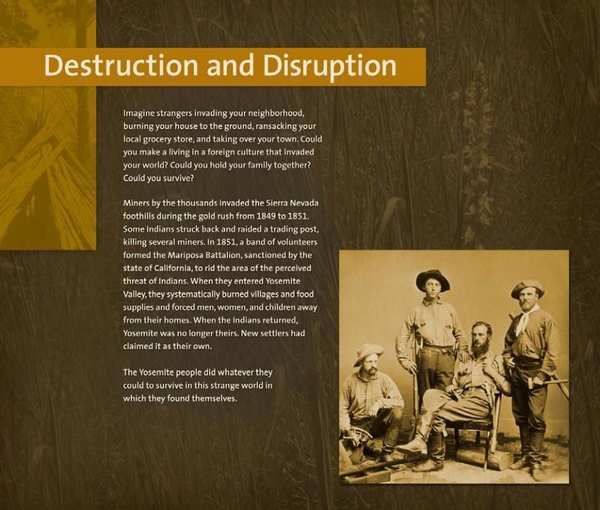
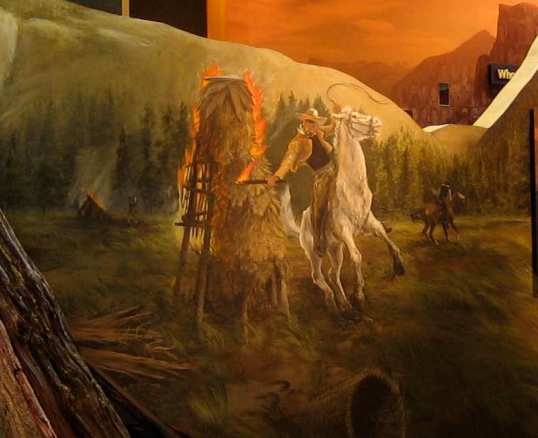
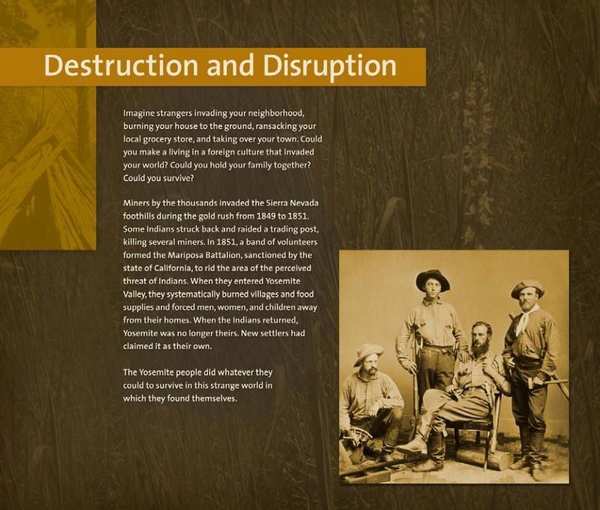
The Ahwahneechee, a Southern Sierra Miwok tribelet, lived in and around the valley they called Ahwahnee. Gold Rush miners and settlers burned their villages and felled oak groves; Indians had no civil or legal rights. Governor John McDougal — who, Greene writes, had once spoken to the legislature of the inevitability of the extermination of the Indian race — authorized a militia: the 200-man Mariposa Battalion under trader James Savage, mustered in January 1851. Savage threatened to annihilate Chief Tenaya’s people if they resisted, then burned their dwellings and food caches to starve them onto reservations. In May another company shot two captives trying to escape; one was Tenaya’s youngest son. [3]
In June 1852 Army troops shot five Indians found with clothing suspected to be the murdered prospectors’. In 1907 the Army took Koomine, the valley’s largest village, as a camp and forced out its residents; in 1969 the Park Service moved the last family from its 1933 Indian Village and burned it. [3]
Women
Enid Michael, a third-grade teacher from Pasadena, moved to the park in May 1919 and became one of the four members of Yosemite’s first Nature Guide Service. She published 195 articles in Yosemite Nature Notes and from 1931 directed the planting of a wildflower garden behind the Yosemite Museum, funded by a $4,000 gift from Marjorie Montgomery Ward, that came to hold more than a thousand plants. Some male colleagues resented a woman in the job: in 1923 she rallied the California Federation of Women’s Clubs to press for a permanent appointment, and a handwritten note on a 1937 memo said Civilian Conservation Corps boys should work under a male naturalist, the word underlined four times. After twenty-one seasonal reappointments, her service ended on September 30, 1942. [4]
Black history
From 1891 to 1914, before the Park Service existed, the U.S. Army guarded Yosemite and the other Sierra parks. In 1899 the 24th Infantry patrolled the backcountry, and the 9th Cavalry followed in 1903 and 1904 — both regiments of African American soldiers, the Buffalo Soldiers, formed after the Civil War. Shelton Johnson argues that the nearly 500 soldiers who served over those three years were long left out of the park’s histories; Carl Russell’s One Hundred Years in Yosemite never names either regiment. He calls them invisible men and contends that such gaps in history are made, not accidental. The Park Service’s 2016 foundation document now names the Army’s role, including the Buffalo Soldiers, in its statement of the park’s significance. [5] [1]
Climate & environment
The 2019 park brochure points to the pika, a small, heat-intolerant animal of the high-country rock piles, whose habitat is shifting upward as the climate rapidly warms — and asks where pikas will go when they run out of mountain. The 2016 foundation document names climate change a key issue: drought had already killed large numbers of ponderosa pines and other trees at lower elevations, and less snowpack and earlier runoff could bring longer, drier summers, larger and more intense wildfires and more flooding as precipitation falls as rain. The park is restoring meadows, riverbanks and the Mariposa Grove and using prescribed and managed fire; the brochure notes that a century of protecting sequoias from fire had harmed the trees it meant to save. [2] [1]
Labor & the New Deal
Ten Civilian Conservation Corps camps operated in Yosemite between May 1933 and October 1940, with 6,816 enrollees assigned — unemployed, unmarried young men of 18 to 25 typically earning thirty dollars a month, twenty-five of which went home to their families. Each camp held 225 to 250 men, mostly from cities, alongside local recruits and experienced local men. They built log curbing and paths around Yosemite Village, revived the 250 apple trees settler James Lamon had planted, and replaced the posts of the Half Dome cable route, drilling 41 holes into the rock by hand while roped to the posts. The Cascades camp on Highway 140 was wiped out in the 1937 flood. [6]
Sources
- Foundation Document, Yosemite National Park, California (NPS, 2016), Part 1: Brief Description, Purpose, Significance
- NPSHistory.com: Yosemite archive page — overview (from the 2019 NPS brochure) and establishment block
- Greene, Yosemite: The Park and its Resources — Historic Resource Study, Vol. 1 (NPS, 1987), ch. I
- Peñalosa, Enid Michael: Yosemite’s First Woman Ranger-Naturalist, Yosemite (Yosemite Association), Vol. 66 No. 3, Summer 2004, pp. 3–6
- Johnson, Invisible Men: Buffalo Soldiers of the Sierra Nevada (NPS Yosemite, undated), pp. 1–6
- Orr, The Civilian Conservation Corps (CCC) in Yosemite, Yosemite (Yosemite Association), Vol. 67 No. 4, Fall 2005, pp. 2–4
Book Pulled From Bookstore: Interpretive materials


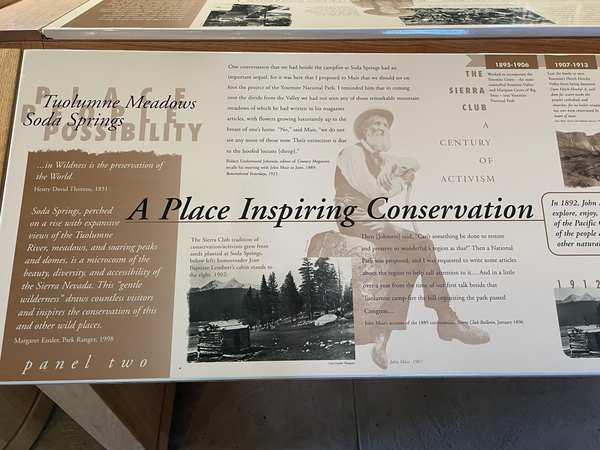
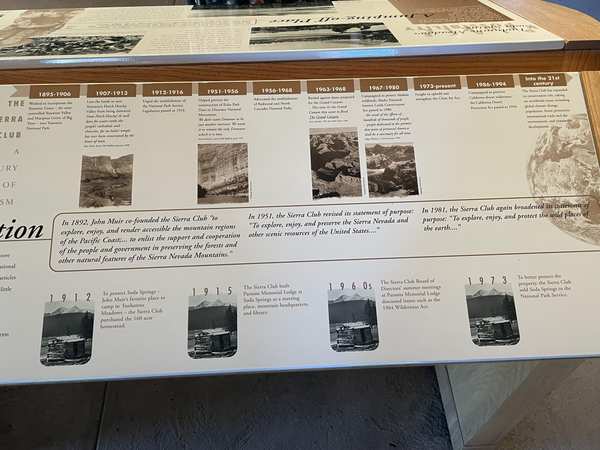
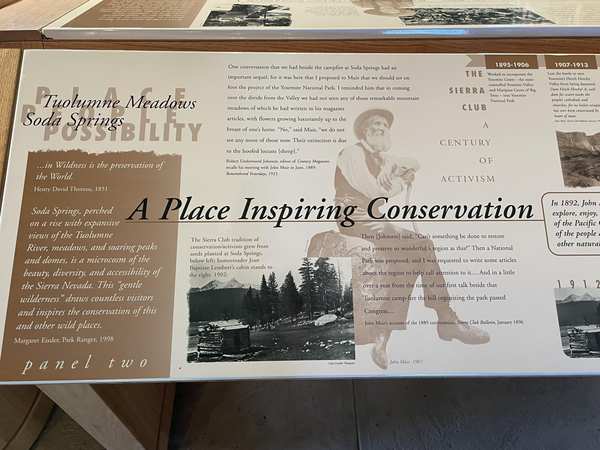
On October 1, 1890, President Benjamin Harrison signed the act establishing Yosemite National Park, after a campaign by naturalist John Muir and Century Magazine editor Robert Underwood Johnson to protect the high country surrounding Yosemite Valley. The valley itself and the Mariposa Grove of giant sequoias, granted to California in 1864 under an act signed by President Abraham Lincoln, remained under state control.
Scottish-born naturalist John Muir was one of the first to theorize that Yosemite's dramatic features were carved by glaciers, not floods. President Theodore Roosevelt camped in Yosemite with Muir in 1903, and in 1906 Congress accepted the return of Yosemite Valley and the Mariposa Grove to the federal government, making them part of the national park. Glaciers carved Yosemite's distinctive U-shaped valleys and left behind polished granite surfaces and countless alpine lakes.
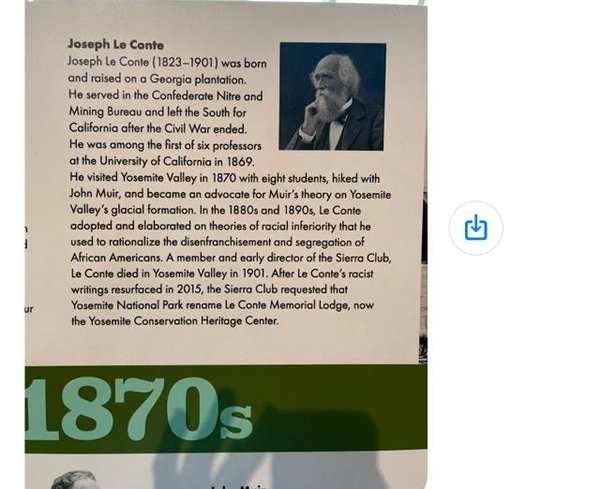
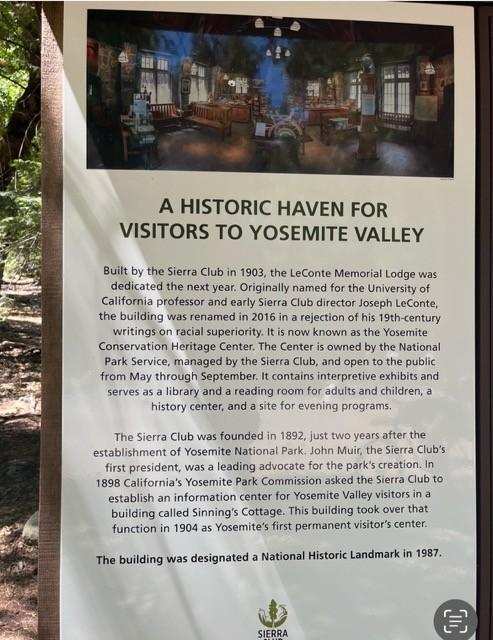
The flagged waysides include “Miwoks and Meadows,” which quotes Maria Lebrado; a history wayside describing the “punitive” work of the Army; the sentence “vast numbers of their population were wiped out” on the “Adapting to New Life” wayside; and a paragraph about Koomine Village on “The First People” wayside. [NPS review record]
Why this matters: Yosemite Valley was home to the Ahwahneechee long before it was a park. In 1851 the state-authorized Mariposa Battalion burned their villages and food stores to drive them onto reservations, and in 1907 the Army took Koomine, the valley’s largest village, as a camp and forced out its residents. The flagged waysides are where visitors learn that the valley’s story did not begin with John Muir. [NPSHistory.com]
- "The State of Water: Understanding California’s Most Precious Resource" (book no longer sold at bookstore)
Please review the Maria Lebrado quote. It was recently vandalized.
Please review content about “punitive” work of the Army.
review sentence “vast numbers of their population were wiped out”
review Koomine Village paragraph
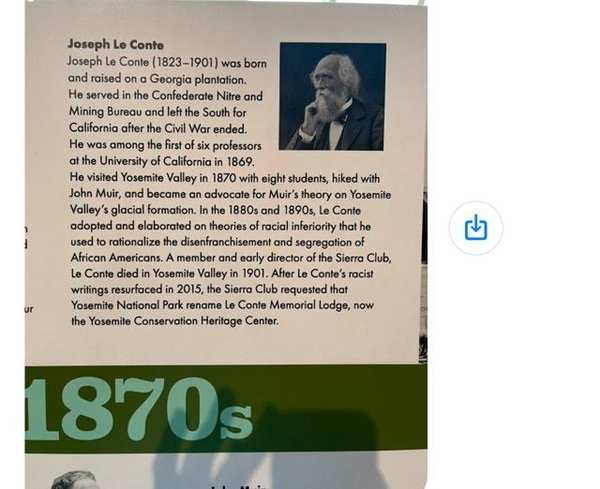
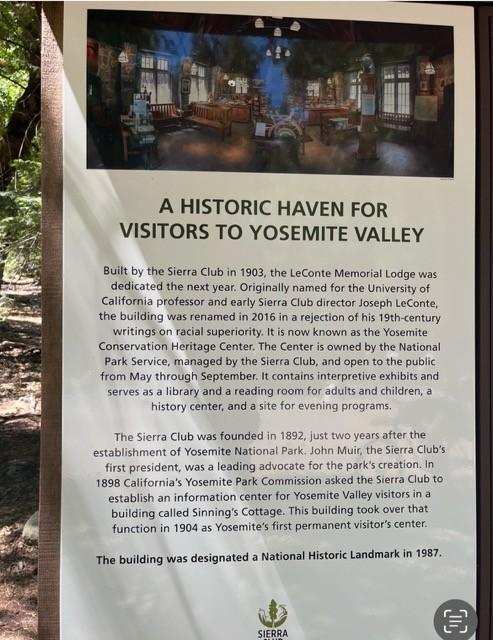
Photographs attached to this park's records in the leaked NPS review database.




News Sources
VerifiedExplore the Full Map
See all 446 entries across every national park and wildlife refuge.
Open Interactive Map →