Belmont-Paul Women's Equality National Monument
Park History
Sourced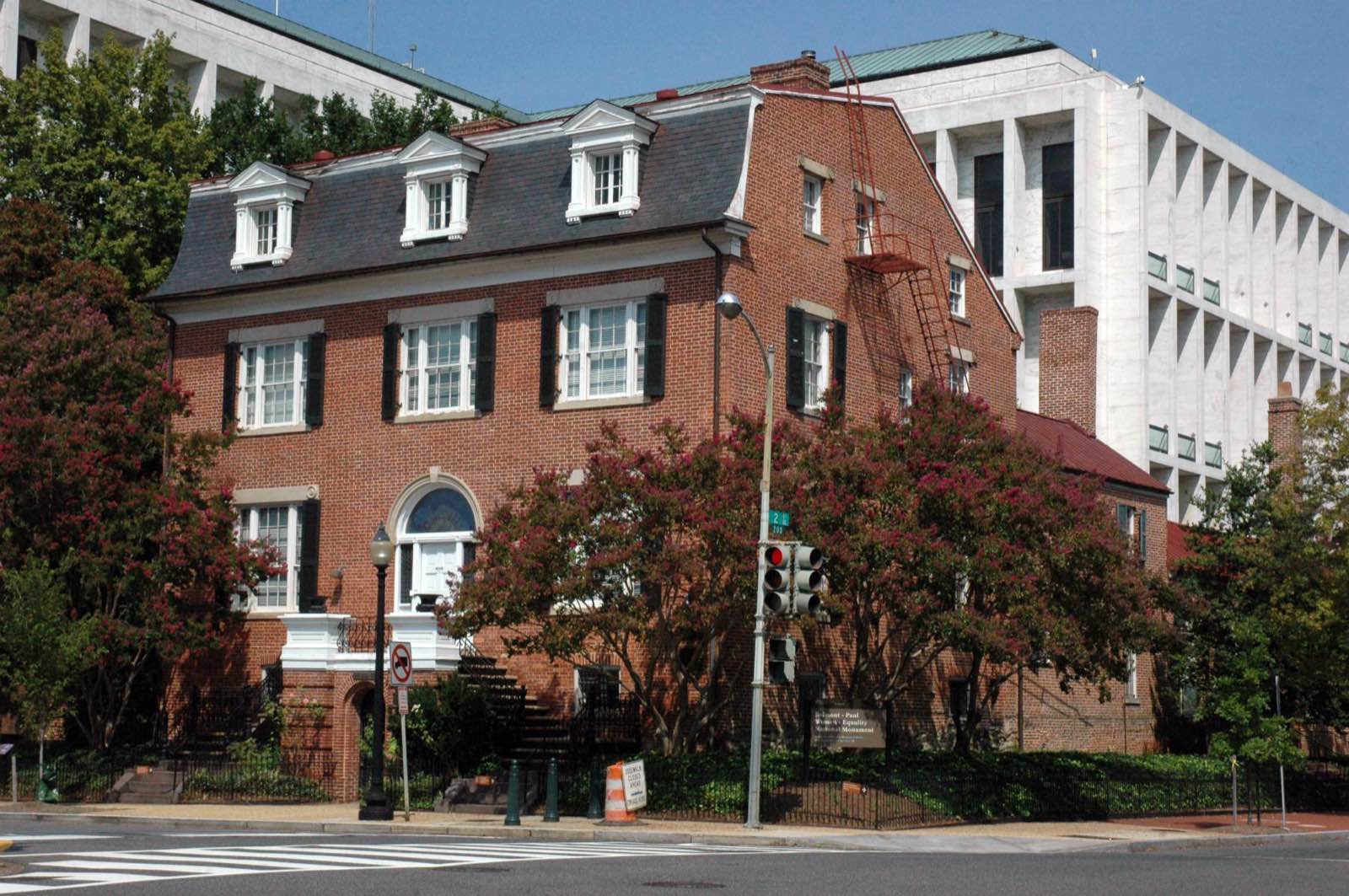
A few blocks from the U.S. Capitol, at 144 Constitution Avenue NE, stands a brick federal-period house that the Park Service counts among the oldest residences in Washington, on land the Nacotchtank, or Anacostans, used for hunting and trading. Robert Sewall built the first house here in 1800, and Treasury Secretary Albert Gallatin rented it from 1801 to 1813. On August 24, 1814, British troops burned it after, by Sewall’s later claim to Congress, Commodore Joshua Barney’s men, retreating from the Battle of Bladensburg, fired on them from inside; the house standing today was rebuilt on the spot by 1820. [1]
In 1929 the National Woman’s Party, founded by Alice Paul in 1916–17, bought the house from Senator Porter Dale with the help of its president and benefactor Alva Belmont, and made it the party’s fifth and final headquarters. From here, the 2017 foundation document says, the party targeted more than 600 discriminatory laws and won more than 300 legislative changes — in marriage, divorce and custody law, jury service, property rights and contracts, the Fair Labor Standards Act of 1938 and the Civil Rights Act of 1964. Paul helped lead the party from the house until she retired in 1972. [2] [3]
The party fought to save the house when construction of the Hart Senate Office Building threatened it in the 1960s; it was listed on the National Register in 1972 and named a National Historic Landmark in 1974. On April 12, 2016, after the party donated the property, President Barack Obama designated it a national monument. [1] [3]
Women
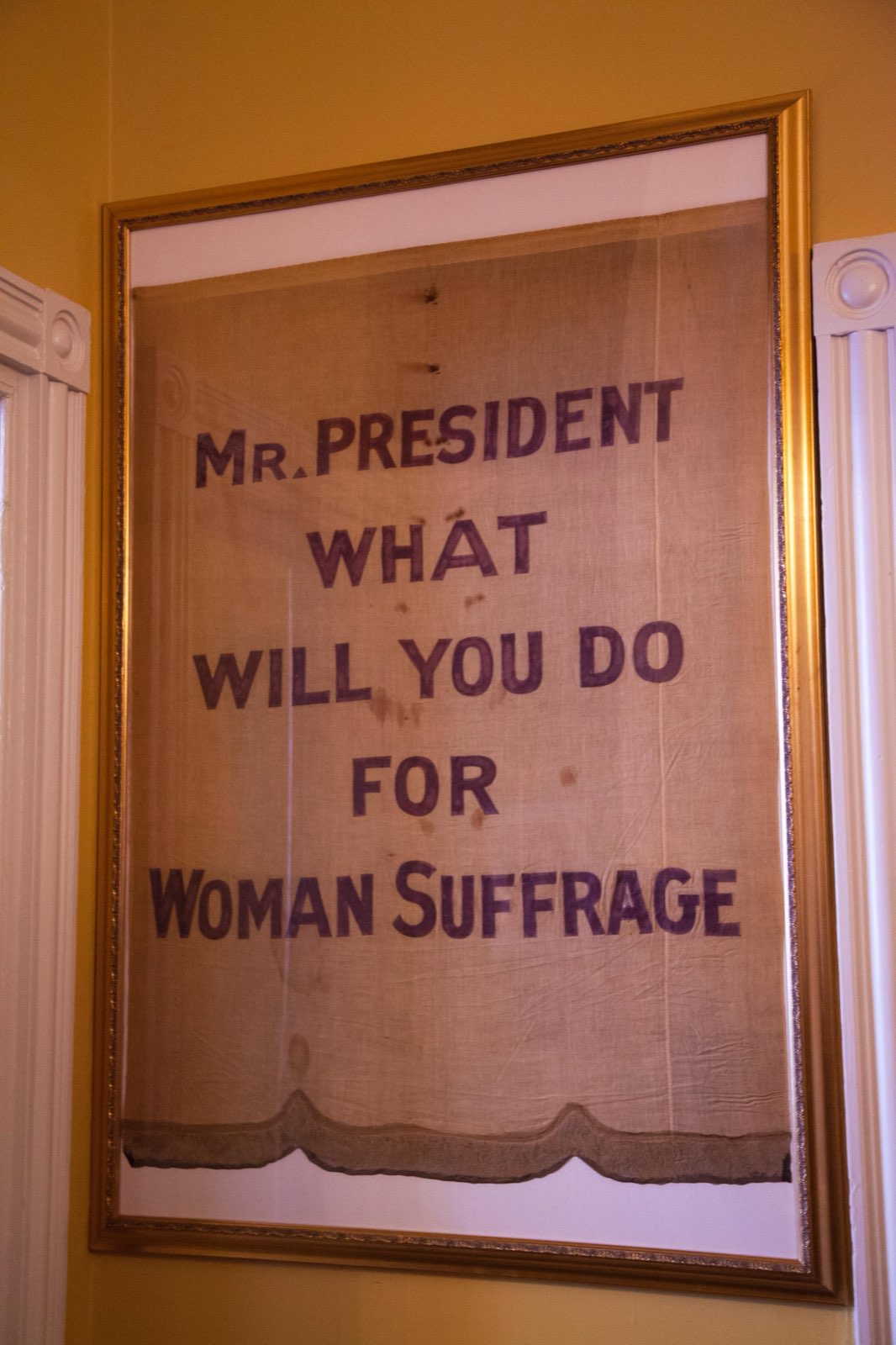
On January 10, 1917, twelve party members began a silent vigil at the White House gates — reportedly the first people ever to picket it. After the United States entered World War I that April, spectators attacked the pickets; in June police began arresting them for obstructing traffic, and in July sixteen were sentenced to 60 days in Virginia’s Occoquan Workhouse. Officials abused the prisoners and held them in solitary confinement, the 2021 resource study records. Alice Paul, sentenced in October to seven months, the longest term, and Rose Winslow went on hunger strike and were force-fed. Publicity roused sympathy; the pickets were released in late November and their sentences invalidated in March 1918. [3]
The party then pursued an Equal Rights Amendment, drafted by its officers and lawyers after 1921 and rewritten by Paul in 1943. Introduced in every session of Congress from 1923, it passed in 1972 but was three states short of ratification at the 1982 deadline. [3]
Black history
For the March 3, 1913, suffrage parade on the eve of Woodrow Wilson’s inauguration, Paul, fearing she would alienate southern white women, tried to segregate Black marchers in a section at the rear; the 2021 resource study says it is unclear whether any actually marched there. The NAACP’s journal The Crisis counted about 40 Black women in the march, among them 25 Howard University students; Ida B. Wells-Barnett, reportedly told she could not march with the white Illinois delegation, waited at the side until the Chicago delegation passed, then stepped into the line with it. The study quotes historian Mary Walton’s judgment that Paul’s failure to welcome Black marchers left a permanent stain on her reputation. Mary Church Terrell marched in 1913 and later joined the White House pickets, while remaining critical of white suffragists’ disinterest in issues that mattered to Black women. [3]
Sources
- NPSHistory.com: Belmont-Paul Women's Equality National Monument archive page — overview (from the NPS website, 2020) and establishment block
- Foundation Document Overview, Belmont-Paul Women's Equality National Monument (NPS, 2017)
- Quinn Evans, Historic Resource Study, Belmont-Paul Women's Equality National Monument (NPS National Mall and Memorial Parks, January 2021)
CONFIRMED REMOVED: Interpretive materials
Belmont-Paul Women's Equality NM preserves the history of the women's suffrage and equal rights movements at the historic headquarters of the National Woman's Party. The site documents the courageous struggle of suffragists who were jailed, beaten, and force-fed for demanding the right to vote. These interpretive materials ensure this critical chapter of American democracy is never forgotten.
The administration has flagged for review content that includes the language: “Silent Sentinels”, and “jailed for freedom.”.
Why this matters: More than 90 of the Silent Sentinels were jailed for picketing the White House in 1917, many at the Occoquan Workhouse, where they were beaten and force-fed during hunger strikes. The publicity helped turn public and congressional opinion. Steps from that workhouse now stand in front of the monument, and the flagged wayside explains why. [NPS review record]
- “Consequential Concrete” — removed
- Informational wayside; reason: Disparages Americans past or living; now: Discarded
This is one of several waysides around BEPA
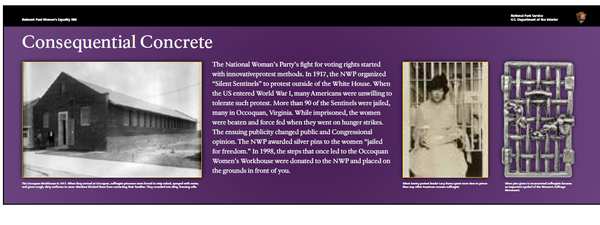
Consequential Concrete
The National Woman’s Party’s fight for voting rights started with innovative protest methods. In 1917, the NWP organized “Silent Sentinels” to protest outside of the White House. When the US entered World War I, many Americans were unwilling to tolerate such protest. More than 90 of the Sentinels were jailed, many in Occoquan, Virginia. While imprisoned, the women were beaten and force fed when they went on hunger strikes.
The ensuing publicity changed public and Congressional opinion. The NWP awarded silver pins to the women “jailed for freedom.” In 1998, the steps that once led to the Occoquan
Women’s Workhouse were donated to the NWP and placed on the grounds in front of you. [Image Captions]
The Occoquan Workhouse in 1917. When they arrived at
Occoquan, suffragist prisoners were forced to strip naked, sprayed with water, and given rough, dirty uniforms to wear. Wardens blocked them from contacting their families. They crowded into dirty, freezing cells.
Silent Sentry protest leader Lucy Burns spent more time in prison than any other American woman suffragist.
Silver pins given to incarcerated suffragi...
FLAGGED FOR REVIEW: Publications (8 items)
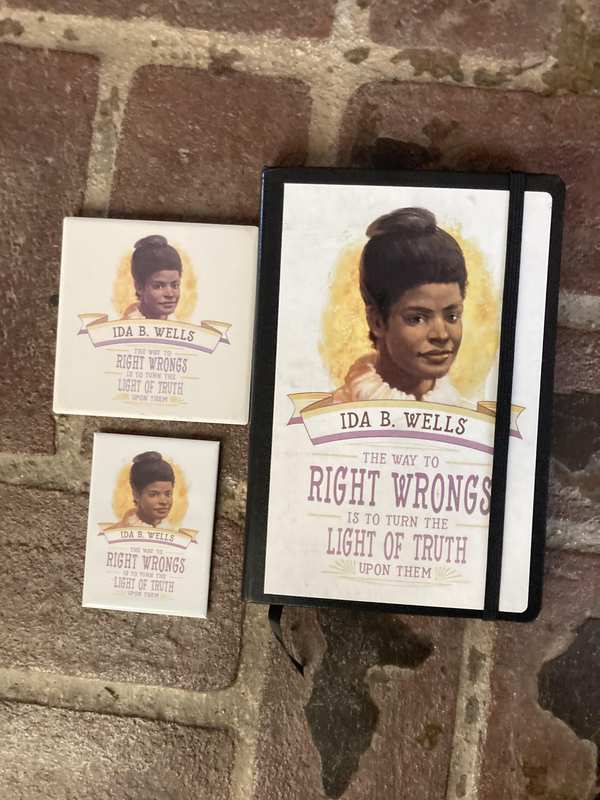
Belmont-Paul Womens Equality NM / National Mall in DC preserves a piece of American history that the public has trusted the National Park Service to protect and interpret. The visitor publications at this site have been developed over years by historians, subject-matter experts, and park staff — and are now being reviewed under Secretary's Order 3431.
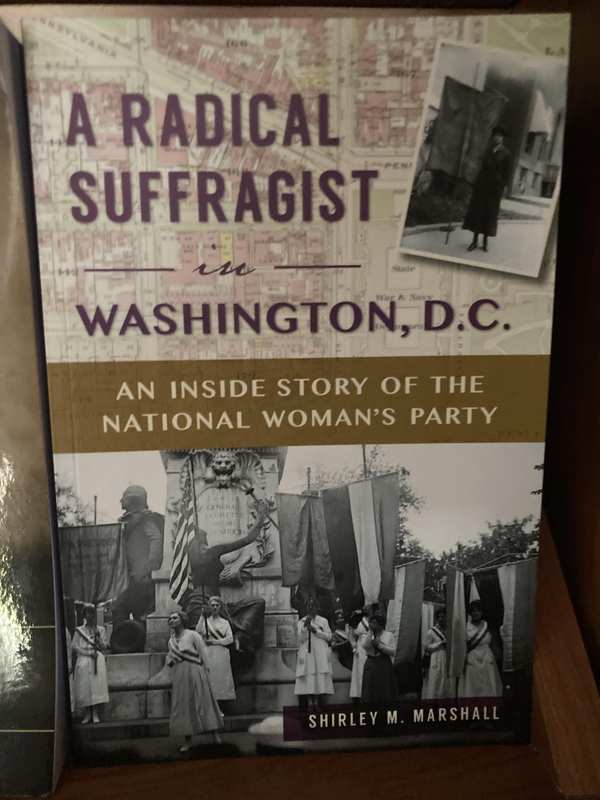
From the internal review records: “These are all sold at the bookstore at Belmont Paul National Womens Monument. A few are books about the suffrage movement and some of the more radical things they did and several are negative to President Wilson, who opposed the movement. 5 are books, the others are pins, magnets, mugs, etc”
Why this matters: Belmont-Paul Womens Equality NM / National Mall is part of a network of over 400 national parks that serve as America's classrooms. The interpretive materials here were developed by subject-matter experts to help visitors understand the full story of this place. When historically accurate content is removed, the public loses access to its own history.
These are all sold at the bookstore at Belmont Paul National Womens Monument. A few are books about the suffrage movement and some of the more radical things they did and several are negative to President Wilson, who opposed the movement. 5 are books, the others are pins, magnets, mugs, etc
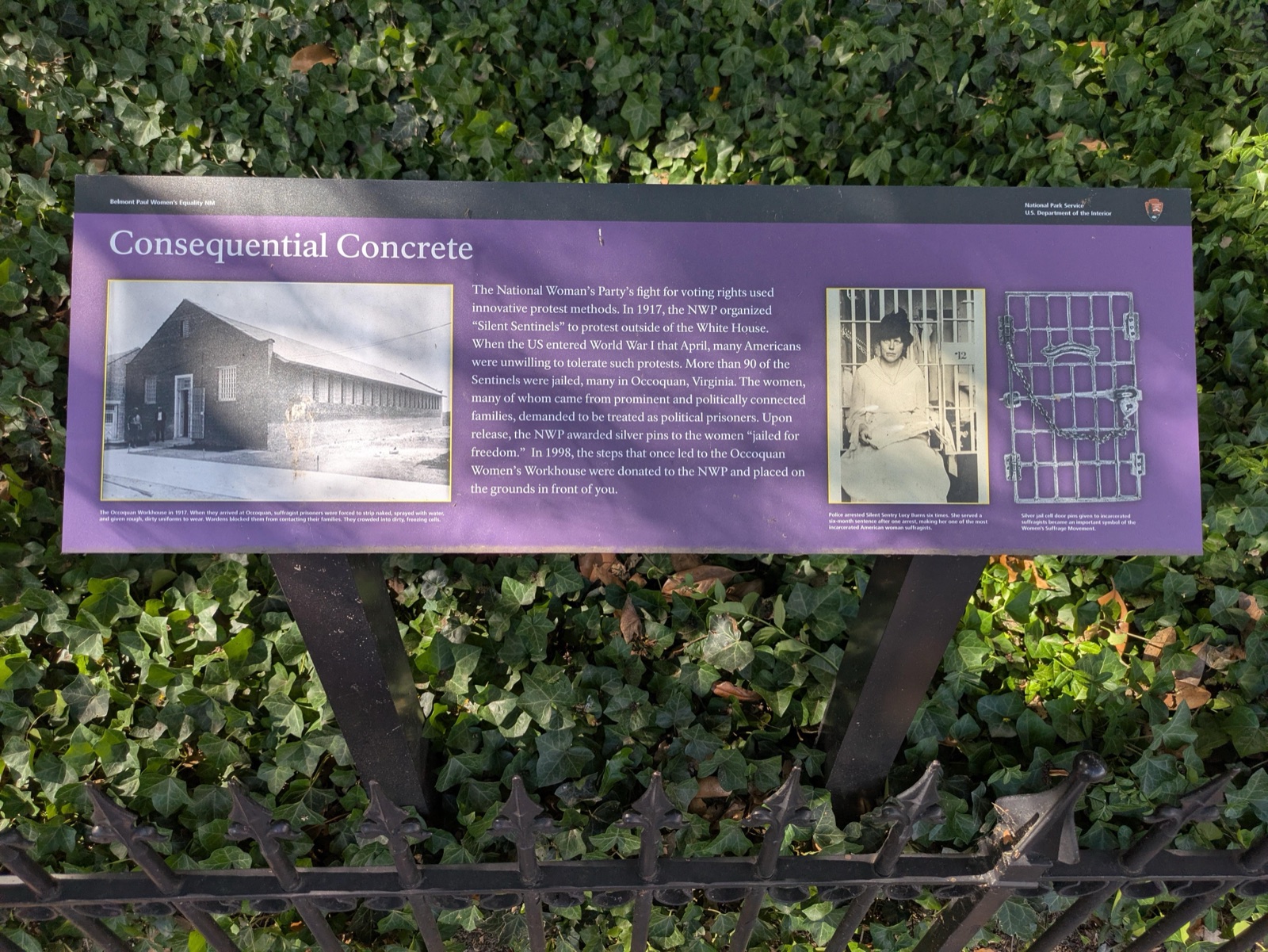
Photos courtesy Save Our Signs (public domain)
Explore the Full Map
See all 446 entries across every national park and wildlife refuge.
Open Interactive Map →