Big Cypress National Preserve
Park History
Sourced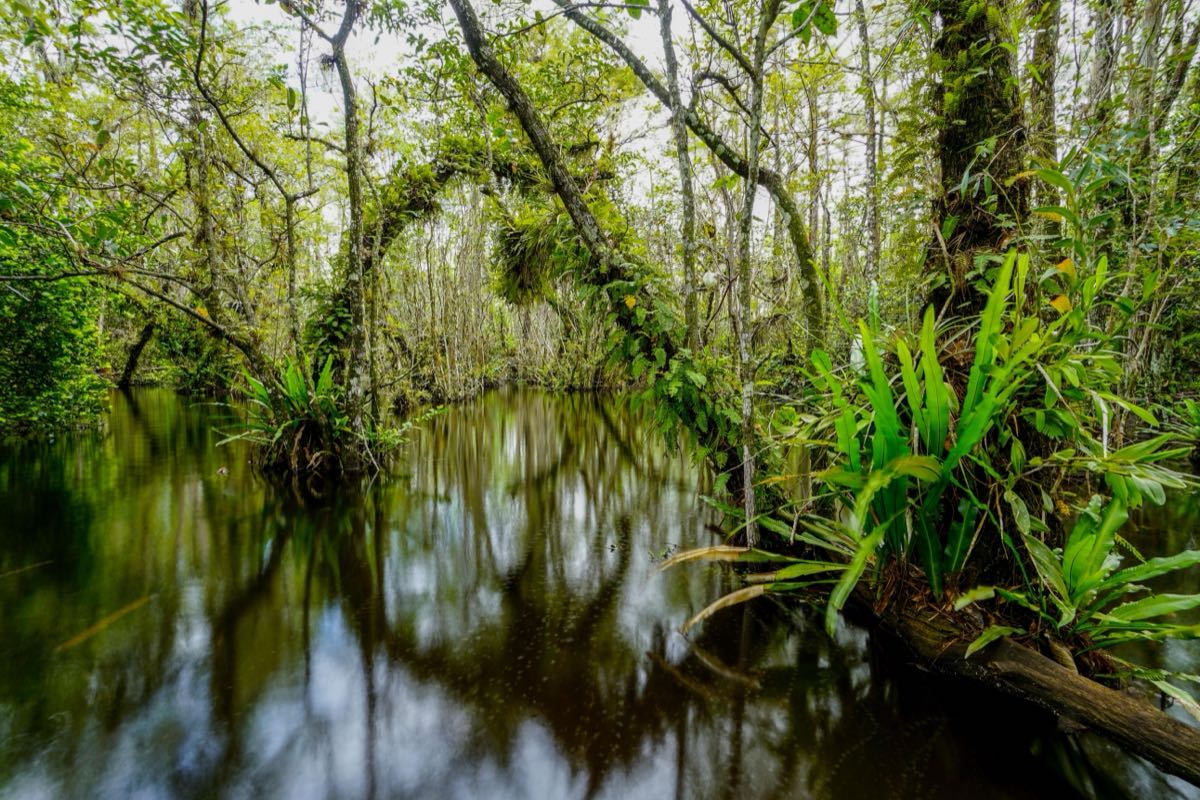
Water is the unifying force of Big Cypress: its 729,000 acres of largely freshwater wetland connect five habitats — hardwood hammocks, pinelands, prairies, cypress swamps and estuaries — and the preserve protects the flow of fresh water into the estuaries of Everglades National Park and the Ten Thousand Islands. By some accounts its watershed supplies more than half the surface water that reaches the Everglades from outside them. The preserve holds the largest dwarf cypress forests in North America and the largest old-growth South Florida slash pine forest, the ghost orchid, one of more than 30 native orchids, and the heart of the primary range of the Florida panther, one of the most endangered mammals in the world. [1] [2] [3]
In 1968 construction began on what was meant to be the world’s largest jetport, which would have devastated the natural flow of fresh water through the swamp. A coalition of conservationists, hunters, landowners and Seminole and Miccosukee people stopped it, and on October 11, 1974, President Gerald Ford signed the law creating Big Cypress as one of the nation’s first national preserves — a new kind of park where hunting, off-road vehicles, oil and gas extraction, private land and the customary uses of the Miccosukee and Seminole would continue alongside protection. Congress enlarged it by 147,000 acres in 1988. The land carries evidence of some 15,000 years of human use. [1] [2] [3]
Indigenous peoples
The swamp was a refuge as well as a home. The 2024 administrative history recounts how U.S. troops pursued Seminole warriors into the Everglades during the Second Seminole War, and how in the Third the United States sought to remove the remaining Seminole from Big Cypress and the Everglades. Abiaka, a Miccosukee medicine man also known as Sam Jones, led warriors who defeated Zachary Taylor’s forces at Lake Okeechobee in 1837 and refused to relocate to Indian Territory. When fighting ended in stalemate by 1858, many Seminole, Billy Bowlegs among them, agreed to go to Oklahoma, but about 150, Abiaka included, stayed in the traditional villages of Big Cypress, where he remained based until his death in 1866. The Seminole population of Big Cypress grew through the late nineteenth century, and the Big Cypress Seminole Reservation now borders the preserve to the north. [3] In creating the preserve, Congress honored the customs and occupancy of the Miccosukee and Seminole peoples, whose villages stand in it today as they have for generations. [1]
Women
Marjory Stoneman Douglas is remembered for saving the Everglades, but her newly formed Friends of the Everglades also played a major role in the coalition that turned back the jetport and won protection for Big Cypress, and her book The Everglades: River of Grass describes the swamp in detail. [1] [2] In the logging town of Copeland a generation earlier, Annie Mae Perry, a logger’s wife known far and wide as “Mother Perry,” served as midwife and delivered more than 500 babies in Copeland, Jerome, Immokalee, Everglades City and Naples; decades later she still gathered them every June. [4]
Black history
Black workers helped cut the cypress forest of Big Cypress. A 2002 study prepared for the preserve by Frank and Audrey Peterman found that the railroad workers and Tamiami Trail builders who made the logging possible were overwhelmingly Black, and that the logging and sawmill labor pool was predominantly Black. Spurred in part by World War II’s need for durable timber, the Lee Tidewater Cypress Company alone shipped about 360 million board feet of cypress from 1944 to 1956. Copeland, a Lee Tidewater company town, had a Black side and a White side; the C. J. Jones company paid its workers in company scrip, good for rent and goods at its store, while Lee Tidewater paid in dollars. Frances Hodge, who in her 2002 interview said she came to Copeland in 1950 and who cooked at the company boardinghouse, serving white workers, for 50 cents an hour, remembered so much work that people slept on others’ porches — until the power saw came and the jobs were gone. The authors note how rarely the local papers of the day even mentioned these workers. [4]
Climate & environment
The preserve’s 2016 foundation document records the change already under way: average annual temperature has risen at a statistically significant rate since 1950, sea levels and storm-surge heights have risen, and the preserve has been in or near 19 hurricane-strength storms over the past century. Rising seas and storm surge threaten loss of land and habitat, rising groundwater and saltwater intrusion into freshwater ecosystems, and an imbalance between salt and fresh water that can favor invasive species. The Gulf Coast region is already showing an enhanced hydrological cycle — more intense rain, stronger storms — and the preserve’s shallow waters are expected to track the warming closely. [2]
Sources
- NPSHistory.com: Big Cypress National Preserve archive page — overview (NPS brochure) and establishment block
- Foundation Document, Big Cypress National Preserve, Florida (NPS, 2016)
- Harvey & Harvey, A Question of Balance: Administrative History of Big Cypress National Preserve (NPS, 2024)
- Peterman, African Americans and the Sawmills of Big Cypress (NPS, 2002), oral histories
Removed Per Nps Court Filing: Interpretive materials
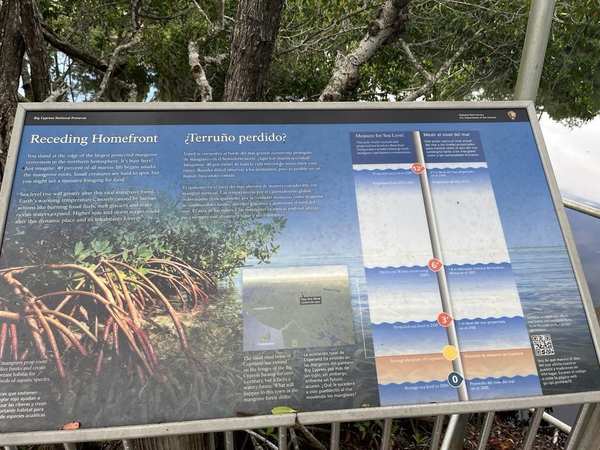
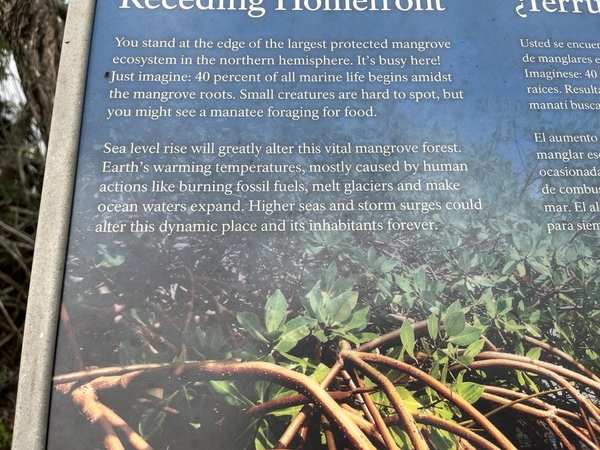
Big Cypress National Preserve in FL is one of hundreds of National Park Service sites where interpretive content has been flagged under Secretary's Order 3431. This directive requires parks to review materials that could be considered negative about past or living Americans — a standard that threatens the factual historical record these sites were created to preserve.
Why this matters: Big Cypress National Preserve is one of 466+ National Park Service sites where historically accurate interpretive content has been flagged under Secretary's Order 3431. Over 300 million people visit national parks each year. For many — especially schoolchildren — these visits are their first and deepest encounter with American history.
- “Mangroves wayside” — removed per NPS court filing
- Mangroves wayside; reason: Unrelated to beauty, abundance, and grandeur of the natural landscape; now: At the park
Explore the Full Map
See all 446 entries across every national park and wildlife refuge.
Open Interactive Map →