First State National Historical Park
Park History
Sourced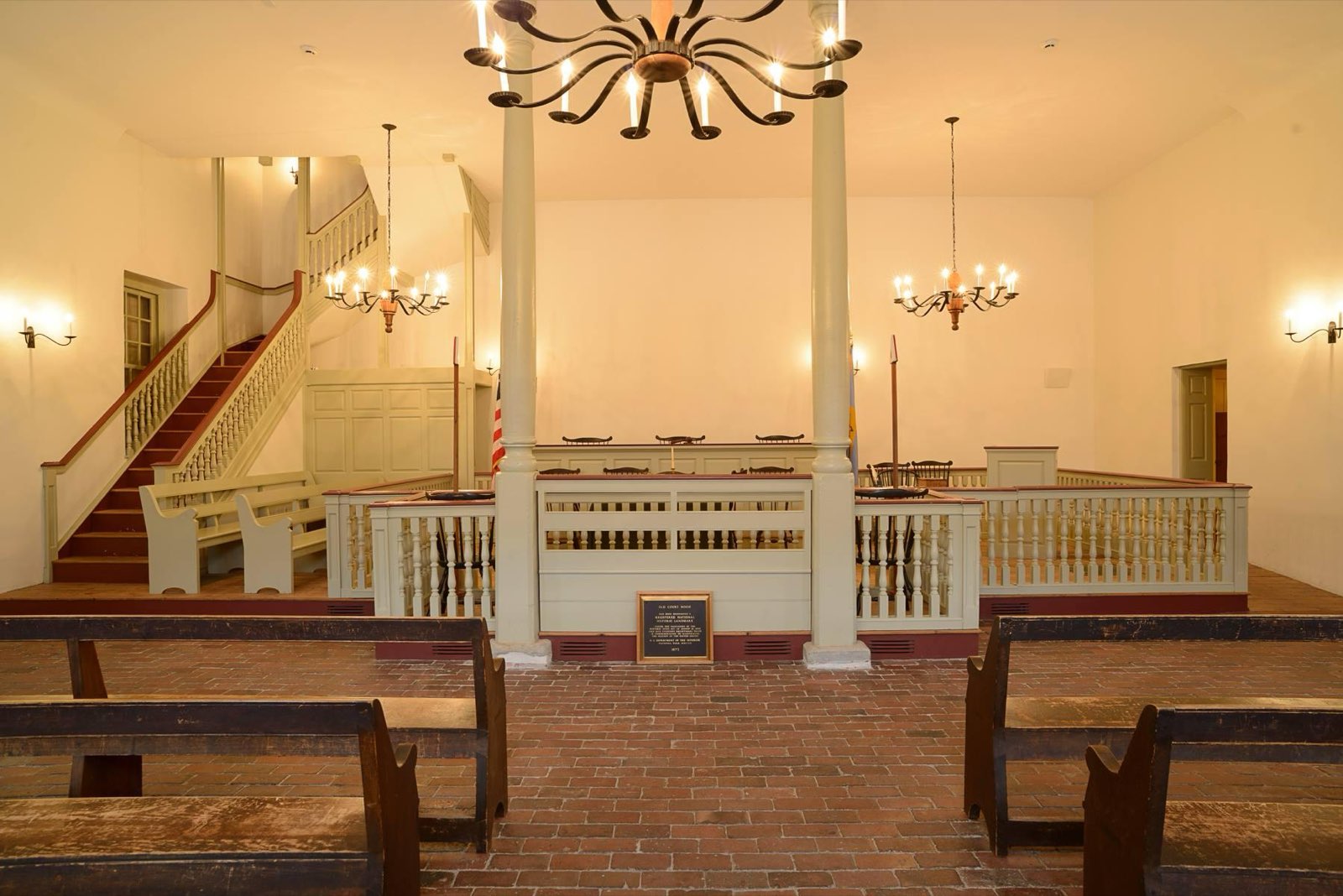
Delaware is small, but the Park Service describes it as a state born out of a three-way contest among Sweden, the Netherlands and Great Britain for the Delaware Valley. First State National Historical Park gathers that story in seven places across Delaware’s two northern counties and a corner of Chester County, Pennsylvania: the rocks on the Christina River where Swedish and Finnish settlers landed in 1638; Holy Trinity (Old Swedes) Church, founded by their descendants in 1698; the New Castle Court House and its Green; the Green at Dover; John Dickinson’s plantation; and the 1,359-acre Brandywine Valley tract of farmsteads, wooded hillsides and stream valleys north of Wilmington. Long before any of them, the land was Lenape country. [1] [2]
On December 7, 1787, delegates meeting at the Golden Fleece Tavern on Dover’s Green made Delaware the first state to ratify the Constitution. President Barack Obama proclaimed the First State National Monument on March 25, 2013, and Congress made it a national historical park on December 19, 2014. The park’s own brochure frames its subject as more than 300 years in which people pursued human rights and self-determination on what it calls a fraught and uneven course, marked by questions and contradictions: the plantation of the primary author of the Articles of Confederation had free and enslaved laborers, and the courthouse where Delaware broke with Britain later saw two Quaker abolitionists bankrupted under the Fugitive Slave Act. The Rodneys, like the Ridgelys and the Dickinsons, owned large plantations near Dover; Caesar Rodney was among the leaders of the colony’s independence movement. [1] [2] [3]
Indigenous peoples
The Lenape knew the Delaware River as the Lenapewihittuck; “Delaware” was an English label — explorers named the bay for Virginia’s governor Lord De La Warr and applied the name to the Lenape themselves. Anthony F. C. Wallace estimated about 8,000 Lenape lived along its drainages around 1600. On the Big Bend of the Brandywine stood Queonemysing, “place where there are long fish,” a summer fishing village. In 1683 Seketarius — a principal Brandywine sachem who, Weslager believed, may have lived there — and other Lenape sachems promised to “give or sell” William Penn the land between the Christina and Upland creeks; in 1701 a Quaker settler was granted the village’s 200 acres on the claim that the people had left — to the surprise, the 2019 study notes, of a band that would have returned the next summer. [3]
Pushed west, the Lenape signed the first treaty the United States made with an Indian nation, at Fort Pitt in 1778. Under two 1829 treaties the federal government removed them to a reservation in Kansas; in 1867 most were moved again to Indian Territory (present-day Oklahoma), where they live today as the Delaware Tribe of Indians. [3] [2]
Women
In 1920 the Nineteenth Amendment needed one more state, and suffragists hoped it would be the First State. Mabel Lloyd Ridgely, who lived on the Dover Green, had already, with the Colonial Dames, saved the old State House from a demolition the legislature proposed in 1909; she presided over the Delaware Equal Suffrage Association. Seven of the women arrested protesting in front of the White House in 1917 were Delawareans, among them Mabel Vernon and Florence Bayard Hilles. As rival rallies filled the Green, the state Senate ratified on May 5, 1920, but the House tabled the vote after nearly a month of debate — the brochure notes that declining to vote counted as a “no.” Anti-suffragists led by Delawareans Mary Wilson Thompson and Emily Bissell had come to Dover too. Hilles went on to work for passage in Tennessee, which ratified two months later; the amendment became law on August 26. [3] [2]
Black history
Delaware’s northern border was the line between slavery and freedom. In December 1845 Samuel D. Burris, a free Black man, guided Samuel and Emeline Hawkins and their six children from Maryland to Quaker John Hunn’s farm; Delaware’s chief justice found no evidence to hold the family, and Thomas Garrett sent them on to Pennsylvania. Convicted in a later case, Burris was sentenced to be sold into slavery for seven years until abolitionists posing as buyers rescued him at auction. In May 1848, in the New Castle Court House, Chief Justice Roger Taney and a jury of Sussex County men described in the study as predominantly pro-slavery found Hunn and Garrett liable under the 1793 Fugitive Slave Act; Taney’s $500 fine per fugitive bankrupted both men. [3] [2]
In the twentieth century, William Poole Bancroft’s Woodlawn Trustees excluded African Americans from their Woodlawn Flats housing in Wilmington, which as late as 1972 allowed only white residents. Only that year, after a decade of Quaker protest and a State Human Relations Commission investigation, did the Trustees agree to accept new applications “without regard to race, color or creed.” [3]
Slavery
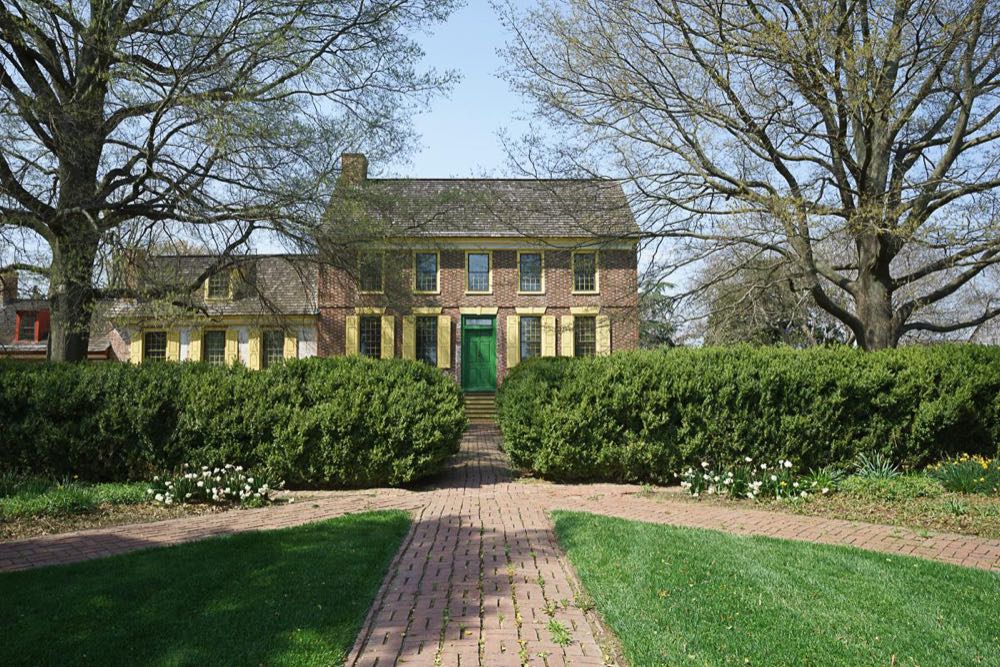
Kent County’s rich soil supported a plantation economy built on enslaved labor, and the John Dickinson Plantation is where the Park Service tells it. The Dickinsons grew wheat and grain there and held a large number of African Americans in bondage. On May 12, 1777, Dickinson signed a deed naming the men, women and children he held — Augustus, Joe, Toby, Mary, Flora, Dinah and many others — and promising them freedom only after another twenty-one years of faithful service. He reconsidered, freeing a few in 1781 and the rest in 1786; by the historic resource study’s count, fifty-nine people in all. Several stayed on as tenant farmers. Slavery remained legal in Delaware throughout the Civil War: nearly 9,000 people, about 15 percent of the state, were enslaved in 1790, and in 1860 there were still more than 1,300 in Sussex County, 303 in Kent and 254 in New Castle. [1] [3]
Sources
- Foundation Document, First State National Historical Park, Delaware and Pennsylvania (NPS, November 2022)
- NPSHistory.com: First State National Historical Park archive page — overview (from the 2017 NPS brochure) and establishment block
- Reed & Wallace, A Historic Saga of Settlement and Nation Building: First State National Historical Park — Historic Resource Study (NPS, September 2019)
Removed Per Nps Court Filing: Interpretive materials
First State National Historical Park in DE is one of hundreds of National Park Service sites where interpretive content has been flagged under Secretary's Order 3431. This directive requires parks to review materials that could be considered negative about past or living Americans — a standard that threatens the factual historical record these sites were created to preserve.
Why this matters: First State National Historical Park is one of 466+ National Park Service sites where historically accurate interpretive content has been flagged under Secretary's Order 3431. Over 300 million people visit national parks each year. For many — especially schoolchildren — these visits are their first and deepest encounter with American history.
- “Caesar Rodney exhibit” — removed per NPS court filing
- Caesar Rodney exhibit; reason: Disparages Americans past or living; now: Discarded
Explore the Full Map
See all 446 entries across every national park and wildlife refuge.
Open Interactive Map →