Monocacy National Battlefield
Park History
Sourced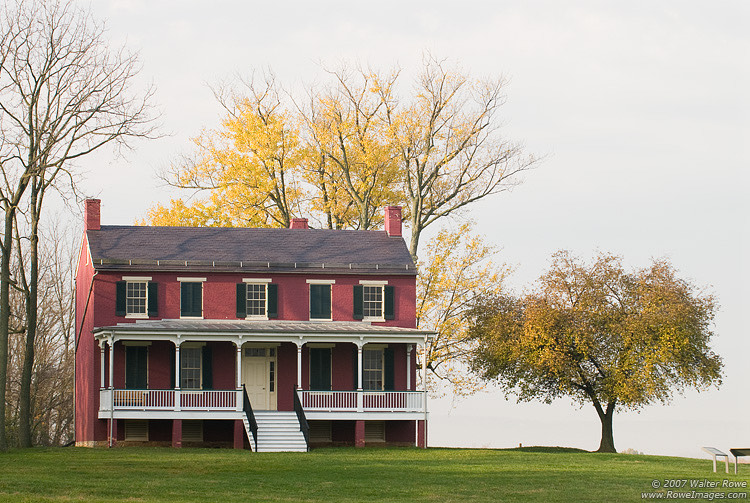
On July 9, 1864, south of Frederick, Maryland, the third and final Confederate invasion of the North ran into a makeshift Union army at Monocacy Junction, where the road to Washington and the Baltimore and Ohio Railroad crossed the Monocacy River. Gen. Lew Wallace had 6,600 men — 3,200 troops, mostly new or short-term recruits, and 3,400 veterans sent by Grant — against a force under Jubal Early that outnumbered him more than two to one. The heaviest fighting raged across the wheat and corn fields of the Thomas Farm; by evening Wallace was retreating toward Baltimore, leaving some 1,300 men dead, wounded, missing or captured. But Early had lost as many as 900 men and a precious day. When he reached Fort Stevens on July 11, reinforcements from Grant were filing into the capital’s defenses, and on July 12 he turned back to Virginia. Wallace’s troops, the park brochure concludes, had lost the battle but saved Washington. [1]
The battle was fought across farms; the Worthington House, the Best Farm and the Thomas Farm still stand. [3] The Worthington family sheltered in their cellar while six-year-old Glenn Worthington watched through a boarded-up window; he later wrote a book, Fighting for Time, urging Congress to establish a national military park. [1] Congress authorized one on June 21, 1934, but set up no way to buy the land, and most of the battlefield stayed in private hands and was actively farmed. A 1976 act provided for buying the land, and since the 1980s the park has acquired the Best, Thomas, Worthington, Baker and Lewis farms and Gambrill Mill. [2] The park’s 2015 foundation document counts 52 historic structures, and says L’Hermitage, the Best Farm, holds the intact archeological record of one of the largest known slave village sites in Maryland. [3]
Indigenous peoples
American Indians have been present in the Monocacy battlefield area since the earliest human occupation of North America, and occupations spanning more than 10,000 years, from the early Archaic to the late Woodland periods, have been documented on the Best, Thomas and Worthington farms. [3] The park’s 2003 cultural landscapes inventory describes Woodland-period villages growing maize, beans and squash, and later Native settlements set in clearings with houses inside palisades. Native groups probably left the Piedmont in the 1630s, and returned or new groups migrated in toward the end of the century; one of the first Europeans to claim land along the river bought a license to it from the Native Americans living at the fork of the Potomac and Monocacy. Native trails became the main north–south routes through the valley; the inventory reports, citing a 1981 study, that by the 1730s only small numbers of Native people remained in the region. [4]
Black history
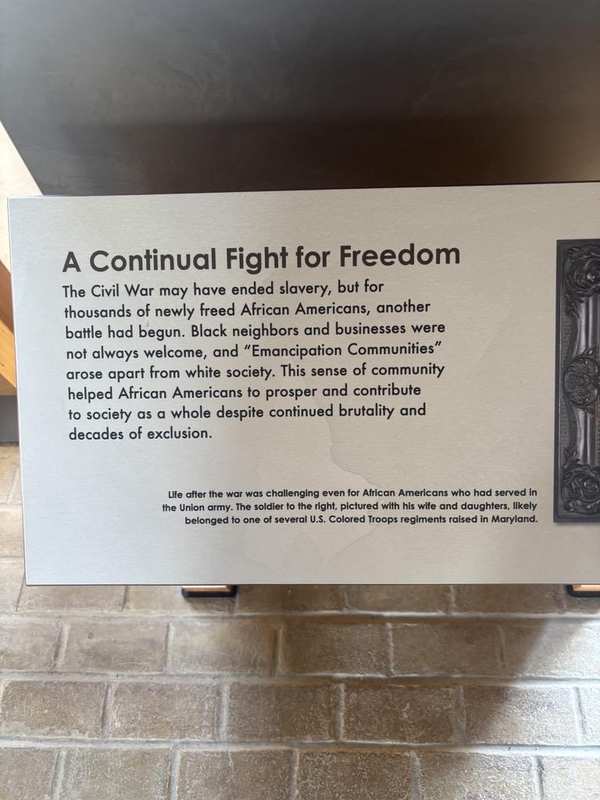
Slavery on the Monocacy farms lasted until Maryland freed all remaining enslaved people in November 1864. In 1860 David Best of the Best Farm sold John, Ann Eliza and Elias Combash — Ann Eliza and Elias, and probably John, children of Dinah, who had been manumitted in 1832 on terms that left her future children enslaved — into terms of service of six to twelve years; the Combash children had been mortgaged twice as collateral for Best’s loans. John Combash was soon resold to a Baltimore man and, in 1863, enlisted in the 1st U.S. Colored Infantry. After freedom some formerly enslaved people stayed on as farm hands and domestics, the 2019 administrative history finds, and some may have moved to free Black communities such as Hope Hill, Sunnyside, Pleasant View and Mt. Ephraim. [2]
Slavery
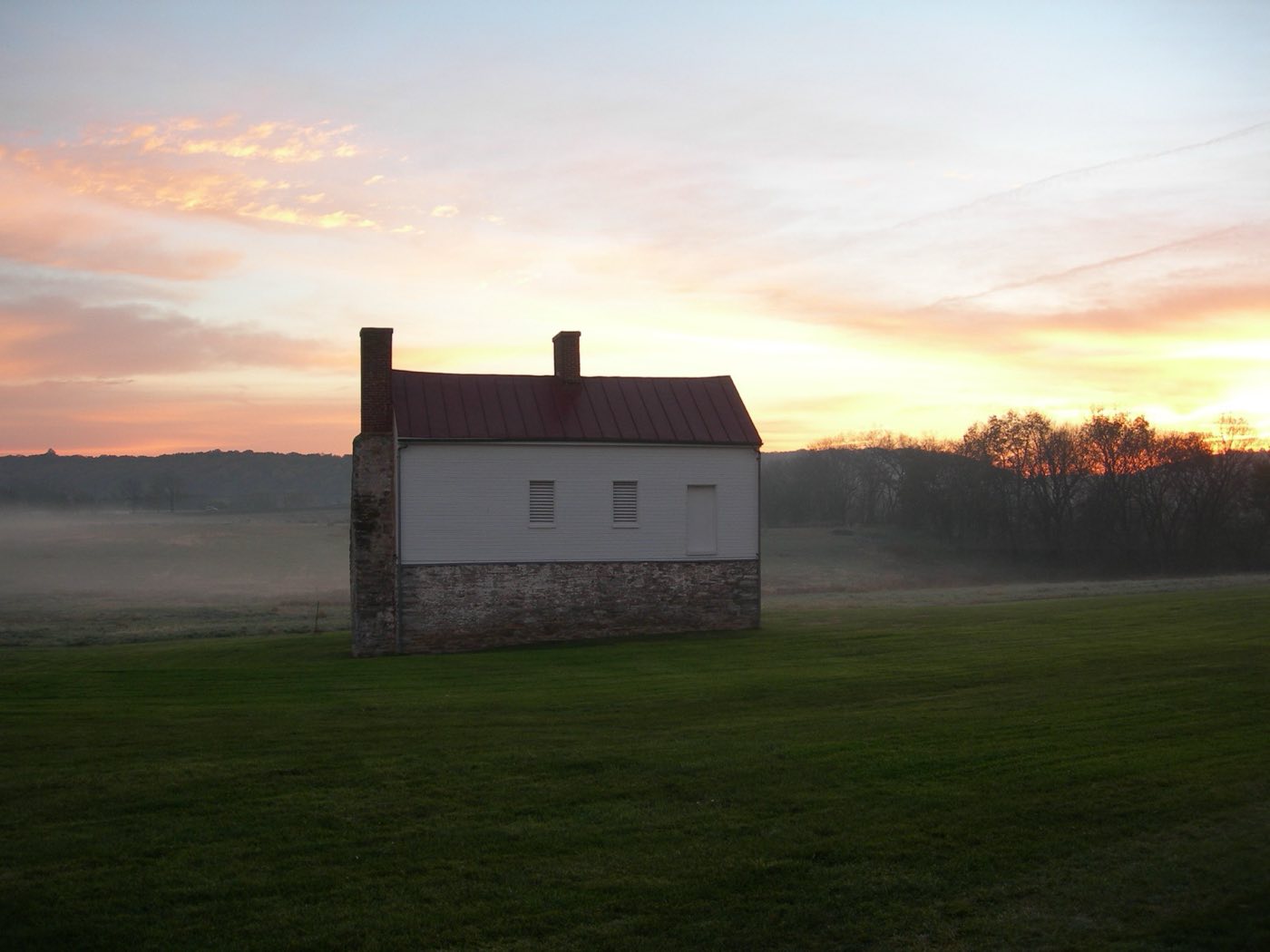
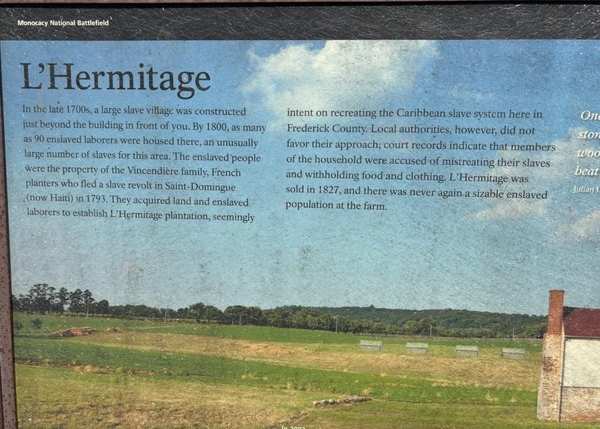
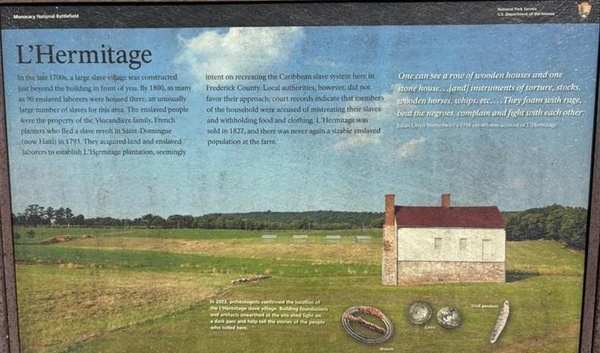
Before it was the Best Farm it was L’Hermitage, established in 1794 by refugees from the slave rebellion in Saint-Domingue (Haiti). [3] Victoire Vincendière had arrived in 1793, at 17, with her mother and her cousin Payen Boisneuf. Maryland let refugee households bring up to five personal servants, though planter refugees, the 2019 administrative history says, seem to have ignored or circumvented the law. From 1795 through at least 1810 about 90 people were enslaved on L’Hermitage, housed in quarters set in front of the main house in the French Caribbean pattern. Courts found Boisneuf guilty of cruelly beating an enslaved man named Shadrack and of not sufficiently feeding and clothing the people he held; in 1798 a jury found Pierre Louis, brought from Saint-Domingue as a slave, entitled to his freedom, though the case went on to arbitration. In 1825 Vincendière sold 17 people, among them children aged 1 to 15, to a Louisiana buyer for $2,925. [2]
Labor & the New Deal
The 1934 act authorized $50,000, but the Depression precluded development, and the still-undeveloped battlefield did not benefit directly from the Civilian Conservation Corps and other work programs that improved parks across the nation, the 2019 administrative history finds. In 1940 the Park Service worked up a plan for vantage points linked by a road, and the Park Service’s Conrad Wirth wrote that some of the proposed road work could be done by a side camp from the CCC camp at the Catoctin Recreational Demonstration Project. By October Demaray was hedging: CCC work was only “possible,” the CCC could not build the needed bridge over Bush Creek, and defense spending might keep the Bureau of the Budget from approving the money. During the war Park Service appropriations were drastically curtailed, and Monocacy waited again. [2]
Sources
- NPSHistory.com: Monocacy National Battlefield archive page — overview (NPS brochure text) and establishment block
- Paula S. Reed & Associates, Monocacy National Battlefield, Frederick, Maryland: An Administrative History (NPS National Capital Region, December 2019)
- Foundation Document, Monocacy National Battlefield, Maryland (NPS, 2015)
- Cultural Landscapes Inventory: Monocacy National Battlefield (NPS, 2003)
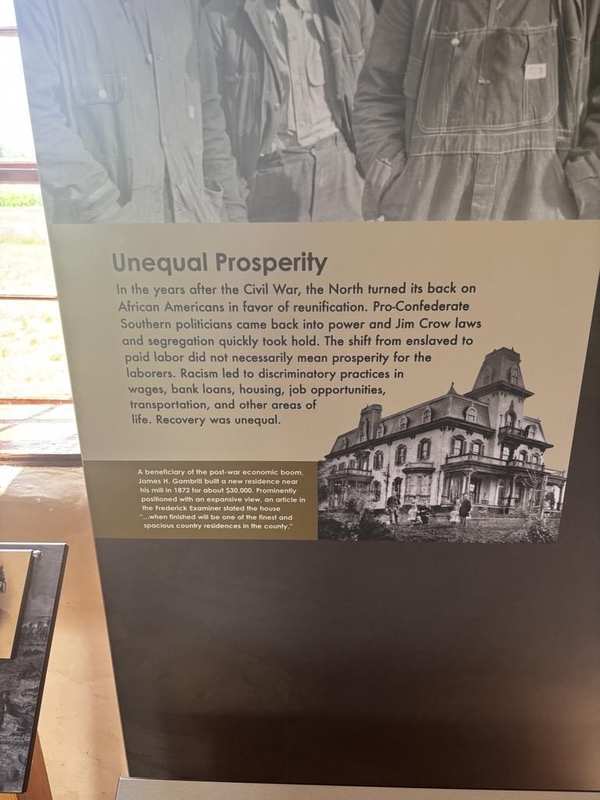
REVISE: Exhibit panels (5 items)
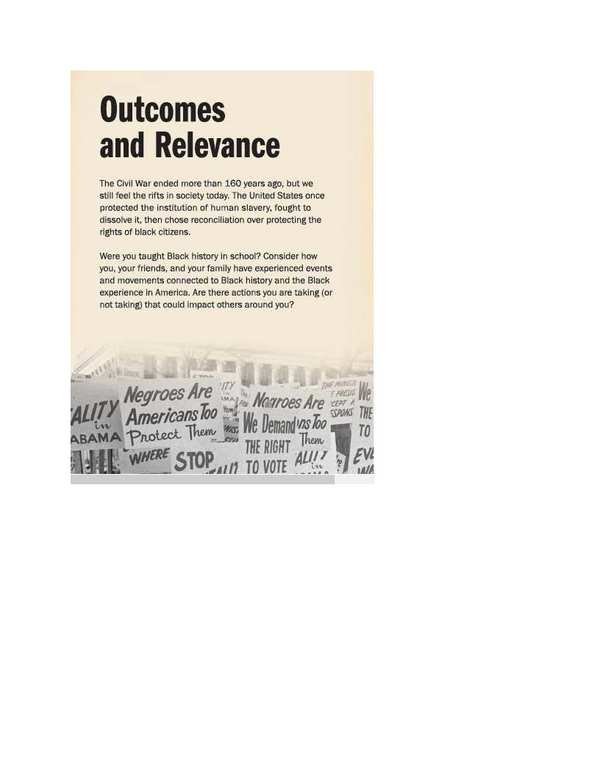
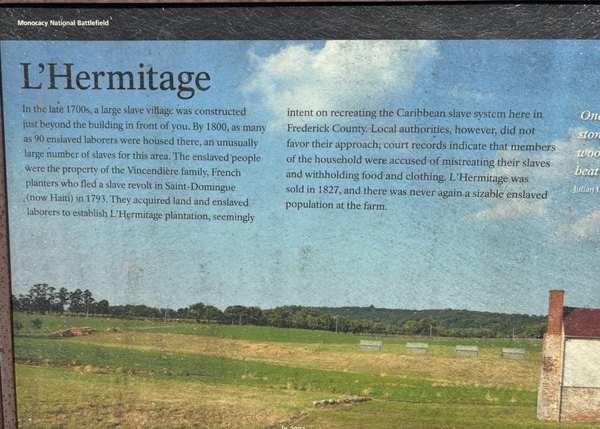
Monocacy National Battlefield in MD preserves a piece of American history that the public has trusted the National Park Service to protect and interpret. The exhibit panels at this site have been developed over years by historians, subject-matter experts, and park staff — and are now being reviewed under Secretary's Order 3431.
From the internal review records: “The exhibits in question are newly developed and have not yet been installed. They are designed to provide visitors with a deeper understanding of the complex histories connected to the site.”
Why this matters: Monocacy National Battlefield is part of a network of over 400 national parks that serve as America's classrooms. The interpretive materials here were developed by subject-matter experts to help visitors understand the full story of this place. When historically accurate content is removed, the public loses access to its own history.
As part of the ongoing renovation of the park museum, we are requesting a review of select new exhibit content to ensure alignment with the intent and guidance of Secretary’s Order 3431.
While the park has conducted an internal review of these materials, we want to ensure we are accurately interpreting the order’s expectations.
The exhibits in question are newly developed and have not yet been installed. They are designed to provide visitors with a deeper understanding of the complex histories connected to the site.
Photographs attached to this park's records in the leaked NPS review database.
Explore the Full Map
See all 446 entries across every national park and wildlife refuge.
Open Interactive Map →