Wrangell-St. Elias National Park & Preserve
Park History
SourcedWrangell-St. Elias is the largest national park in the United States — the brochure counts it as six Yellowstones — a place where four mountain ranges meet and nine of the sixteen highest peaks in the country rise. Mount Wrangell still vents steam near its summit. Near the coast the Bagley Icefield, North America’s largest subpolar icefield, feeds glaciers like the Hubbard and Guyot, and the Malaspina Glacier spills out of the St. Elias Range in a mass larger than Rhode Island. Its more than 9.6 million acres of designated wilderness make up nearly a tenth of the national wilderness system, and with neighboring parks in Canada and Glacier Bay it forms a 24-million-acre World Heritage Site. [1]
This is the homeland of the Ahtna, whose territory takes in the whole Copper River Basin; some 2,500 Ahtna place names — nearly every drainage, hill and ridge named — attest to the length of their presence. Yakutat, on the coast, is a traditional Tlingit fishing village. From 1911 to 1938 the Kennecott mines near McCarthy shipped copper by rail to Cordova, and their ruins are a national historic landmark. President Carter proclaimed the area a national monument on December 1, 1978, and Congress established the 13.2-million-acre park and preserve on December 2, 1980, where local rural residents may still hunt, fish and trap for subsistence. [1] [2]
Indigenous peoples
The Copper River, called ’Atna’ or “beyond river” in Ahtna, runs 290 miles from the Wrangells to the Gulf of Alaska, and the Ahtna have worked and traded its copper for centuries — archeologists think for 500 to 1,000 years. In 1885 Chief Nicolai showed Lt. Henry Allen a copper vein, and later revealed a source to prospectors for a cache of supplies. Some writers demeaned him as an innocent who traded a multimillion-dollar mine for food; Pratt (1998), as summarized in the 2024 ethnographic overview, argued instead that he was canny in his dealings and that his death in 1899 or 1900 opened the floodgates to rapid outside exploitation. Simeone and Miller call the Kennecott mine one of the grandest colonial land thefts in early twentieth-century Alaska: the Ahtna received no compensation for the land or the ore, though they could ride the railroad free. Ahtna reaction to the 1978 monument, the authors write, was mixed: many supported protection for the lands their subsistence depended on, but Alaska Native people felt their voices were sidelined at points in the debates over land selections and protected areas. [2]
Women
Two Ahtna elders, Katie John and Doris Charles, pushed the federal government into managing subsistence fishing across much of Alaska. In 1983 they and the Mentasta Village Council asked the state to let them fish at Tanada Creek, which the state had closed to fishing in 1964; at Batzulnetas, their natal village, salmon had been taken for hundreds of years. Refused, they sued. In March 1994 a federal court ruled that the federal government could manage subsistence fisheries on navigable waters, and the ruling was upheld in April 1995. Thousands marched in Anchorage in their support, Rosa Parks among them. John said she fought so her grandchildren would remember the way she had learned. Their victory opened Batzulnetas and extended federal subsistence jurisdiction to more than half of Alaska’s navigable waters. [2]
Climate & environment
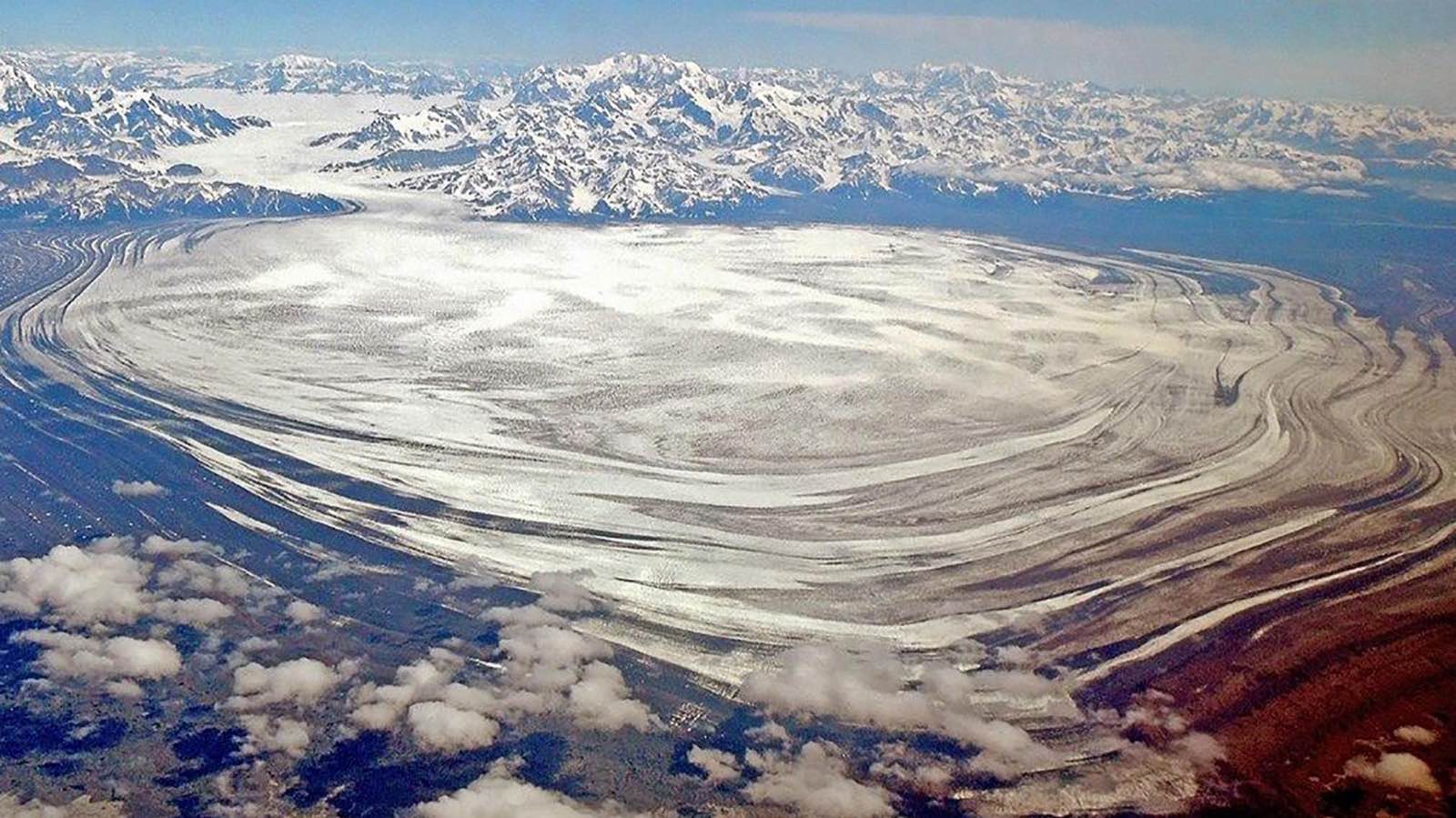
The Tlingit named the Malaspina Glacier Sít’ Tlein, Big Glacier. At about 2,400 square kilometres it is the world’s largest piedmont glacier, and it is thinning by more than a metre a year. A 2023 radar-mapping study found that two-thirds of it is grounded below sea level, its bed cut by channels that reach more than 350 metres below sea level, and that only a narrow, eroding strip of ice-cored land separates it from the Gulf of Alaska — where lagoons have formed in front of the glacier in recent decades. If the sea breaks through, the authors warn, retreat could be rapid, and the glacier holds enough ice to raise global sea level by 1.4 millimetres. [3]
Labor & the New Deal
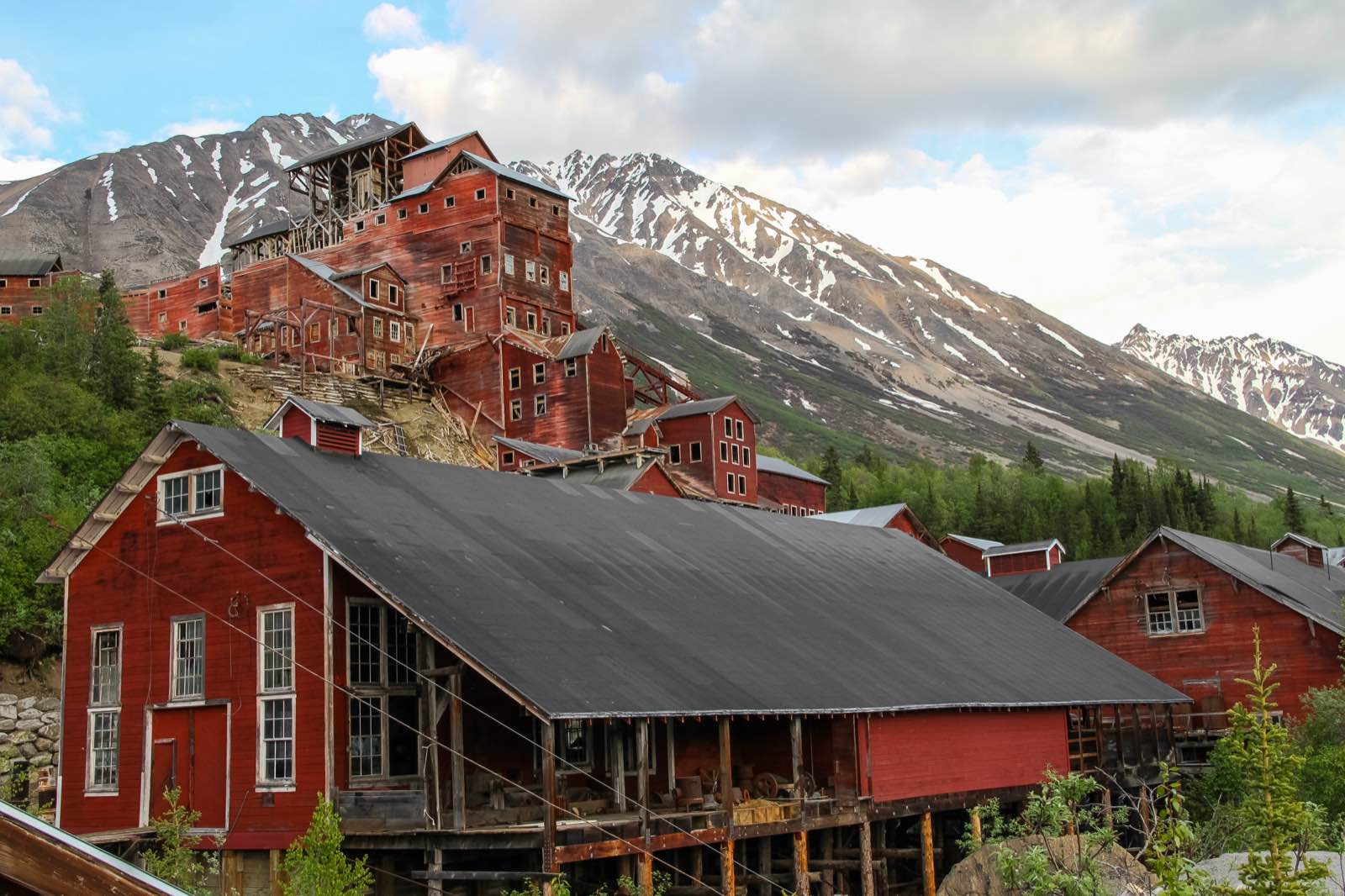
At Kennecott, a 14-story concentrator stepped down the hillside so gravity could carry ore through the mill. In 1916 the mines produced 101,410,000 pounds of copper; William Douglass, later Kennecott’s superintendent, reckoned it achieved a third of the Anaconda mine’s production in Butte with only 500 workers to Anaconda’s 15,000. The mill town was ordered by rank, the manager’s house and staff quarters at its center; the bunkhouses had no facilities for families, so married miners usually left theirs behind. In June 1917 miners struck — the only strike at Kennecott — for a flat wage instead of one that slid with copper prices. In arbitration 45 days later the company kept its sliding scale but granted a 50-cent daily raise and a new bunkhouse, mess hall and recreation hall at the Bonanza Mine; it refused collective contracts and rehired only one member of the Miners Committee. [4]
Sources
- NPSHistory.com: Wrangell-St. Elias National Park & Preserve archive page — overview (from the 2010 NPS brochure) and establishment block
- Simeone & Miller, Ahtna and Wrangell-St. Elias National Park and Preserve: An Ethnographic Overview and Assessment (NPS, 2024)
- Tober et al., Comprehensive Radar Mapping of Malaspina Glacier (Sít' Tlein), Alaska, Journal of Geophysical Research: Earth Surface 128 (2023)
- Cultural Landscape Report: Kennecott Mill Town, Wrangell-St. Elias National Park and Preserve (NPS, 2001), Part I Site History
Removed Per Nps Court Filing: Interpretive materials
Wrangell-St. Elias National Park & Preserve in AK is one of hundreds of National Park Service sites where interpretive content has been flagged under Secretary's Order 3431. This directive requires parks to review materials that could be considered negative about past or living Americans — a standard that threatens the factual historical record these sites were created to preserve.
Why this matters: Wrangell-St. Elias National Park & Preserve is one of 466+ National Park Service sites where historically accurate interpretive content has been flagged under Secretary's Order 3431. Over 300 million people visit national parks each year. For many — especially schoolchildren — these visits are their first and deepest encounter with American history.
- “Exhibit panels” — removed per NPS court filing
- Exhibit panels; reason: Disparages Americans past or living; now: TBD
Explore the Full Map
See all 446 entries across every national park and wildlife refuge.
Open Interactive Map →